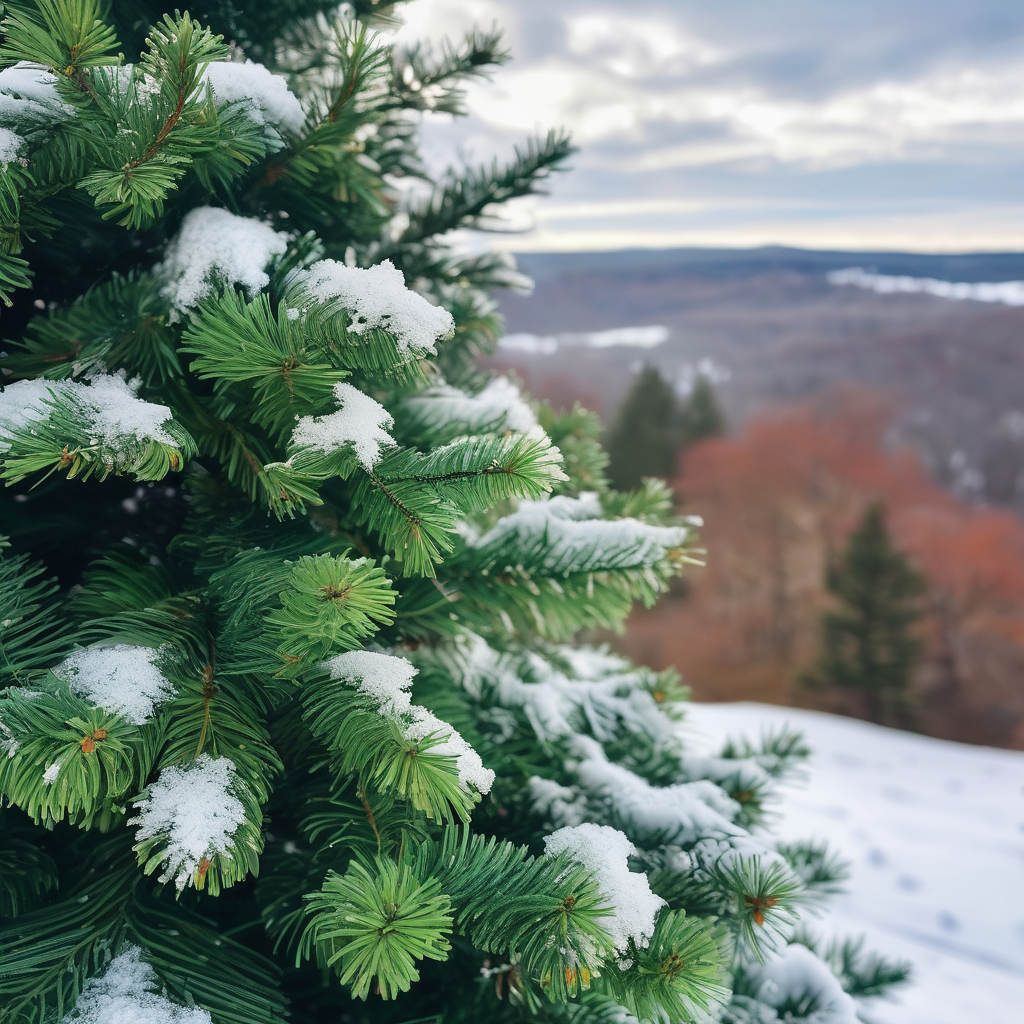
In Shelton, Connecticut, Craig Rogers from Sandy Hook secured a Christmas tree atop his car at the Jones Family Farms on December 11, 2025, a family tradition that is now facing challenges due to the effects of climate change. The Christmas tree industry in Connecticut is struggling as shifting weather patterns, including heavy rain followed by drought, hinder the growth of trees that typically take 10 to 15 years to mature.
Jamie Jones, who runs the family-owned Jones Family Farms, highlighted the complexities of nurturing Christmas trees amidst these climatic adversities. “It’s definitely becoming more challenging to grow trees in this climate,” he remarked, pointing out that extreme weather conditions, including heat waves and fluctuating rainfall, complicate the delicate growth process of these perennial plants.
Richard Cowles, a plant pathologist at the Connecticut Agricultural Experiment Station and another Christmas tree farmer, is at the forefront of innovative efforts to combat these challenges. His team has been experimenting with planting diverse tree varieties, including rare ones from abroad, to identify species that might endure climate variability better than traditional trees like the Fraser fir, which has shown susceptibility to diseases exacerbated by irregular weather patterns.
Angevine Farms’ Lisa Angevine-Bergs emphasized that the team is focusing on developing trees that can withstand drought while retaining aesthetic qualities sought by consumers. “They’ve already started researching and producing trees to be more drought resistant and climate resilient,” she explained.
The current climate dynamics not only affect the health of the trees but also the economic stability of local farmers. U.S. Department of Agriculture data revealed that the number of Christmas tree farms in Connecticut is rising due to an increase in smaller operations, even while the production area and number of trees cut have seen slight declines in recent years. In fact, the total number of trees harvested dropped from 98,500 in 2017 to 88,893 in 2022, although the average price for trees has increased—suggesting shifting market dynamics influenced by climate challenges.
However, the outlook is not entirely bleak. While the Christmas tree industry faces hardships, local growers like Cowles and Angevine-Bergs are determined to adapt and innovate. They are encouraging younger generations to engage in the industry, which has seen an average grower age hovering around 70. “It’s important for local farms to see profitability and a future, as that may inspire the next generation to stay in the business,” Angevine-Bergs noted.
As Connecticut’s Christmas tree farmers navigate the delicate balance of nurturing their crops in a warming world, they remain committed to preserving the joys of the holiday season for families, hoping their efforts will help “save Christmas” for future generations.