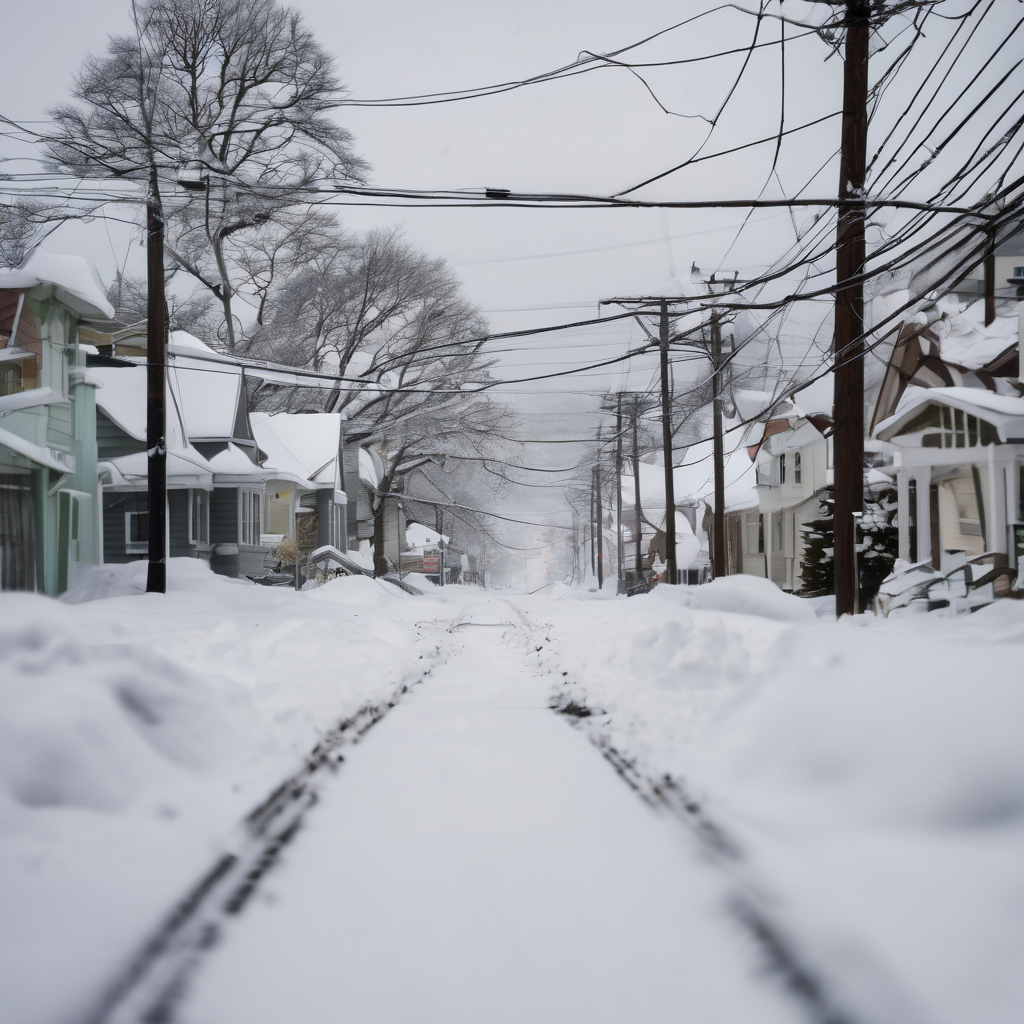
As freezing temperatures persisted in the Northeast on Tuesday, thousands of residents remained without power in the wake of a severe winter storm that dumped over two feet of snow across several states. The storm, which began on Sunday night, developed into a bomb cyclone early Monday, producing hurricane-force gusts and extreme snowfall conditions, forcing many to stay indoors under blizzard warnings.
Temperatures in much of the region were not expected to rise above freezing, limiting the potential for snow melt. By Tuesday evening, over 225,000 customers were still without electricity, with Massachusetts accounting for the majority—over 190,000 of those outages were reported. Eversource, one of the key utility companies in the area, indicated that it could take days to restore power fully. “It is a multiday restoration,” stated Doug Foley, Eversource’s president of electric operations in Massachusetts.
Public transit systems have faced delays, with icy road conditions complicating travel as flight cancellations piled up. As of Tuesday evening, more than 2,200 flights were canceled across the northeastern U.S., particularly affecting major airports in New York, Boston, and Newark. Travelers faced significant disruptions, prompting many, like Alyssa Myers—who experienced multiple cancellations—to advise others to reconsider non-essential trips.
The historic storm resulted in widespread school closures, postponed congressional votes, and disrupted public transit systems. DoorDash even suspended its service in New York City amid the inclement weather.
As the storm waned, the snow totals revealed some remarkable measurements: Providence, Rhode Island, recorded the highest accumulation with 37.9 inches. Other notable measurements included 33.7 inches in Whitman, Massachusetts, and 31 inches in Central Islip, New York. In Newark, the snow buildup ranked as the second-heaviest on record, while Philadelphia reported its most significant snowfall from a single storm since January 2016.
While the immediate danger from this storm subsides, residents are facing the prospect of more snow, though it is expected to be minor. A quick-hitting storm is predicted to bring less than two inches to most areas, potentially impacting the Great Lakes region before reaching the Northeast.
Despite the challenges posed by this severe winter weather, communities are coming together to cope with their situation. Neighbors are helping to clear pathways, and volunteers are setting up to assist those still without power, showcasing resilience in the face of adversity.