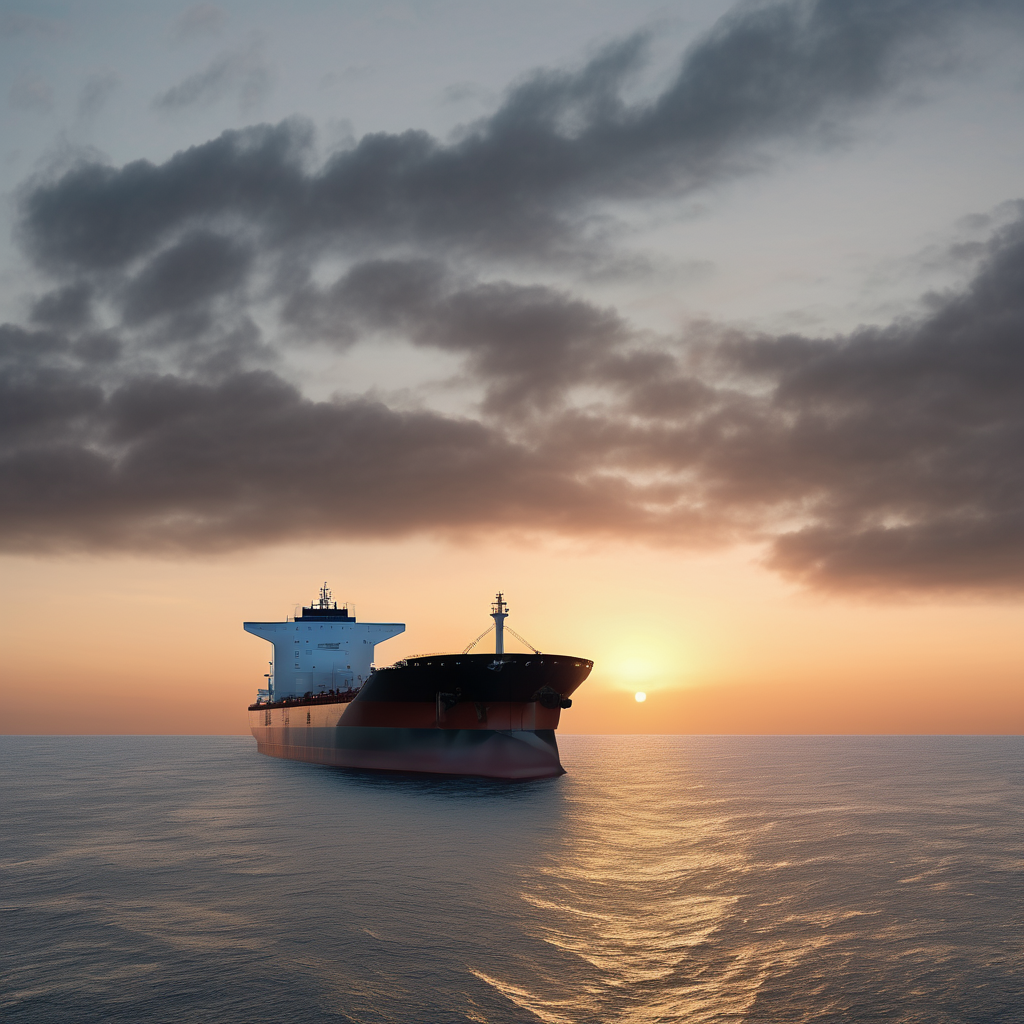
Ukrainian sea drones have successfully targeted a tanker involved in the trade of Russian oil, striking it on Wednesday as it navigated through Ukraine’s exclusive economic zone in the Black Sea, headed for the Russian port of Novorossiysk. This incident marks the third sea drone attack in just two weeks, aimed at vessels associated with Russia’s so-called “shadow fleet,” which comprises unregulated ships that facilitate Moscow’s oil exports despite stringent Western sanctions.
The tanker, identified as the Dashan, was reportedly operating at maximum speed with its transponders disabled when it was hit by powerful explosions that inflicted considerable damage on its stern. An official from the Security Service of Ukraine (SBU) confirmed the attack, although no casualties were reported. The Dashan, currently under European Union and British sanctions, was sailing without an identifiable flag, employing evasive measures to avoid detection.
The attack was validated by three maritime security sources, and video footage released by Ukrainian officials captured the moment the naval drones approached and detonated on impact with the vessel. Reuters further corroborated the tanker’s identity through comparative analyses with previous imagery and confirmed specifics through ship tracking data.
An SBU representative stated, “The SBU continues to take active measures to reduce petrodollar revenues to the Russian budget,” highlighting Ukraine’s persistent strategy to disrupt Moscow’s funding for its military actions. This latest strike is part of Ukraine’s broader campaign, which has included attacks on Russian oil refineries using long-range aerial drones.
In response, Russian President Vladimir Putin condemned the operations as acts of piracy and threatened to restrict Ukraine’s access to the Black Sea. The situation has further escalated, with numerous explosions recorded in tankers linked to Russian ports, emphasizing the intensifying maritime conflict since the onset of the invasion in February 2022.
The mounting dangers associated with shipping in the Black Sea have led to higher war insurance costs, as insurers are now reassessing policies on a daily basis in light of the evolving landscape. These developments suggest a comprehensive strategy by Ukraine aimed at undermining Russia’s oil revenues and maritime operations, representing a notable escalation in the ongoing conflict. The dynamic nature of these attacks may signal a turning point in the region’s maritime security, as Ukraine adapts to counteract Russian military expenditures.