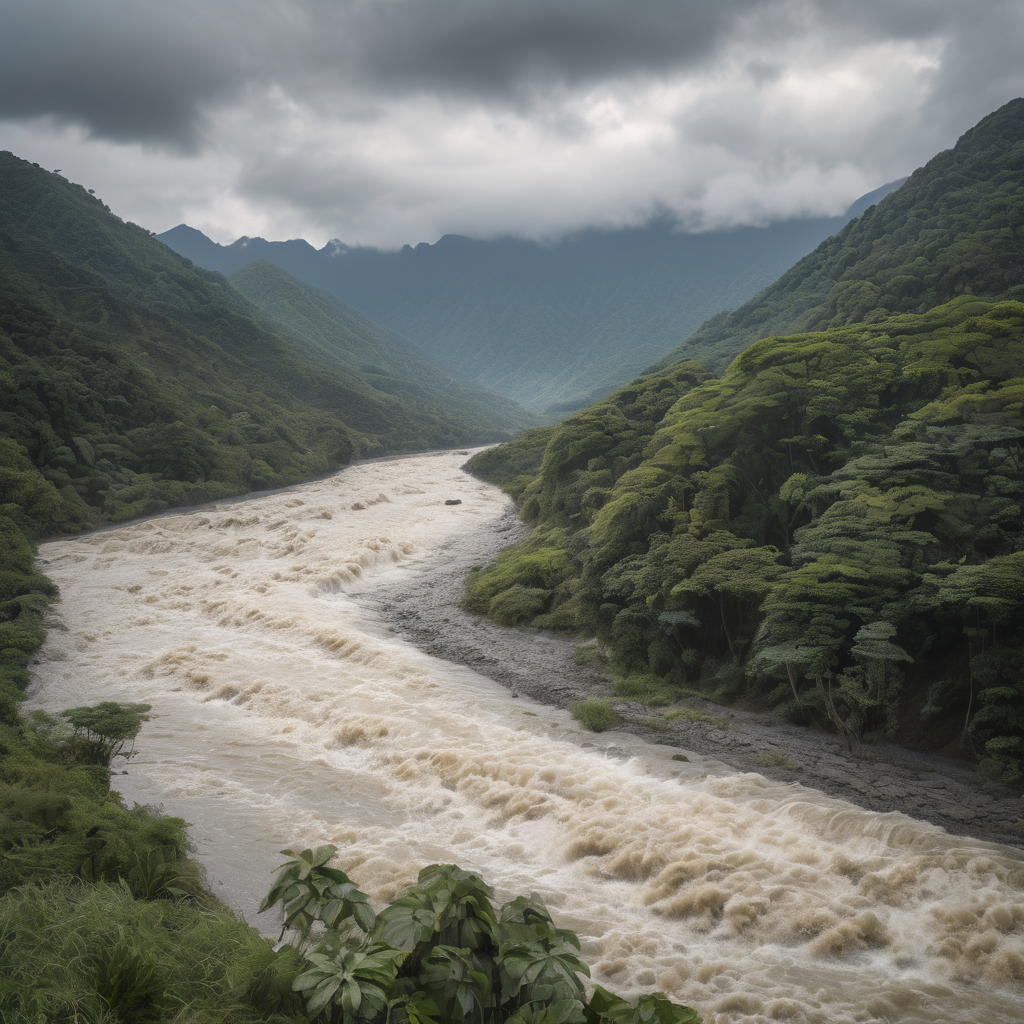
A tragic event has occurred in Taiwan’s eastern county of Hualien, where Super Typhoon Ragasa’s intense rainfall led to the overflow of a barrier lake, resulting in catastrophic flooding in the township of Guangfu. The calamity has resulted in the loss of 14 lives, with 129 individuals still missing. The incident unfolded when landslide-related barriers collapsed on Tuesday, unleashing a torrent of water that eyewitnesses likened to a tsunami, devastating the community.
Guangfu has been severely affected, with substantial damage to infrastructure, including the destruction of a major road bridge. The flooding has left many residents isolated, spurring urgent rescue efforts. In response, the military has deployed 340 troops to assist local authorities, distributing crucial supplies such as water and instant noodles under strenuous conditions.
Despite government calls for evacuation, many inhabitants chose to remain, either by seeking refuge within their homes or relocating to stay with family outside the flooded area. This decision has sparked criticism from local officials, who argued that the voluntary evacuation orders were insufficient given the scale of the disaster.
Further intensifying the crisis, additional flood warnings have heightened fears of more flooding. However, amidst these adversities, there has been a notable display of unity and resilience. Rescue teams from across Taiwan have converged to aid in the response efforts, and even Beijing, despite political tensions with Taipei, has expressed condolences—highlighting the magnitude of the humanitarian crisis.
Hualien, celebrated for its natural beauty and rich indigenous cultures, including the Amis people, is now on the path to recovery as search efforts continue for the missing and support is extended to those displaced. This disaster draws parallels with other recent global flooding events, highlighting the growing frequency and impact of extreme weather linked to climate change.
Reflecting on past incidents such as the 2009 Typhoon Morakot, which caused substantial damage and loss of life, underscores the need for improved disaster preparedness and resilient infrastructure. The ongoing efforts in Taiwan showcase the strength and solidarity of the community, offering hope for recovery and rebuilding in the afflicted areas.