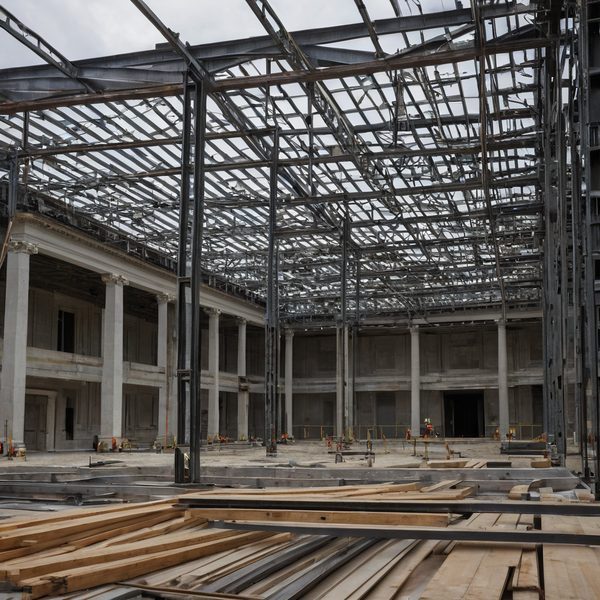
President Donald Trump is facing renewed accusations of hypocrisy after reports said the White House’s new $400 million East Wing ballroom will use tens of millions of dollars’ worth of donated foreign steel supplied by Luxembourg-based ArcelorMittal. The disclosure has prompted a wave of criticism online and renewed scrutiny of White House trade decisions that critics say undercut the president’s “America First” pledges to bolster domestic steelmakers.
The New York Times and other outlets reported this week that ArcelorMittal, the world’s second-largest steelmaker, has committed the steel donation—Trump in October 2025 said he had been offered steel valued at $37 million. The White House has not released full details about the contribution, and officials have not publicly disclosed a complete materials list for the ballroom, which is under construction on the White House grounds.
The revelation has drawn sharp rebukes from opponents and social media users who contrasted the gift with the administration’s aggressive posture toward foreign metals. Trump spent much of his presidency and his 2024–25 campaigns championing U.S. steel production, imposing tariffs and threatening steep duties on imports to protect American manufacturers. Critics seized on the apparent inconsistency between those policies and accepting foreign steel for a high-profile White House renovation.
The disclosure also comes against a backdrop of recent trade-policy changes that could benefit ArcelorMittal. Reports noted that the White House made tariff adjustments days after Trump’s October remarks—changes that would, by some counts, halve tariffs on certain automotive steel exports from a Canadian ArcelorMittal plant. That timing has fueled questions about whether policy shifts and in-kind donations intersect, though the White House has declined to provide a full accounting of the transaction.
White House spokesman Davis Ingle defended the project, saying the president was “making the White House beautiful and giving it the glory it deserves at no cost to the taxpayer,” and dismissed critics as suffering from “Trump Derangement Syndrome,” according to the Times. The administration has also argued that halting construction would pose a security risk; earlier this month the government asked a federal appeals court to pause a judge’s order that temporarily halted ballroom work amid litigation over national-security concerns.
Legal fights and political backlash have not quieted public reaction. Posts on X (formerly Twitter) and other platforms lamented that the donated material was produced in Europe and demanded that, even if donated, White House projects use American steel. Supporters of Trump countered that a donated material saves taxpayers money and that quality should matter more than origin.
The ballroom remains a focal point in broader debates over presidential ethics, trade policy and the optics of public projects. With construction legally entangled and the White House resisting full disclosure of donation terms, the controversy is likely to persist as lawmakers, competitors in the steel industry and watchdog groups press for more transparency about both the origin of materials and any policy decisions that might have advantaged a donor.