
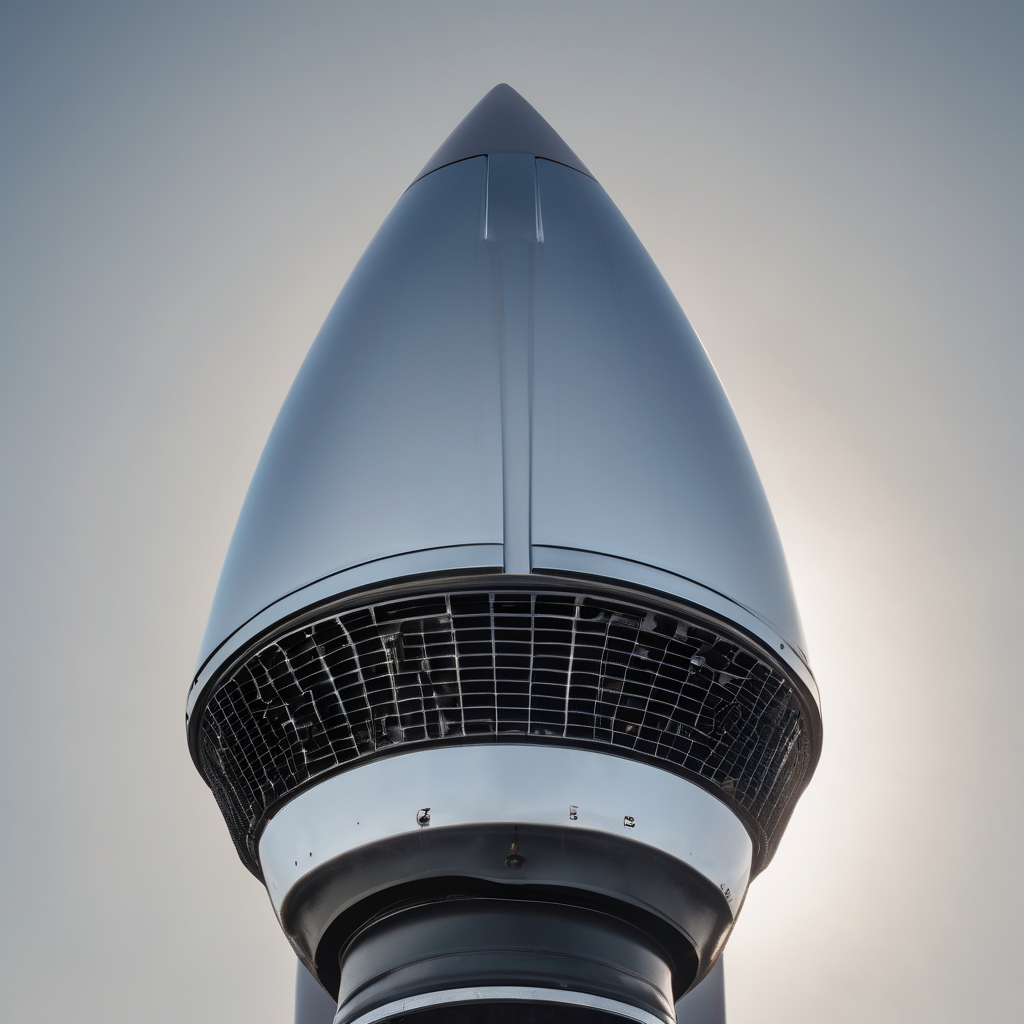
A Vulcan rocket launched by United Launch Alliance (ULA) successfully completed its mission to place a range of classified payloads into orbit, despite experiencing a nozzle burn-through in one of its solid-fuel boosters. This launch took place at 4:22 a.m. EST from Cape Canaveral Space Force Station, showcasing the power of the Vulcan rocket equipped with twin Blue Origin BE-4 engines and four Northrop Grumman solid-fuel boosters, generating 2.9 million pounds of thrust.
Initial flight conditions were smooth; however, around 20 seconds into the ascent, a flame erupted from the nozzle of one of the strap-on GEM 63XL boosters. Shortly thereafter, the rocket exhibited an unexpected roll, although this motion ceased once the boosters were jettisoned. ULA’s vice president of Atlas and Vulcan programs, Gary Wentz, confirmed that despite the anomaly, both the Vulcan booster and its Centaur upper stage executed their missions as planned, successfully delivering the satellite payloads to geosynchronous orbit.
Following the launch, ULA initiated a review process to analyze technical data and imagery, forming a recovery team to collect any debris and investigate the root cause of the nozzle issue. This incident marks the fourth launch of the Vulcan, which is designed to replace the older Atlas 5 rockets that relied on Russian engines. Notably, this is the second occurrence of a booster nozzle failure during the Vulcan’s development, following a similar issue during the rocket’s certification flights.
On this mission, the primary payload was a Geosynchronous Space Situational Awareness Program (GSSAP) satellite, tasked with monitoring other satellites in high Earth orbit. This satellite joins a series of previously launched GSSAP units, enhancing the United States’ capability to detect and characterize disturbances in space.
The ULA aims to conduct over 20 launches this year, including 16 to 18 with the Vulcan rocket. While it remains unclear how the recent nozzle failure might impact upcoming flight schedules, the company’s commitment to thorough investigations suggests a proactive approach to ensuring future missions are successful.
This successful launch reinforces ULA’s role in national security and advanced space missions, demonstrating both the resilience and capability of their new heavy-lift rocket as it embarks on complex orbital assignments.