
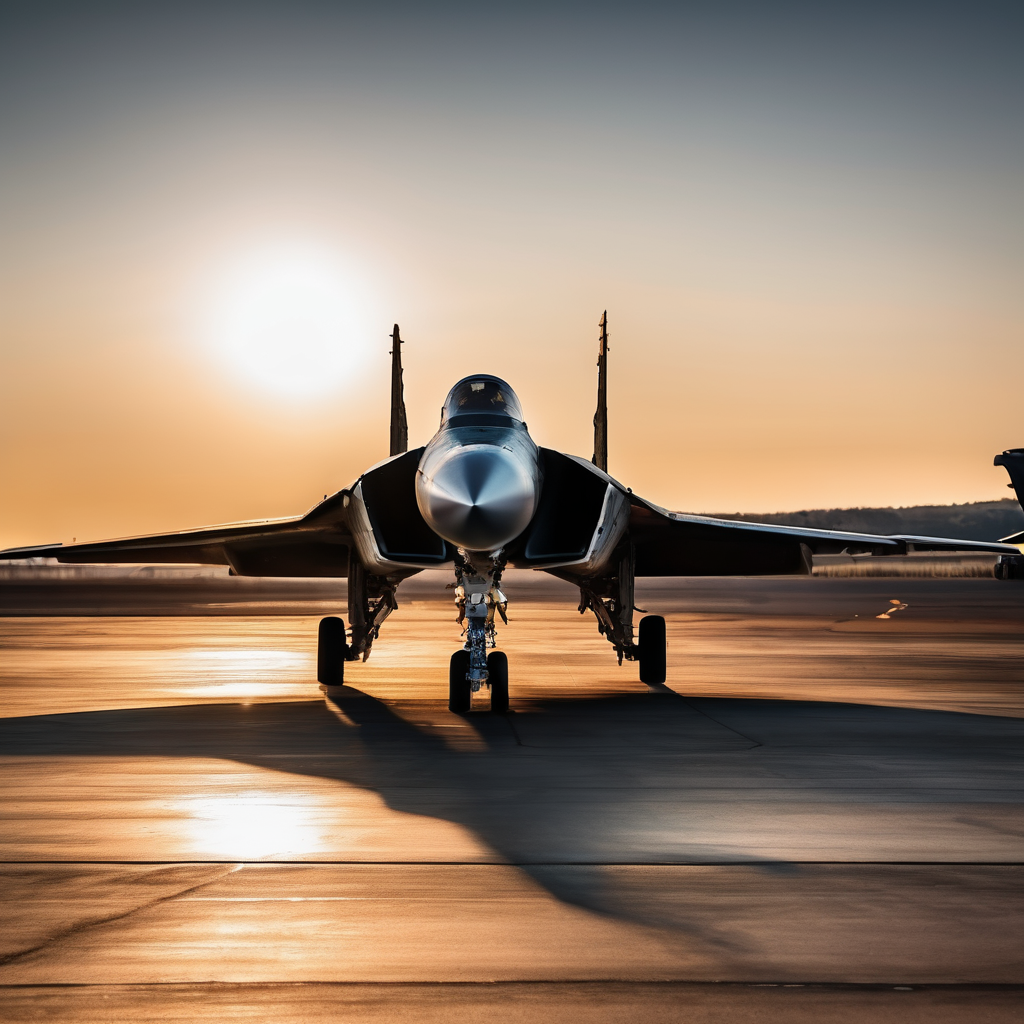
Israel recently released footage showcasing its strikes on two American-made fighter jets, the F-5 and F-4, deployed by Iran. These aircraft were sold to Iran by the United States prior to the 1979 Islamic Revolution and have since become part of an antiquated fleet. The Israeli strikes occurred at an airport in Tabriz on Sunday morning, where the jets were reportedly preparing for takeoff. The Israel Defense Forces (IDF) noted that these targeted strikes aim to diminish the operational capacity of the Iranian Air Force.
The operation coincided with the larger military campaign initiated by Israel and the US, known as Operation Epic Fury by Washington and Operation Roaring Lion by Israel. This escalation of conflict focuses on eliminating Iranian leadership and supporting potential regime change in Tehran. According to official statements, numerous Iranian officials, including Supreme Leader Ayatollah Ali Khamenei, have been targeted.
In response to these airstrikes, Iran has conducted multiple phases of missile and drone retaliations against both Israeli targets and US bases in the region, including locations in Qatar and the United Arab Emirates. The ongoing military operations reflect an increasingly intensified conflict in the region, with US and Israeli officials indicating that actions aimed at crippling Iran’s military capabilities will persist in the following weeks.
The F-4 Phantom II, once a dominant air superiority and bomber aircraft during the Vietnam War, exemplifies the legacy of US military technology sold to Iran before the geopolitical shift of 1979. Although Iran still operates a limited number of these vintage jets, their effectiveness has diminished significantly over the years due to sanctions and the lack of modernization options. Currently, estimates suggest that Iran has around 60 F-4s, fewer than 50 F-5s, and some F-14s in service, though many are reportedly non-operational.
Comparatively, Israel and the US maintain a fleet of modern aircraft, prominently featuring advanced models like the fifth-generation F-35 stealth fighter, which are designed for superior combat performance. Historically, Israel has consistently achieved air superiority over the region, leveraging advanced technology and strategic operations to mitigate the threats posed by Iranian military assets.
As the situation develops, the focus remains on the broader implications of these military engagements, highlighting the challenges faced by Iran’s aging air fleet in a high-stakes geopolitical landscape.