
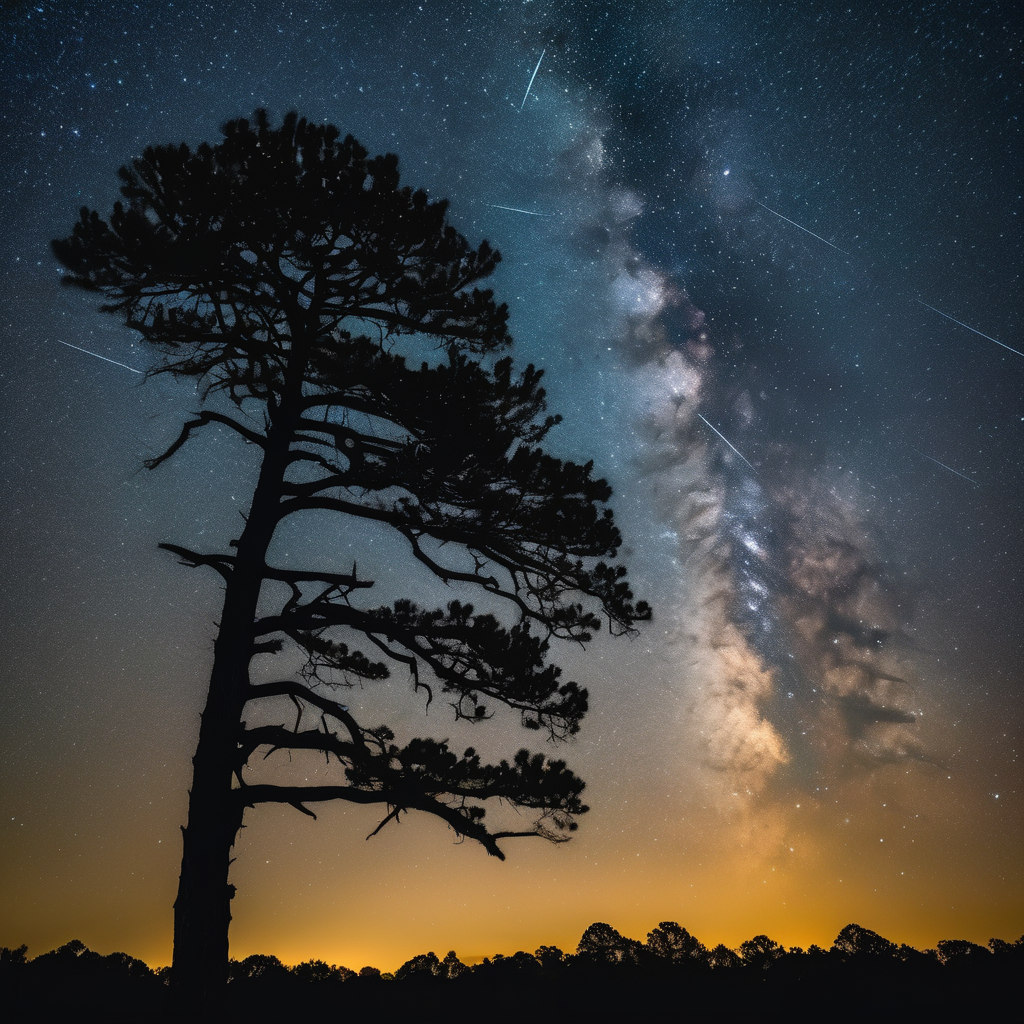
The annual Geminid meteor shower is expected to illuminate the skies over East Texas this weekend, reaching its peak during the night of December 13 into the early morning hours of December 14. Under optimal conditions, stargazers could witness up to 150 meteors per hour.
Beau Hartweg, director of the Tyler Junior College Earth and Space Science Center, expressed his excitement, stating, “This is one of the best and reliable meteor showers to see! The Geminids is one of my favorites of the year.”
During the peak viewing times of December 13 and 14, the best chances to catch a glimpse of the meteors will be after midnight. The Geminids meteors travel at an impressive speed of approximately 21 miles per second as they enter Earth’s atmosphere. These meteors originate from the constellation Gemini, near the star Castor, which is how they got their name.
The origin of the Geminid meteors is linked to the debris trail left by the asteroid 3200 Phaethon. Each December, as Earth moves through this cosmic dust and particles, these tiny remnants enter the atmosphere, burning up and creating the vibrant streaks visible as meteors.
For those eager to enjoy this celestial spectacle, there are several tips for optimal viewing:
– Allow your eyes to adjust to the darkness for about 45 minutes to an hour to enhance your night vision.
– Seek out locations that are free from city lights to maximize visibility.
– Dress warmly, as temperatures often drop significantly after midnight; layers, blankets, and a comfortable setup such as a lawn chair or sleeping bag are recommended.
– Finally, keep your gaze oriented upward, as meteors can appear in any part of the sky; staying relaxed will help you catch those fleeting flashes.
Hartweg advises that the best viewing experience will occur after midnight. Remember to bundle up, find a dark spot, and look skyward—this year’s Geminid meteor shower promises to be one of nature’s most dazzling exhibitions.