
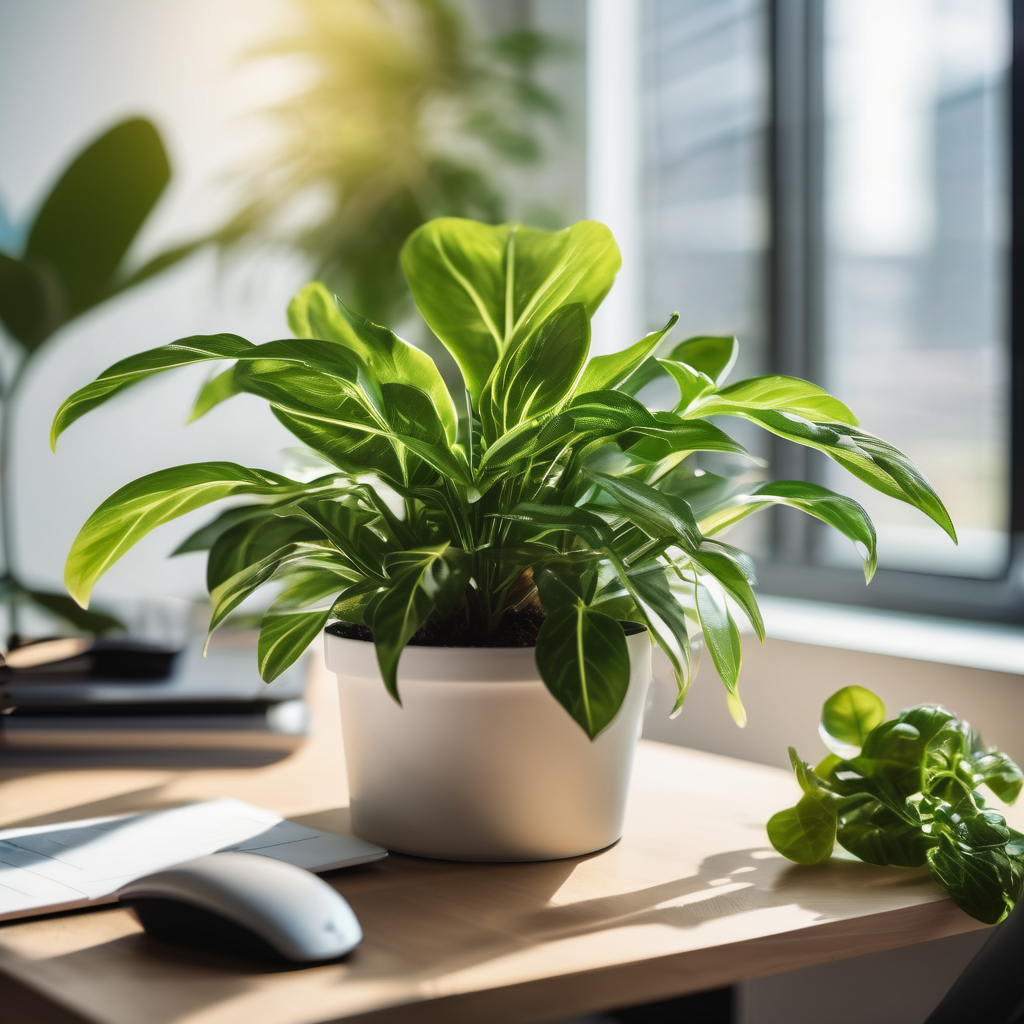
Recent research has brought to light the significant benefits of indoor plants in enhancing our living and working environments beyond mere aesthetic appeal. A comprehensive study conducted by the University of Surrey’s Global Centre for Clean Air Research reveals that indoor greenery, including houseplants and sophisticated systems like living walls, can help in improving indoor humidity and thermal comfort, leading to healthier buildings in the face of climate change.
This research, published in the journal Building and Environment, represents a collaboration of 35 experts from various countries, including the UK, USA, Australia, India, Brazil, and across Europe. The study examined 26 different indoor plant systems, finding that larger green installations can make indoor areas feel up to two degrees cooler, significantly enhancing comfort even as external temperatures remain constant.
The implications of these findings are pivotal, particularly for urban living in an era of increasing temperatures. The study highlights not only how indoor greenery can improve the comfort of our spaces but also how these plants can mitigate the presence of fine particulate matter and volatile organic compounds, although these benefits depend on factors such as plant density and lighting.
Lead author Professor Prashant Kumar emphasized the importance of understanding the role of indoor plants, stating that people spend approximately 90% of their lives indoors, yet we have limited knowledge about how these green systems can transform our environments. He stressed that the effective benefits of indoor greening do not occur by chance. Instead, they require appropriate systems and maintenance to be fully realized, suggesting the need to consider urban greening as vital infrastructure rather than mere decoration.
Co-author Dr. Tijana Blanusa from the Royal Horticultural Society remarked on the value of indoor planting in making the advantages of nature accessible in urban settings, where green spaces may be limited.
While the initial findings are promising, the researchers call for more extensive, long-term studies to develop concrete design guidelines for integrating greenery into buildings. These insights suggest that what we once regarded simply as decorative houseplants may play a crucial role in sustainable urban planning as climate challenges intensify.
As we move forward, the integration of plants into our indoor environments holds the promise of not only beautifying our spaces but also enhancing our health and comfort, propelling us towards a more resilient urban future.