
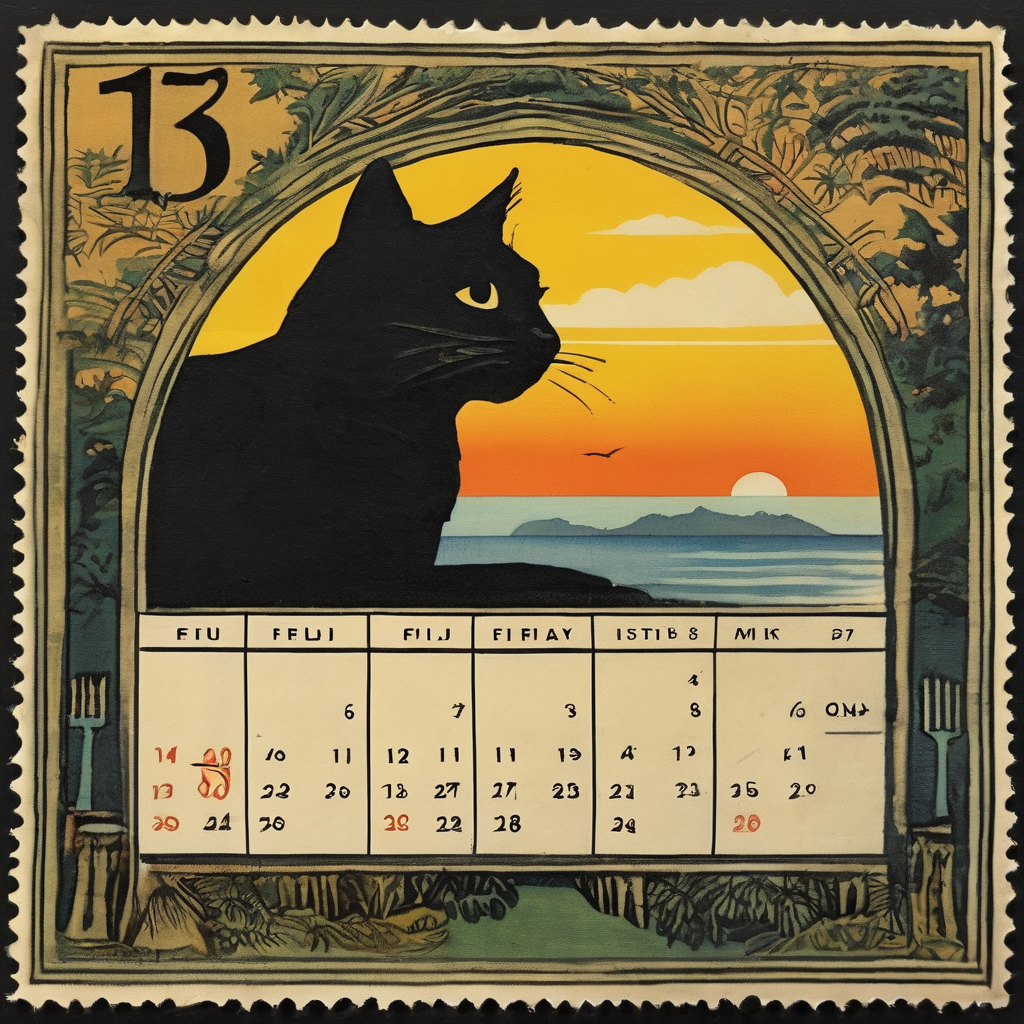
The first Friday the 13th of 2026 is set to bring a unique streak of superstition, as this fateful date will be marked three times throughout the year—in February, March, and November. For those who adhere to such beliefs, these days are often regarded as unlucky.
The origins of the superstition surrounding Friday the 13th can be traced back to significant historical and religious events. One widely acknowledged source links the number 13 to the Last Supper, where Jesus Christ dined with his twelve apostles before his crucifixion. This gathering prompts associations with Judas Iscariot, the disciple who betrayed Jesus, casting a shadow on the number 13 as imperfect when compared to the completeness of 12.
Another potent historical reference is the arrest of the Knights Templar on Friday, October 13, 1307, under the orders of King Philip IV of France. Alleged claims made by a disgraced former member accused the knights of heretical practices, including denying Christ and engaging in immoral activities during initiation rites. These accusations were largely seen as fabricated, providing Philip with a convenient rationale to dismantle the wealthy order and settle his debts incurred during conflicts with England.
Many members of the Knights Templar faced brutal punishments, including execution by burning. One of the most legendary figures of this tragedy, Grand Master Jacques de Molay, is said to have uttered a powerful curse as he faced the flames: “God knows who is wrong and has sinned. Soon a calamity will occur to those who have condemned us to death.” This curse, according to legend, imprinted a sense of perpetual bad luck associated with every Friday the 13th that followed.
Interestingly, the irrational fear of this date has a term—paraskevidekatriaphobia. However, beliefs about unlucky dates vary globally; in Spanish-speaking countries and Greece, it is Tuesday the 13th that instills fear, while Italians often consider Friday the 17th as portentous.
Beyond numerology, common omens of bad luck include a black cat crossing one’s path, breaking a mirror, walking under a ladder, or opening an umbrella indoors.
As society continues to engage with superstitions, these historical narratives serve to shape collective attitudes towards certain dates and events. The occurrence of multiple Fridays on the 13th in 2026 offers an opportunity for reflection on these beliefs and their origins, perhaps transforming a feared date into an occasion for curiosity and discussion.