
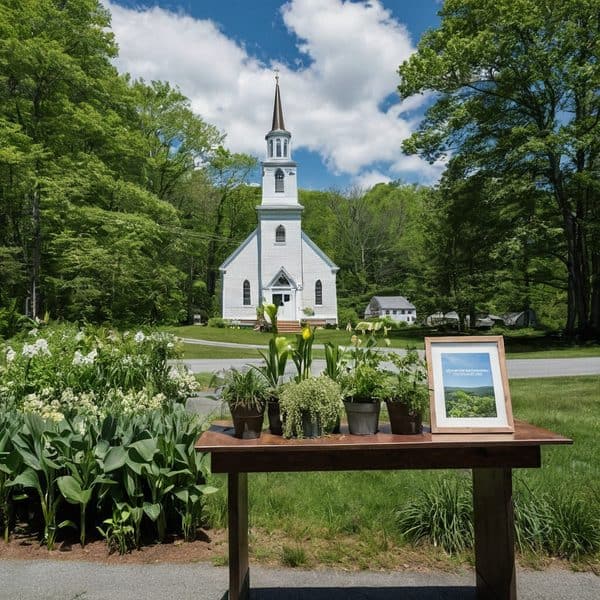
Earth Day 2026 falls on Wednesday, April 22, marking the 56th anniversary of the global environmental observance. In the Lakes Region of New Hampshire, the First Congressional Church, UCC, of Wolfeboro will mark the occasion with an Eco Sunday service and community fair the weekend before, offering residents a local opportunity to engage with conservation groups and learn about grassroots climate campaigns.
The church will host Reverend Kendra Ford at its 10 a.m. service on April 19, where she will present “350nh and No Coal No Gas,” a program that appears aimed at spotlighting local climate advocacy and the push to keep fossil fuels out of energy portfolios. After the service, the church will hold an EcoFair from 11:15 a.m. to 12:30 p.m., bringing together nonprofits that advocate for earth stewardship. The event, at 115 South Main Street, will include a light lunch for attendees.
Earth Day’s origins trace back to growing public awareness of environmental damage in the 1960s. Many observers point to Rachel Carson’s 1962 book Silent Spring — which highlighted the dangers of pesticides such as DDT and helped spark a broader environmental consciousness — as a foundational influence. The formal drive that became Earth Day took shape after Senator Gaylord Nelson of Wisconsin witnessed the devastation from a large oil spill off Santa Barbara, California, in 1969. Nelson organized a nationwide campus teach‑in on pollution for April 22, 1970, recruiting activist Denis Hayes and Congressman Pete McCloskey to help mount what became a mass mobilization.
In that first national Earth Day, some 20 million Americans — roughly 10 percent of the U.S. population at the time — participated in demonstrations targeting the environmental costs of more than a century of industrial development. The scale of that early mobilization helped spur landmark U.S. environmental laws and the creation of institutions such as the Environmental Protection Agency.
Despite those gains and growing concerns about climate change, participation in Earth Day has not maintained the single‑movement momentum of 1970. The observance now is often marked by localized efforts — conservation commissions, school projects, houses of worship and nonprofit fairs — rather than a single, unified national campaign. The Laker’s preview notes that local initiatives such as Wolfeboro’s Eco Sunday and EcoFair are emblematic of how communities continue to translate the broader goals of Earth Day into on‑the‑ground activities.
For residents interested in attending, the First Congressional Church’s Eco Sunday provides a clear, community‑level option for engaging with climate advocacy groups in person on April 19 ahead of Earth Day itself. The event’s program title signals a focus on organized regional campaigns such as 350nh and anti‑fossil‑fuel initiatives, reflecting the contemporary emphasis on local action within a global environmental movement that began more than half a century ago.