
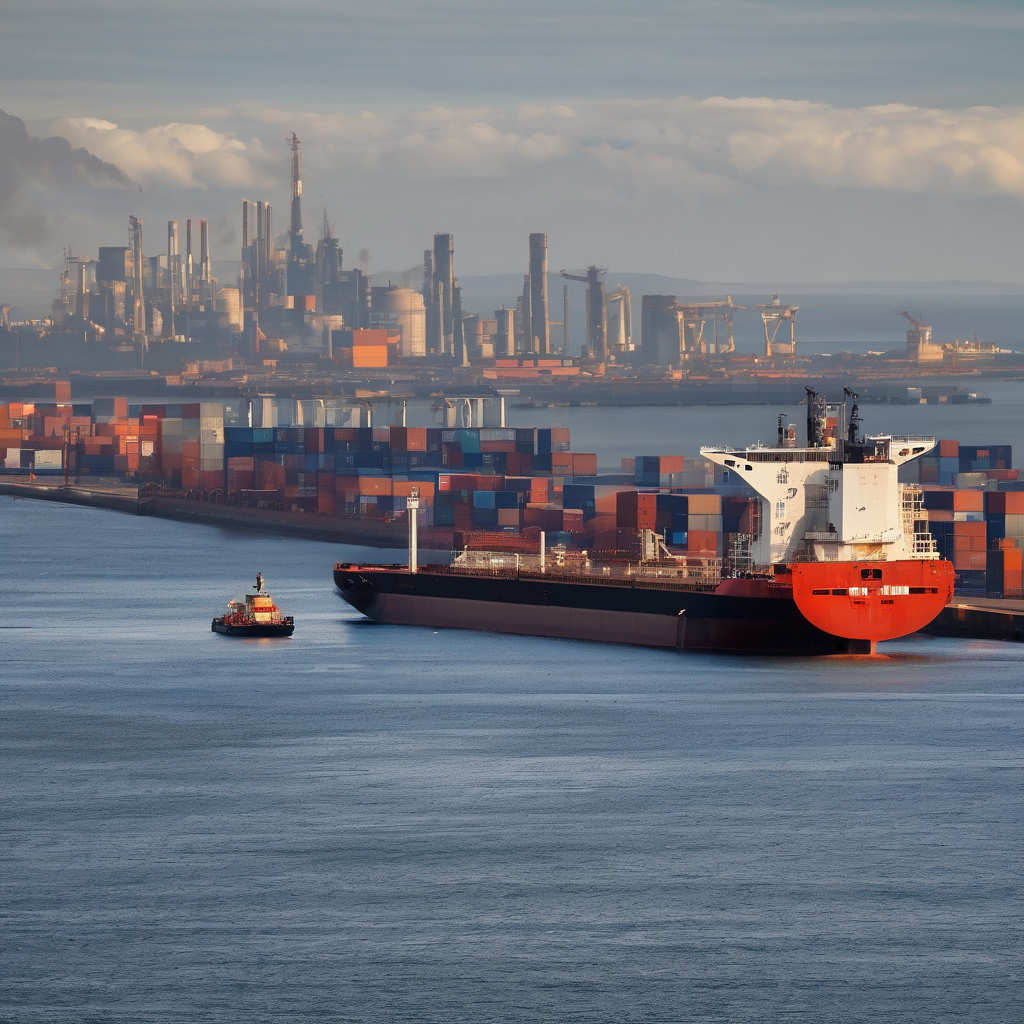
The United States has escalated its aggressive tactics against Venezuela under President Donald Trump, including the controversial hijacking of an oil tanker off the Venezuelan coast. This latest maneuver has drawn criticism and reflects years of sanctions and interventions that have severely impacted the Venezuelan populace.
In recent months, the U.S. has been accused of destroying small boats in the Caribbean, branding their passengers as drug traffickers. Trump made a statement claiming the seized tanker was the “largest one ever seized,” while his advice to reporters to “get a helicopter and follow the tanker” raised eyebrows, especially since he previously declared Venezuela’s airspace “closed in its entirety.”
Despite claims of combating drug trafficking, Trump’s remarks about keeping the oil fail to disguise the underlying motive many see as a pursuit of Venezuela’s vast energy reserves rather than an effort to protect the U.S. from potential drug threats. Observers have noted that Venezuela has little connection to the drugs entering the U.S., with the nation not producing fentanyl. Contrasts have been drawn to previous U.S. military interventions, such as in Iraq, where similar justifications were used to justify aggressive actions based on exaggerated threats.
The U.S. has effectively been in a state of war with Venezuela, a situation acknowledged by officials like U.S. Defense Secretary Pete Hegseth, who described wartime actions as shrouded in the “fog of war.” The assault on Venezuela predates recent incidents, starting with support for a failed coup against Hugo Chavez in 2002 and intensified sanctions beginning in 2005. According to the Center for Economic and Policy Research, these economic measures have resulted in tens of thousands of deaths, with estimates suggesting that sanctions have contributed to the dire humanitarian situation in the country.
While sanctions were portrayed as targeting Venezuela’s leadership, they have disproportionately harmed ordinary citizens. Reports indicate that severe food insecurity affects over 2.5 million Venezuelans, exacerbated by shortages of essential services and tangible health crises. Trump’s approach has included intensified measures designed to isolate and destabilize the country, leading to comments from former officials that highlight the painful ramifications on civilians.
Remarkably, at the same time he pursues Venezuelan authorities, Trump has pardoned Juan Orlando Hernandez, a former Honduran president convicted in the U.S. on drug charges—illustrating the contradictions within U.S. foreign policy. Recent actions, including Trump authorizing covert CIA operations inside Venezuela, further signal a departure from diplomatic engagement.
The impacts of these strategies resonate deeply within Venezuela, as revealed in personal stories of those compelled to flee the country. A young Venezuelan man, who faced near-drowning in his journey to the U.S. and subsequently dealt with immigration enforcement, expressed frustration at the ongoing turmoil. His sentiments emphasize the human cost of political machinations and the desperate reality faced by many Venezuelans.
As tensions mount and the prospect of conflict looms, the situation in Venezuela remains profoundly complex and deeply troubling, characterized by a tragic interplay of geopolitics and human suffering. The unfolding narrative serves as a stark reminder of the consequences of foreign intervention and the critical need for a reassessment of such strategies that perpetuate hardship rather than promote stability and welfare for the people affected.