
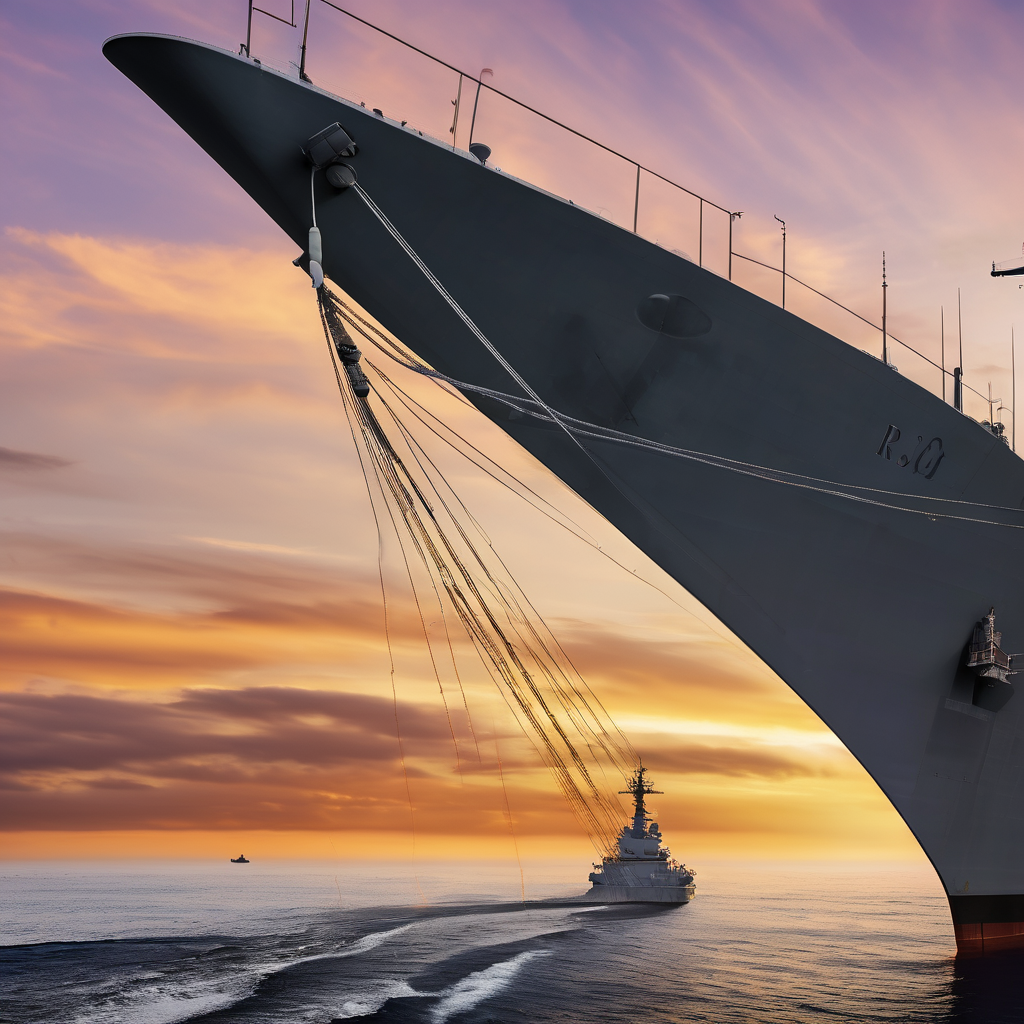
The USS Gerald R. Ford remains at sea, marking over eight months of deployment, as the U.S. Navy emphasizes the resilience and readiness of its crew. The aircraft carrier departed Naval Station Norfolk on June 24, 2025, initially anticipating a standard Mediterranean rotation. However, following operations in the Atlantic and U.S. Sixth Fleet areas, the situation evolved, leading to further deployments in response to rising tensions involving Iran.
Originally planned as a routine mission, the deployment took a turn as the Ford transitioned through the Strait of Gibraltar in November 2025, engaging in U.S. Southern Command missions in the Caribbean. This redeployment prompted a military mobilization from Venezuela as the carrier entered the region, illustrating the sensitive geopolitical landscape it operated within.
The initial carrier rotation model, managed by the Navy’s Optimized Fleet Response Plan, was disrupted by the necessity of adapting to ongoing global demands. Defense officials have indicated that the ship has already accrued 241 days at sea by mid-February 2026, pushing it toward a potential record of over 294 days, a significant milestone in the post-Vietnam era for U.S. aircraft carrier missions.
During its extended deployment, the USS Gerald R. Ford has served over 4 million meals and produced more than 400,000 gallons of potable water on a daily basis, underscoring the considerable logistical operations needed to support its personnel. The carrier operates as a self-sufficient floating airbase, capable of flight operations and supporting escort vessels, thus allowing it to remain deployed across multiple theaters without resupply.
The extended mission presents a rigorous test for the Ford, which is equipped with advanced technologies like the Electromagnetic Aircraft Launch System. This technology is designed to enhance sortie generation and reduce maintenance strain compared to older carrier models. Should the operations continue into late April or May, the USS Gerald R. Ford is poised to be among the longest deployed carriers in recent history.
While the Navy operates 11 nuclear-powered aircraft carriers, only a fraction are available for deployment at any one time. The continued extension of the Ford’s mission creates a ripple effect across the fleet, impacting training, maintenance schedules, and personnel readiness. The Navy has yet to disclose any recovery periods for the crew following this extended mission.
As the USS Gerald R. Ford returns to the Mediterranean, it stands ready to address ongoing regional tensions. Positioned in a strategic location, the carrier can respond swiftly to various flashpoints stretching from North Africa to the eastern Mediterranean. The presence of U.S. naval forces, equipped with advanced fighter aircraft and support vessels, offers a crucial deterrent and rapid response capability should conditions escalate.
This deployment reinforces the Navy’s commitment to global military readiness while showcasing the endurance and adaptability of its personnel in the face of evolving challenges.