
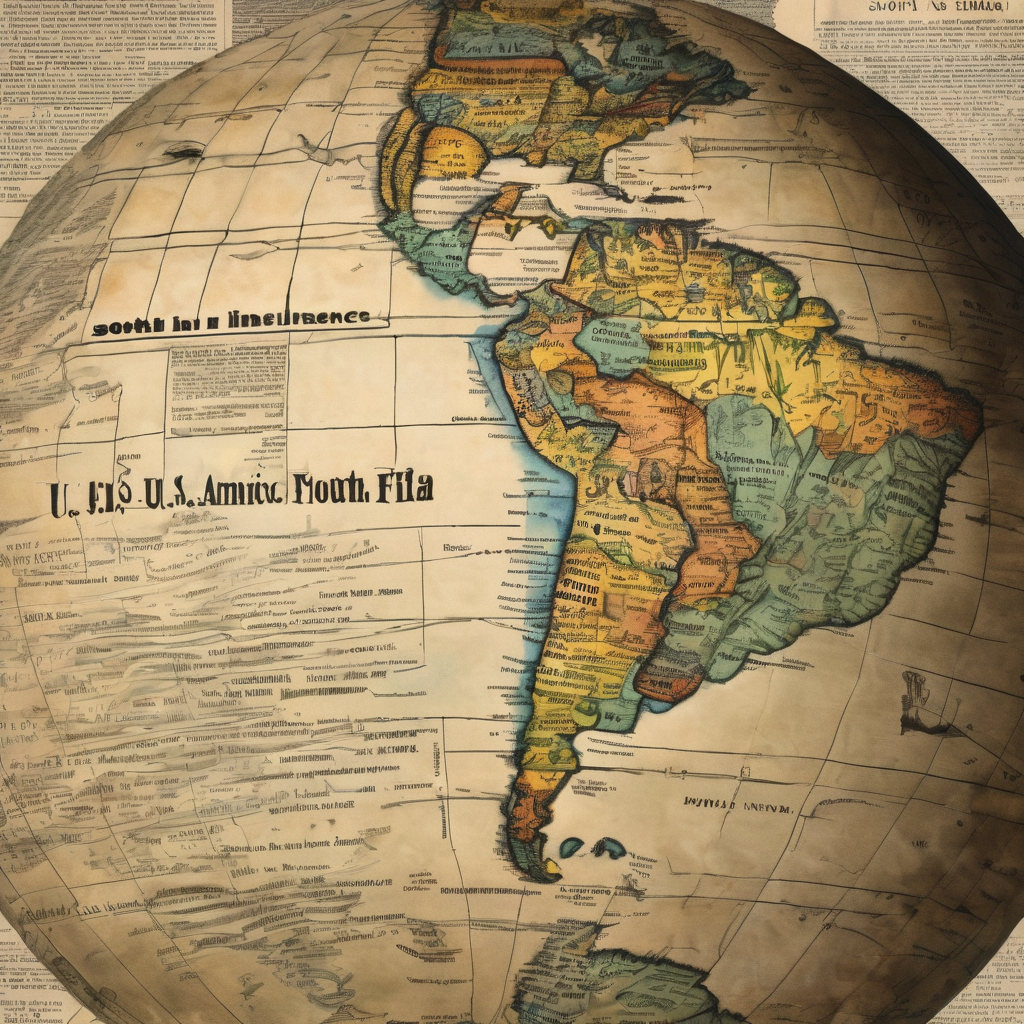
In a significant display of American assertiveness in Latin America, President Donald Trump declared the capture of Venezuelan leader Nicolás Maduro as a pivotal moment that would reaffirm U.S. dominance in the Western Hemisphere. This proclamation came just hours after Maduro was taken into custody by U.S. law enforcement, illustrating a culmination of escalating tensions between the U.S. and Caracas that have reignited memories of historical U.S. interventionism in the region.
Since taking office, Trump has pursued an aggressive foreign policy aimed at reshaping Latin American politics. This approach, which he has referred to as the “Donroe Doctrine,” echoes the principles of 19th-century President James Monroe who advocated for U.S. control over its regional sphere. Trump’s tactics have included military strikes against alleged drug traffickers in the Caribbean, a naval blockade of Venezuelan oil exports, and intervention in the political landscapes of countries like Honduras and Argentina.
The U.S.’s recent actions have created a clear divide across Latin America, as pro-Trump leaders like Argentine President Javier Milei embraced the event as a triumph of democracy over dictatorship, while leftist leaders expressed alarm regarding U.S. interventions. Chile’s President-elect José Antonio Kast welcomed the raid, referring to it as a positive development for the region, while Brazil’s Lula da Silva and Mexico’s Claudia Sheinbaum raised concerns about U.S. actions jeopardizing regional stability and violating international law.
Furthermore, Trump’s bold statements about managing Venezuela’s oil sector demonstrate a striking shift in U.S. policy, a direct challenge to the sovereignty of Latin American nations. Reactions have varied, with right-wing leaders across South America touting their alignment with Trump’s vision, while left-leaning figures have condemned the actions as a revival of historical U.S. interference that many deem dangerous.
As Trump continues to strengthen alliances with those in the region who share his ideological preferences, he has simultaneously issued stark warnings to nations that oppose his policies, signaling a future where U.S. interaction in Latin America may become increasingly simplistic—favoring friend over foe.
In this turbulent environment, the political landscape of Latin America appears to be shifting, as the rise of populist leaders aligns closely with Trump’s objectives. Whether these transformations will lead to sustained political stability or further conflict remains uncertain. The ramifications of the U.S.’s renewed assertiveness are yet to unfold fully as both supporters and critics of the actions contemplate their potential impacts on regional politics and sovereignty.