
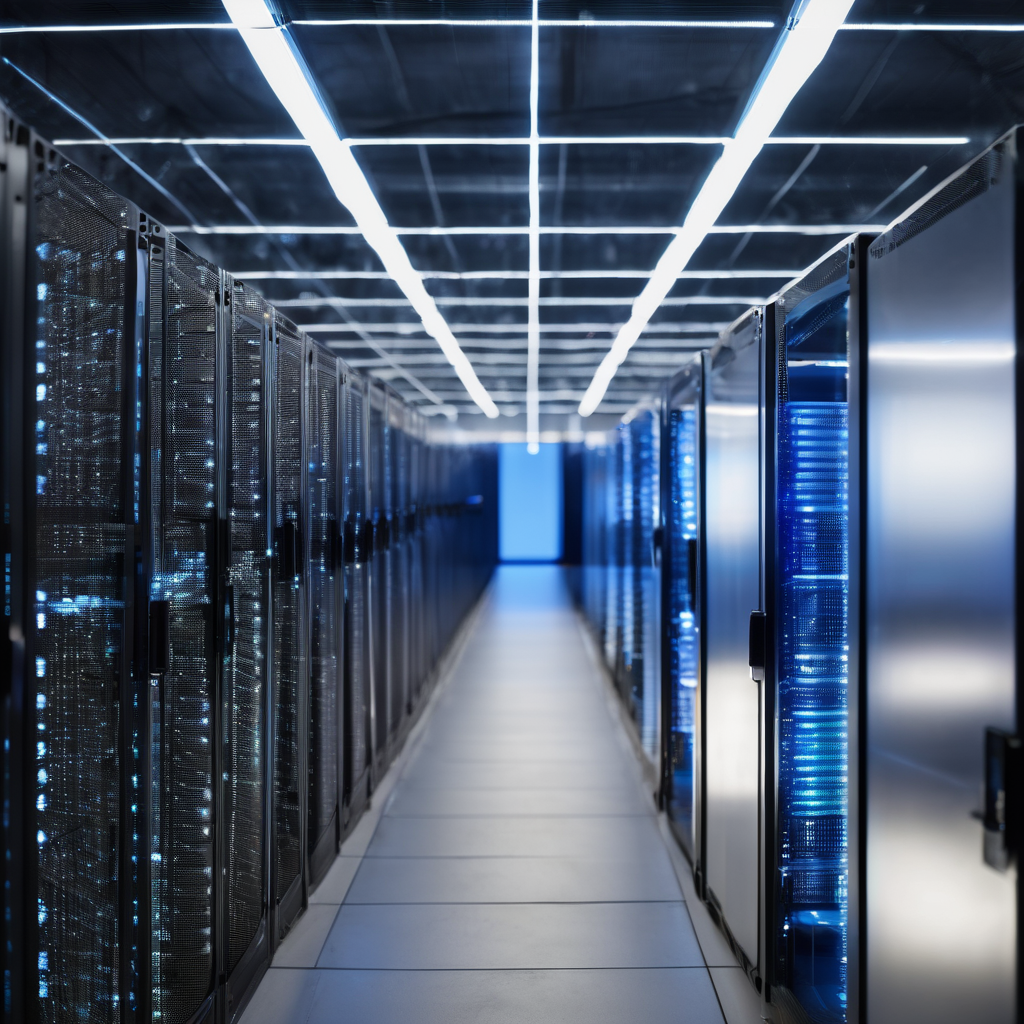
Donald Trump has expressed growing concerns about the impact of datacenters on electricity costs in the United States, particularly as Americans face soaring energy prices. His worries could jeopardize his party’s prospects in the upcoming November elections.
In recent weeks, Trump highlighted his apprehensions through two significant initiatives. On January 13, he and Microsoft’s president announced that the tech giant would assume full financial responsibility for its datacenters, agreeing to pay full property taxes and forgoing any tax breaks or electricity rate discounts in areas where it operates. “We are the ‘HOTTEST’ Country in the World, and Number One in AI. Data Centers are key to that boom, and keeping Americans FREE and SECURE but, the big Technology Companies who build them must ‘pay their own way,’” Trump stated on his Truth Social platform.
Additionally, on January 16, Trump and governors from the northeastern US instructed the nation’s largest power grid operator to conduct an emergency reliability auction by September. This auction could require tech companies to invest in new power plants, mandating them to bid on the future reliability of the electricity they intend to use from the grid. “I never want Americans to pay higher Electricity bills because of Data Centers,” Trump reiterated.
Following Microsoft, OpenAI announced on January 20 that it, too, would take responsibility for its energy consumption, aiming to avoid raising electricity prices for consumers. The company is joining forces with the Trump administration through the Stargate collaboration to invest $500 billion in AI infrastructure.
Trump’s promises to reduce Americans’ electricity bills by half face significant challenges. His administration has faced criticism for blocking renewable energy projects, which he has labeled as “scams,” while promoting increased drilling for oil and gas. Efforts to reverse the closure of older coal plants and restart exports of liquefied natural gas could inadvertently lead to higher costs for consumers. The issue of rising power prices is particularly pressing as it intertwines with the broader cost of living crisis, which is affecting Trump’s party as elections approach.
The narrative doesn’t end in the US. In Europe, governments are also grappling with the energy demands of datacenters. In Germany, where energy prices are a significant barrier to growth, Chancellor Friedrich Merz has taken measures to subsidize industrial electricity use until 2028. Meanwhile, datacenters are required to source half of their energy from renewable sources—a stipulation that raises concerns about their ability to meet these standards.
In the UK, where energy costs are among the highest globally, the Department for Science, Innovation and Technology is seeking to encourage investment in datacenters through proposed discounts in “AI growth zones.” Conversely, Ireland has imposed a ban on new datacenters connecting to Dublin’s grid due to the excessive strain on its electricity supply, highlighting the urgent need for balance between technological expansion and energy sustainability.
Looking beyond the US and Europe, the datacenter boom is anticipated to continue in the Gulf states and India, where energy costs are lower, but challenges, such as water scarcity, cloud this growth. The potential expansion of data facilities underscores the need for innovative solutions to balance energy consumption with environmental and societal considerations. Despite the hurdles, industry leaders remain optimistic as investments continue to flow into this essential sector.