
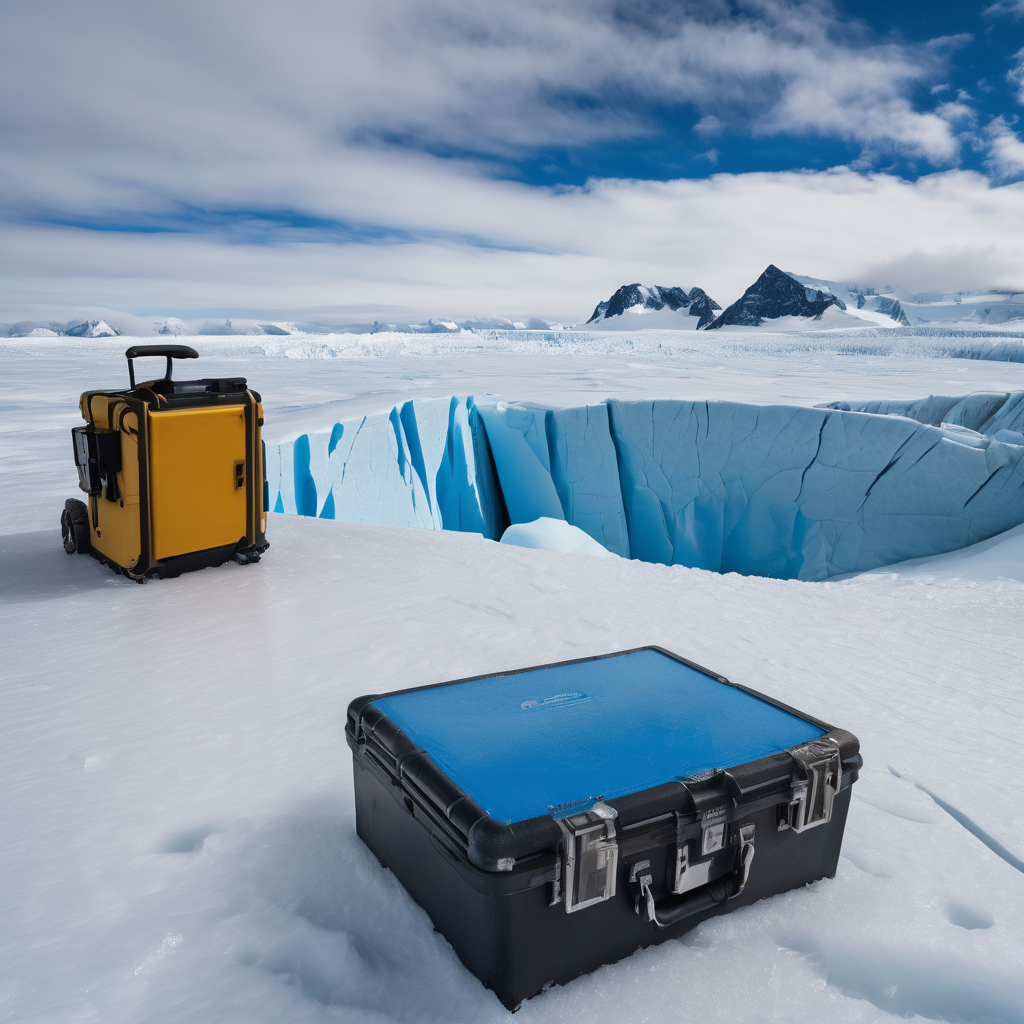
Thwaites Glacier, often referred to as “The Doomsday Glacier,” continues to capture the attention of polar scientists, due to its formidable size and volatile nature. Stretching an impressive 80 miles wide, this glacier is distinguished not just as the widest in the world, but also as one of the most unstable, leading to increasing alarm about its potential contributions to global sea level rise.
Recent research indicates that the situation at Thwaites is deteriorating at an alarming rate. Among the troubling new findings are the effects of undersea storms contributing to melting from below, the occurrence of hundreds of ice earthquakes fracturing the glacier, and the significant loss of stability in the Thwaites Eastern Ice Shelf. These factors paint a concerning picture of a glacier that, despite ongoing studies, remains unpredictable and deeply concerning for coastal megacities around the world.
The International Thwaites Glacier Collaboration (ITGC), a major research initiative comprising 100 scientists, is set to wind down by the end of 2026 due to funding cuts proposed in the Trump administration’s FY2026 budget, which slashes support for polar scientific research. This decision arises from a broader trend of diminishing resources allocated to climate research, which could severely hinder the ability to monitor and understand the complexities of ice dynamics in Antarctica.
Though ITGC’s researchers have suggested that while Thwaites will continue to retreat, it is unlikely to completely collapse within this century, contrasting predictions from other scientific bodies present a grimmer outlook. A conference held in August 2024 by the Scientific Committee on Antarctic Research, with 1,500 participants, warned that Antarctica’s glacial melt is advancing faster than previously recorded. Notably, glaciologist Gino Casassa dramatically predicted that sea levels could rise as much as 13 feet by 2100, highlighting stark discrepancies in projections within the scientific community.
Further adding to these alarm bells, recent studies have revealed new data suggesting that the glacier’s conditions are worsening rapidly due to complex factors including meltdowns driven by underwater storms, a phenomenon that has only recently been understood in-depth. Additionally, observations of glacial earthquakes at Thwaites indicate significant instability, as these seismic events often result from icebergs capsize—impacting the glacier and potentially accelerating its deterioration.
Despite the overwhelming evidence pointing to significant risks, there remains a paradoxical disconnect between scientific findings and political action. The potential catastrophic impacts of climate inaction loom large, particularly as many current policymakers may remain insulated from these timelines of environmental change, prioritizing short-term economic gains over long-term ecological stability.
The situation surrounding Thwaites Glacier is a sobering reminder of the fragility of our climate systems. With scientists universally agreeing on the high-risk nature of the glacier and the uncertain timing of its impact on sea levels, the implications for global populations could be staggering. The time to heed these warnings and commit to effective climate interventions is now, as the consequences of inaction could be felt for generations to come.