
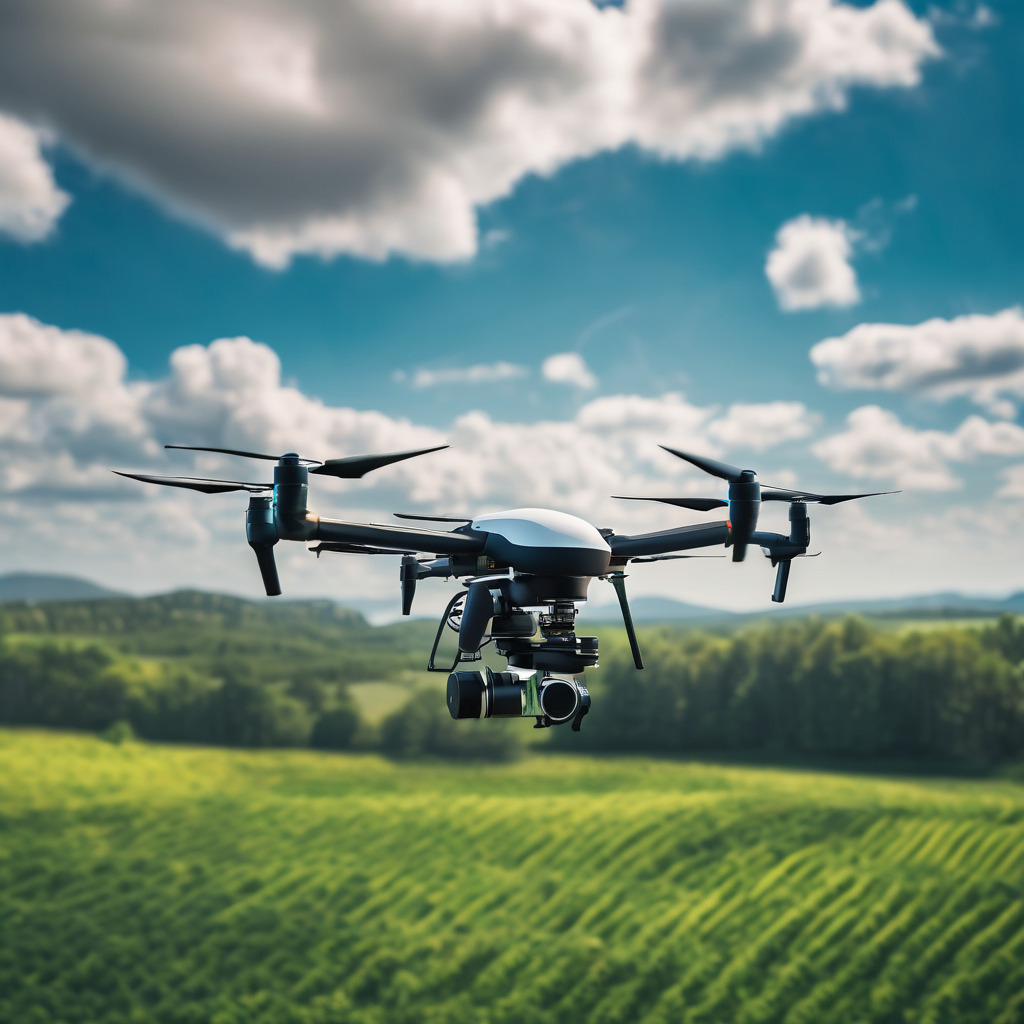
The National Weather Service (NWS) is set to enhance its forecasting capabilities through a groundbreaking partnership announced this week with Meteomatics, a Swiss weather intelligence and technology company. With offices around the globe, including New York City, Meteomatics will support NOAA’s National Mesonet Program (NMP) by deploying their innovative Meteodrones to collect critical lower-atmospheric data, an area where the current national observing system is notably sparse.
The Meteodrones are designed to generate comprehensive vertical profiles of temperature, humidity, and wind within the lower atmosphere. This frequent data collection promises to provide meteorologists with clearer signals, allowing for improved predictions regarding the development of thunderstorms, the lifting of fog, the precipitation types associated with winter storms, and the movement of smoke and air quality changes. With the integration of this data, NWS aims to issue more timely warnings and minimize disruptions for vital sectors such as aviation, highway management, utilities, agriculture, and emergency management.
Martin Fengler, CEO of Meteomatics, emphasized the importance of public-private partnerships like the NMP, stating that they are essential for enhancing national weather observation capabilities, especially given the increasing severity of weather events. He noted that Meteodrones were specifically designed to provide access to previously unattainable data to better prepare nations for severe weather phenomena.
Ashish Raval, President and CEO of Synoptic Data, highlighted their mission to broaden access to observational data, ensuring that both NOAA and NWS receive high-quality, low-latency data crucial for their life-saving and property protection efforts.
The partnership will commence with a pilot project through April 2026, during which Meteomatics will operate from a remotely controlled Meteobase in Oklahoma. This setup will enable pilots to efficiently manage operations across multiple locations from a single remote center, ultimately paving the way for advanced weather forecasting.
This collaboration not only signifies a stride towards more accurate weather predictions but also represents a hopeful advance in the field of meteorology, promising to enhance safety and preparedness in the face of increasingly unpredictable weather patterns.