
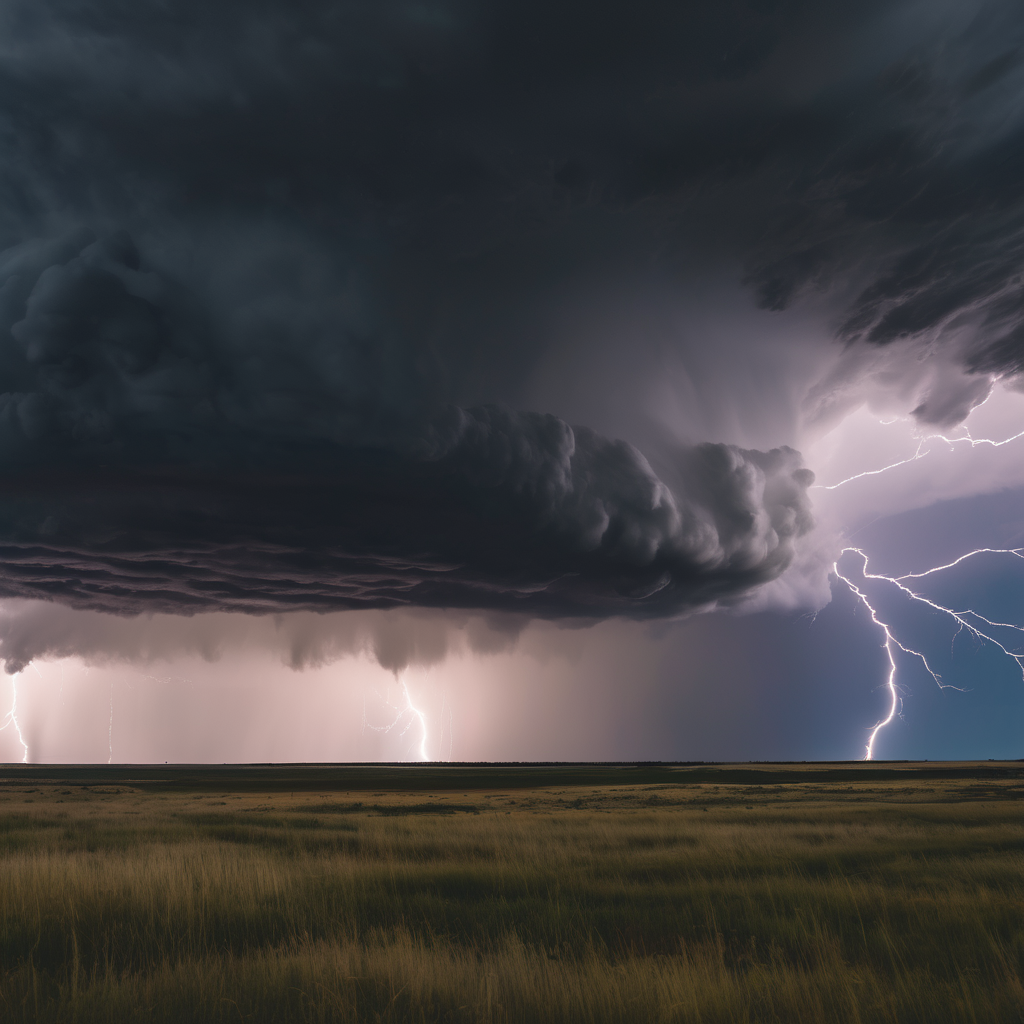
Severe weather made its presence felt across Oklahoma on Thursday night, as thunderstorms intensified, setting the stage for potential tornadoes across several states in the heartland. Powerful storms were developing by Friday afternoon, stretching from North Texas to Michigan, where a tornado warning was issued southwest of Kalamazoo, despite no immediate sightings of tornado activity.
As the storms moved through North Texas, a tornado watch was announced for the region, remaining in effect through Friday evening. Eyewitness footage captured a dramatic scene near Fairview, Oklahoma, where a first responder approached a storm revealing flashes of lightning highlighting a large funnel cloud.
Tragically, Thursday’s storms were linked to a fatal incident involving a 47-year-old woman and her 13-year-old daughter from Fairview, whose vehicle was discovered at the intersection of a highway and county road late Thursday night. Authorities suggested the crash was related to the tornado activity. Oklahoma Governor Kevin Stitt expressed his condolences for the family in his statement, highlighting the impact of the severe weather.
The National Weather Service in Norman, Oklahoma, announced the deployment of a damage survey crew to verify the occurrence of tornadoes from the previous night’s storms. Meteorologist Ryan Bunker noted that investigations were underway regarding the storms’ intensity and classification.
Forecasts indicated that Friday could see even more powerful storms, with over 7 million people in the highest risk category for severe weather. This includes major urban centers like Kansas City, Tulsa, and Omaha. An estimated 25 million others are in a slightly lower risk zone encompassing Dallas and Oklahoma City among others.
According to the National Weather Service, the greatest chance for strong tornadoes and large hail will focus on eastern Oklahoma, Kansas, Nebraska, western Arkansas, Missouri, and southern Iowa. Meteorologists attribute this severe pattern to a significant clash between warm, moist air from the Gulf Coast and cooler air from Canada.
As these storms develop, officials stress the importance of preparedness as the spring storm season commences. Basic safety measures, such as having a weather radio and a designated shelter plan, are recommended for residents in impacted areas.
In contrast, parts of the Northeast faced winter weather advisories as a mix of rain, snow, and slush led to a complicated morning commute for many, especially in Pennsylvania and Maine. Schools in various states had to adjust their schedules, either canceling or delaying classes due to the treacherous conditions.
Looking ahead, parts of the southern U.S. are expected to experience a dramatic shift in temperatures by the weekend, potentially reaching 20-30 degrees above average, with temperatures in the 80s reaching as far north as the Ohio Valley and Mid-Atlantic, hinting at an unusual warmth for this time of year.
Despite the challenges posed by the severe weather, there remains a sense of hope and resilience among communities as they navigate through this robust spring storm season. Weather authorities continue to monitor and provide updates to ensure public safety in light of the rapidly changing weather patterns.