
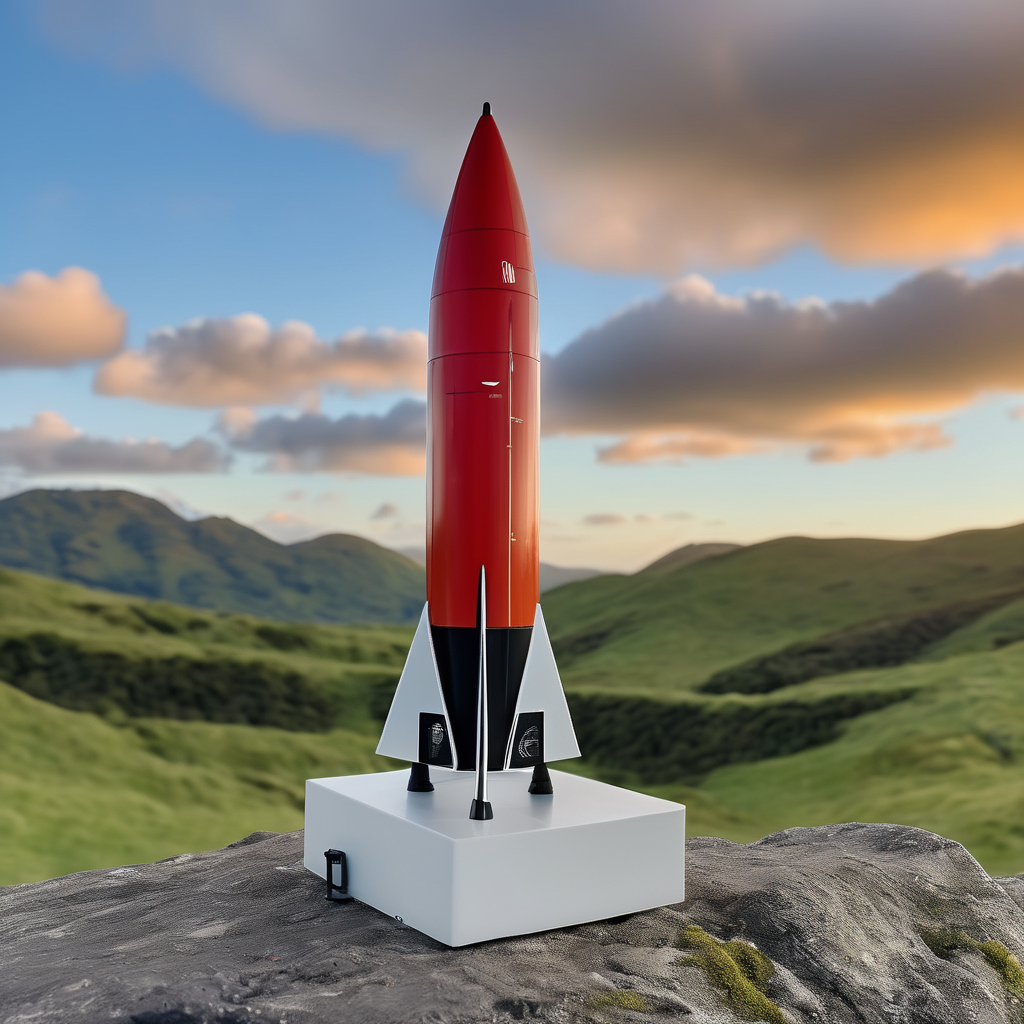
Rocket Lab is set to make significant strides in the space launch sector as it prepares for the inaugural flight of its latest rocket, the partially reusable Neutron. The company has successfully completed final qualification tests for the rocket’s distinctive fairing, which is designed to revolutionize vehicle reusability. The Neutron is scheduled for its first launch early next year.
The fairing, which has been likened to the “Hungry Hippo” game, operates on a clamshell mechanism, opening and closing to release the rocket’s second stage and payload. This innovative approach distinguishes Neutron from other rockets, such as SpaceX’s Falcon 9, which has a proven reusability record but employs traditional fairing designs that separate and return to Earth independently.
In a game-changing move, Neutron’s first stage will eject the payload while using its fairing to reconfigure back into a single unit, facilitating a complete recovery process for future flights. The fairing has now been transported to the Mid-Atlantic Regional Spaceport in Virginia for integration with the rocket ahead of its launch.
Shaun D’Mello, Vice President for Neutron at Rocket Lab, emphasized the pioneering nature of the rocket during a statement released on December 8. He noted that “a rocket like Neutron has never been built before,” highlighting Rocket Lab’s commitment to accelerating innovation and competition in the aerospace industry.
Neutron is being touted as “the world’s largest carbon composite launch vehicle,” a feat that reflects significant engineering advances. Prior to being shipped, the fairing underwent rigorous testing, enduring pressures of up to 275,000 pounds, along with rapid mechanism cycling to ensure the operational efficiency of the opening and closing processes.
Once fully assembled, Rocket Lab plans to conduct several prelaunch tests, including a static hotfire of the nine Archimedes engines that will power the reusable rocket. Standing at 141 feet (43 meters) tall with a diameter of 23 feet (7 meters), the Neutron is anticipated to carry payloads of up to 28,700 pounds (13,000 kilograms) into low Earth orbit.
As Rocket Lab continues to push boundaries in the space launch market, the upcoming debut of Neutron showcases the potential for innovation that could lead to more sustainable and efficient space exploration practices.