
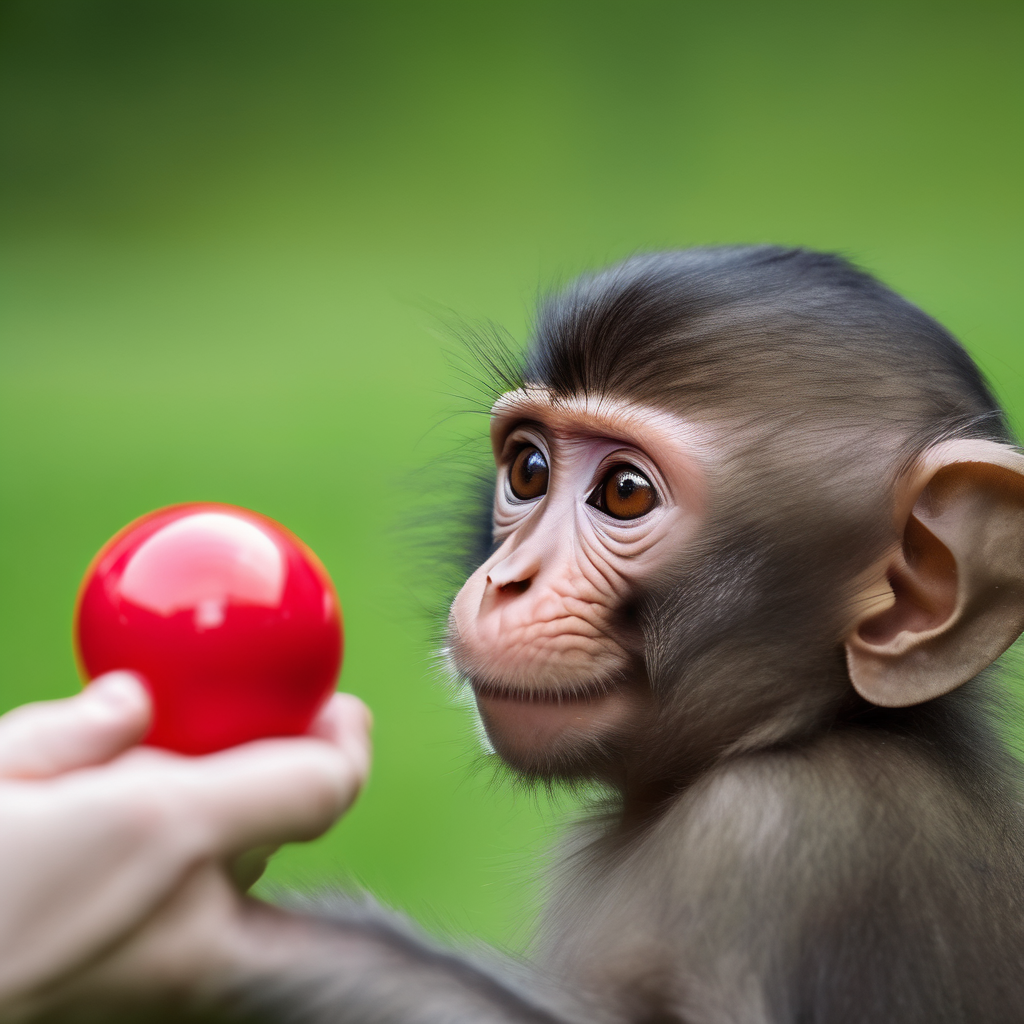
A baby monkey named Punch, born last July at Ichikawa Zoo in Japan, has recently captured the hearts of people worldwide after a series of distressing yet touching videos depicting his struggles went viral. The young Japanese macaque, abandoned by his mother shortly after birth, has been seen seeking comfort from a stuffed orangutan toy provided by zookeepers.
The videos reveal a poignant narrative where Punch faces bullying from older macaques, but also moments where he finds some solace in the companionship of his toy. Initially filmed wandering alone and being pushed away by other monkeys, Punch has shown extraordinary resilience, clutching the stuffed orangutan tightly in times of distress. Although there were brief moments of warmth—like when another monkey groomed him—new videos showcased the harsh reality of his situation, capturing the moment when a larger monkey aggressively targeted him before Punch found refuge behind a rock.
These events have raised questions about the behavior of monkeys in relation to abandonment. According to Alison Behie, a primatology expert from the Australian National University, such behavior can emerge from several factors including the mother’s inexperience and environmental stressors—conditions Punch’s mother likely faced, including being a first-time mom born during a heatwave.
Zookeepers, committed to Punch’s well-being, initially attempted various methods to provide him with a source of comfort before introducing him to the stuffed toy, which was chosen because it resembled a monkey and could potentially help him integrate back into the troop later. Kosuke Shikano, one of the zookeepers, noted that the absence of maternal contact might hinder Punch’s social development as Japanese macaques follow strict matrilineal hierarchies.
While Punch experiences challenges in his social interactions, Behie emphasized that the actions of the other monkeys are commonplace within macaque social structures. However, she cautioned that Punch’s lack of maternal guidance might affect his ability to learn appropriate societal responses as he matures.
The situation has drawn widespread attention, resulting in increased visitation at the zoo. In response, officials have introduced stricter viewing regulations to ensure both Punch’s safety and well-being, highlighting a growing global concern for zoo animal welfare.
Conservation psychologist Carla Litchfield pointed out the significance of Punch’s story, illustrating broader themes such as habitat loss, the impact of climate change, and the rising importance of social media in raising awareness about wildlife issues. She voiced hope that the online fascination surrounding Punch would not inadvertently fuel the illegal trade of infant monkeys as exotic pets.
As a unique character within the zoo community, Punch reflects both the vulnerabilities of young animals and their innate strength. His plight has created an emotional connection with audiences, reminding us of the importance of keeping wildlife in their natural habitats to promote their overall health and social development. In a world where stories like Punch’s resonate profoundly, it’s essential to advocate for the welfare of all animals and support their right to thrive within their own species.