
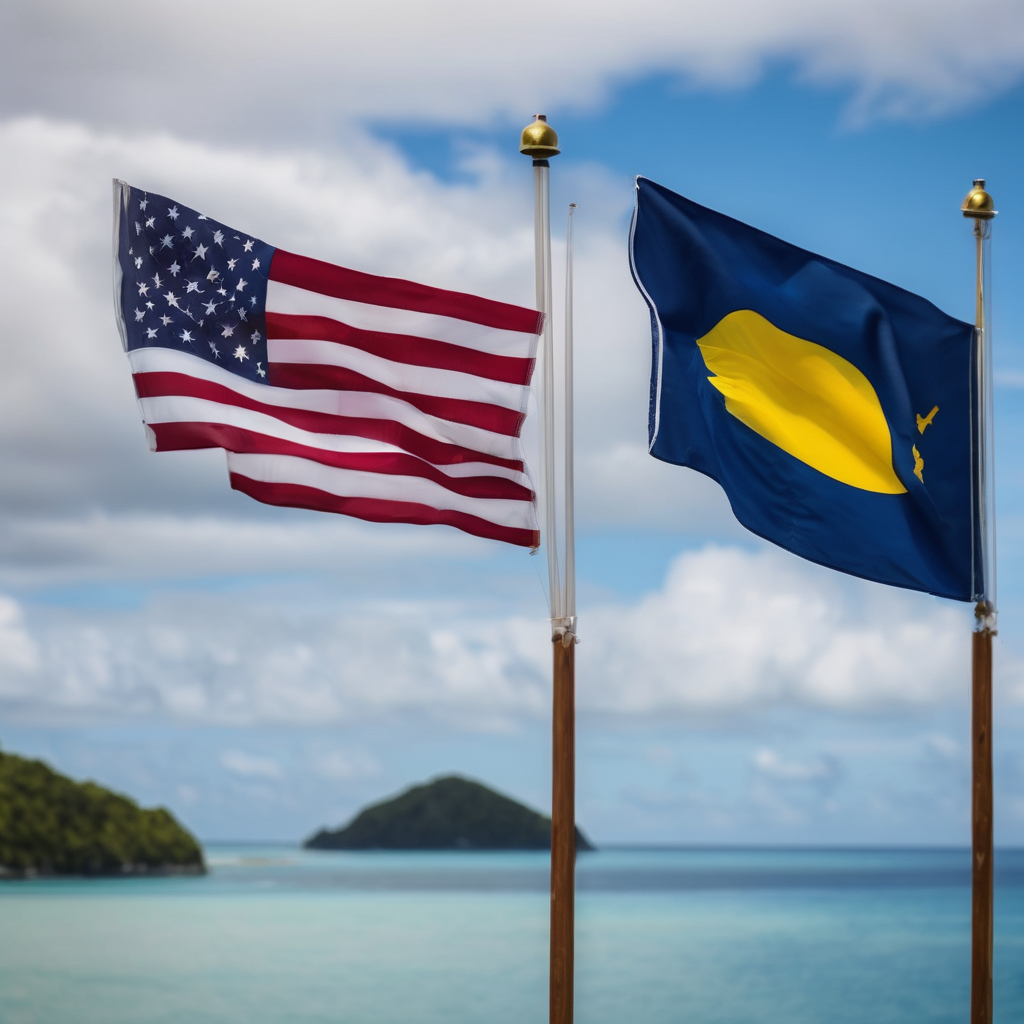
Palau has agreed to accept up to 75 migrants from the United States as part of a newly signed memorandum of understanding aimed at addressing local labor shortages. This agreement follows discussions between U.S. Deputy Secretary of State Christopher Landau and Palau President Surangel Whipps. Their communications highlight a significant shift in the relationship between Washington and the tiny Pacific Island nation, especially after earlier rejections of similar proposals by Palau’s lawmakers.
The memorandum specifies that the migrants will include third-country nationals who have never been charged with a crime. This arrangement is designed to provide labor for needed occupations, while also facilitating a financial support package from the U.S. government amounting to $7.5 million. This funding is intended to enhance public services in Palau, alongside additional assistance of $2 million for security advisors and $6 million allocated for reforms related to the nation’s civil service pension plan.
Despite the cooperation, there had been previous resistance within Palau regarding U.S. immigration policies, particularly in light of a controversial push to transfer asylum seekers to countries where they have no ties. In July, Palau’s Congress publicly expressed its inability to accept the U.S. proposal for such transfers.
Palau, with a modest population of 17,000, maintains a compact of free association with the United States, ensuring economic benefits in exchange for allowing U.S. military access. Notably, Palau is not a signatory to the 1951 UN Refugee Convention, complicating its position on refugee and asylum policies.
Recent developments in U.S. immigration law also cast uncertainty over these matters, as a federal judge has indicated a willingness to rule that deportations to third countries without adequate notice or the chance to contest the deportation could be unlawful. This could affect future policies and agreements regarding the treatment of migrants and asylum seekers.
Overall, the agreement reflects a pragmatic step forward for Palau in addressing its labor needs while enhancing cooperation with the United States, fostering hope for improved economic conditions and reinforced ties between the two nations.