
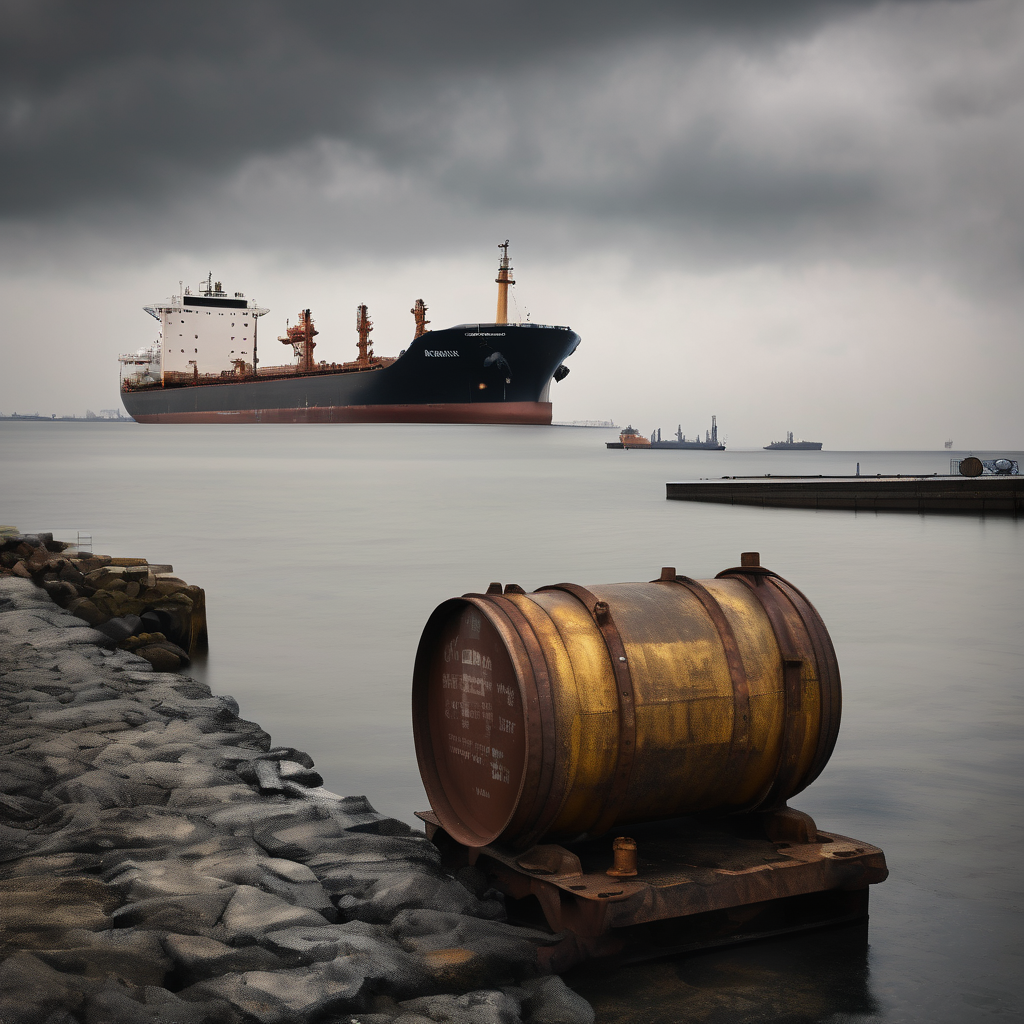
The United States has initiated an operation to take control of an oil tanker linked to Venezuelan oil amid rising tensions in the North Atlantic. The tanker, formerly known as the Bella 1 and now identified as the Marinera, has reportedly changed its flag from Guyanese to Russian. U.S. officials have underscored that the ship is being pursued for allegedly breaching American sanctions by shipping Iranian oil, despite its reported status as empty at present.
The situation escalated when Russia dispatched a submarine and additional naval vessels to escort the Marinera, which is currently navigating between Iceland and the British Isles. The U.S. Coast Guard previously attempted to board the tanker in the Caribbean when it was believed to be en route to Venezuela. Following a warrant for its seizure due to sanction violations, the vessel altered its course dramatically.
In recent developments, reports indicate that approximately 10 U.S. military transport aircraft and helicopters have arrived in the region, amplifying concerns for all parties involved. The Russian foreign ministry has responded to the escalating scrutiny, declaring that their ship is operating in international waters and complying with maritime law, while expressing apprehension over what it perceives as disproportionate attention from U.S. and NATO military forces.
This incident follows a declaration from former President Donald Trump, who announced a blockade of sanctioned oil tankers associated with Venezuela, which the Venezuelan government has described as a form of theft. U.S. officials have indicated that the preferred course of action is to seize the Marinera rather than sink it. Meanwhile, footage shared by Russia Today appears to show a U.S. Coast Guard vessel closely monitoring the tanker, which raises significant questions about international maritime operations and geopolitical dynamics in the region.
As this complex situation unfolds, it highlights the tensions surrounding global oil supply chains and international law, demonstrating how quickly maritime operations can become focal points of broader geopolitical conflicts.