
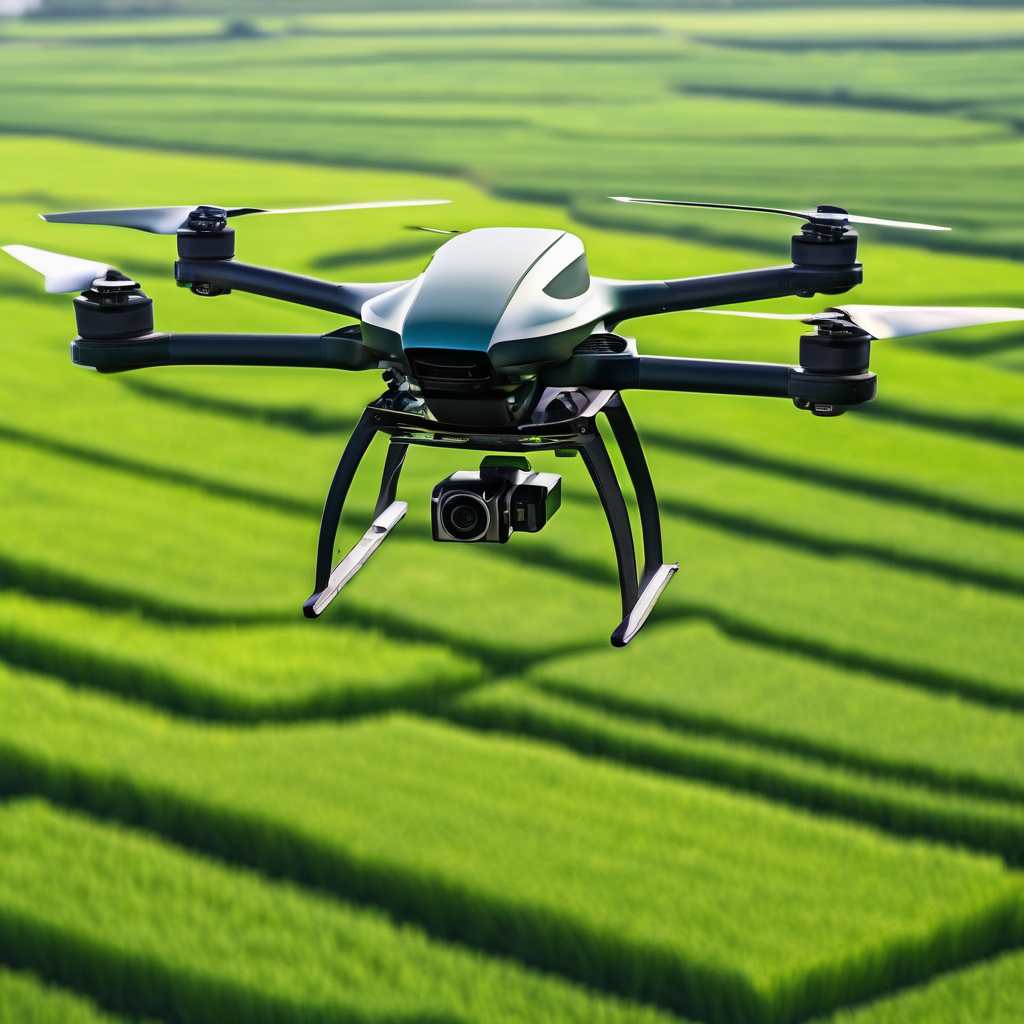
The Ministry of Agriculture and Waterways has launched a testing phase for agricultural drone technology to improve efficiency and productivity in large-scale rice farming. These trials are being conducted at the Koronivia Research Station, where drones are employed for pesticide application on rice fields designated for seed production.
This initiative marks a significant transformation in farming methods, as the Ministry emphasizes that drone technology can drastically lower labor costs, streamline operations, and reduce farmers’ exposure to hazardous chemicals. By utilizing drones for pesticide spraying, officials report enhanced precision and coverage, which not only bolster the safety of agricultural practices but also minimize health risks associated with traditional manual pesticide application.
In support of this technological advancement, five Ministry officers are currently undergoing certification training to obtain licenses for operating drones legally and safely. The drones, designed for a variety of tasks, also feature capabilities for seed broadcasting, fence-line spraying, field surveying, and crop monitoring. This comprehensive approach aligns with national goals focused on increasing agricultural productivity and ensuring food security.
The adoption of drone technology in agriculture signals a hopeful future for farming, promising not only enhanced efficiency and sustainability in food production but also improved livelihoods for farmers. By advancing these modern practices, the initiative contributes significantly to a more secure food ecosystem, paving the way for a resilient agricultural sector.