
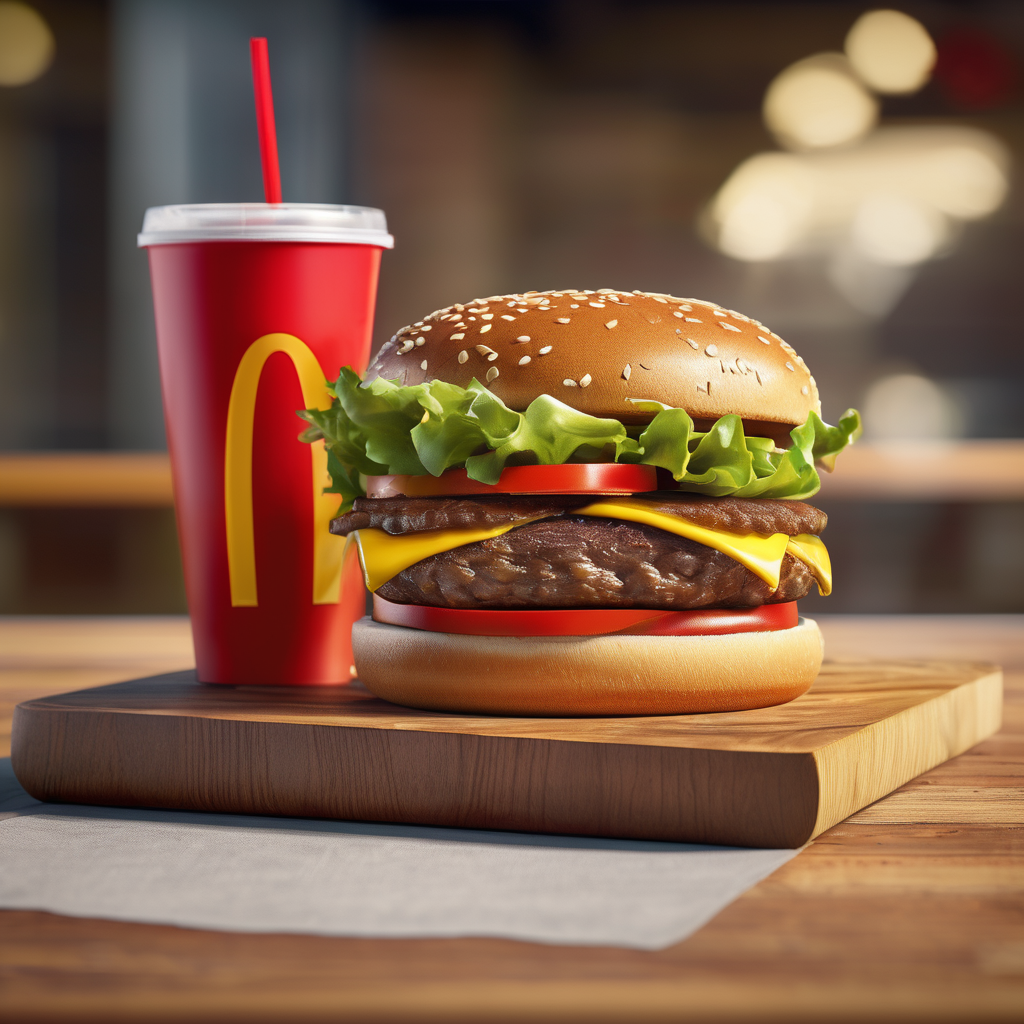
McDonald’s is gearing up to launch its most ambitious burger yet, the Big Arch, on March 3, a decision that has sparked both excitement and concern among industry analysts. The fast food giant’s foray into premium pricing comes at a time when many consumers are conscious of value, reigniting memories of the infamous Arch Deluxe, which was criticized for its adult-oriented marketing and ultimately flopped in the 1990s.
The Arch Deluxe, touted as a sophisticated burger with special ingredients like dijonnaise, was initially met with skepticism by consumers who were not willing to spend more than a Big Mac. The failed launch, paired with a staggering $150 million marketing campaign aimed at children, serves as a cautionary tale for the company. Former Head Chef Andrew Selvaggio noted the operational challenges posed by the Arch Deluxe due to its unique components, which strayed from McDonald’s efficient service model.
In stark contrast, the Big Arch features a competitive price point over $9 and utilizes a new tangy mustard sauce, a toasted bun with poppy and sesame seeds, crispy onions, and three kinds of cheese, including white cheddar. This burger also joins the Quarter Pounder as the second made-to-order option on McDonald’s menu using fresh beef. The timing of its release raises eyebrows, particularly as trends show a steep decline in demand for higher-priced fast food options amid recovering consumer traffic post-pandemic.
Nevertheless, McDonald’s is coming off positive momentum, having recently reported a 5.7% increase in same-store sales, surpassing expectations. This growth can largely be attributed to value-driven strategies, including promotional combos priced lower than individual items. CEO Chris Kempczinski emphasized the importance of listening to consumers to enhance traffic and affordability perceptions.
Interestingly, while other upscale burger joints and fast-casual establishments face a downturn in business, the Big Arch appears to resonate positively in testing phases across the U.S., Canada, and Europe. It has even been adopted as a permanent feature in the United Kingdom and Ireland. With evolving preferences for hearty, protein-rich meals, the Big Arch aims to cater to consumers looking for a substantial burger experience.
The fast-food sector is noticing a shift where higher-income diners have been supporting quick-service chains, helping them weather economic pressures. Additionally, McDonald’s has adapted its strategies by reintroducing lower-priced options, indicating a balanced approach to meet diverse consumer needs.
Ultimately, the introduction of the Big Arch signifies McDonald’s continued relevance in a changing culinary landscape. Through innovative marketing and adaptations to consumer feedback, the fast-food titan hopes to carve a niche in the competitive burger market, reinforcing its lasting influence despite past missteps. Just as trends can cycle back, the potential revival of fan-favorite elements from the past might be a testament to McDonald’s enduring brand strength and adaptability.