
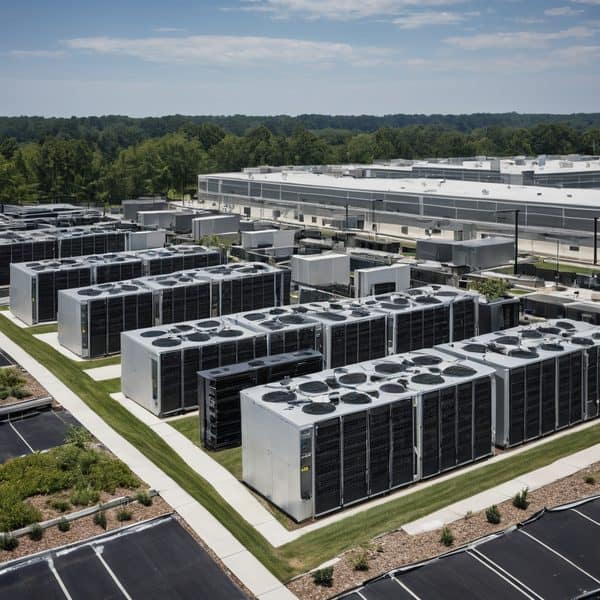
At least 48 planned data center projects across the United States were blocked, delayed or forced to change course in 2025 after organized local opposition, according to new tracking by a supply chain and political risk analyst who launched a nationwide watch effort. The projects represent more than $156 billion in proposed investment, highlighting growing friction between tech infrastructure builders and the communities where they seek to expand.
The tally comes from Data Center Watch, an initiative created by Miquel Vila of 10a Labs that combs local news reports, government meeting records and social media groups to document organized resistance to data centers. Vila, who told The New York Times he has no financial or ideological stake in the industry, said the monitoring found a wave of community-led pushes that have stalled or altered development plans in 2025. The Times published the findings and the dataset was shared publicly on X by advocacy group More Perfect Union, drawing attention and praise online.
Data centers — facilities that house the servers and cooling systems that power cloud services and artificial intelligence applications — have long clustered near major fiber routes and affordable power. But analysts say the easier sites have been built out, and further expansion increasingly collides with local concerns. "A lot of the commitments and build-out of data centers in easily accessible areas has already occurred, making new developments increasingly challenging," Todd Castagno, managing director at Morgan Stanley, told The New York Times.
Investors and bankers are monitoring the trend closely because delays and cancellations can shift timelines and costs for cloud and AI infrastructure. Aniket Shah, managing director at Jefferies, said the growing number of halted projects points to deeper political and regulatory resistance that could become a meaningful constraint on future build-outs. The scale of the projects flagged by Data Center Watch—both in number and dollars—underscores that risk for developers and their financial backers.
The wave of opposition has been amplified by more transparent local scrutiny than in prior years. Vila and others noted that in 2023 and 2024 some developers quietly purchased land and secured permits under nondisclosure agreements or without broad public attention. That tactic, analysts say, has become harder as residents, community groups, academics and nonprofits publish research and share information about potential impacts—particularly noise, water use and air quality—from large data facilities.
Grassroots resistance remains fragmented across jurisdictions, but social media and local reporting have accelerated awareness of projects and given opponents tools to organize at meetings and in public hearings. The More Perfect Union post of Data Center Watch data prompted responses from online audiences; one commenter posted that the list was "the sliver of hope that I need to see," reflecting the emotional and political stakes for local opponents.
Developers argue data centers are essential infrastructure for an increasingly AI-driven economy, while communities point to environmental, land-use and quality-of-life concerns. As the industry seeks new sites beyond the most accessible corridors, the balance between national infrastructure needs and local opposition looks poised to shape the pace and geography of data-center growth in the coming years.