
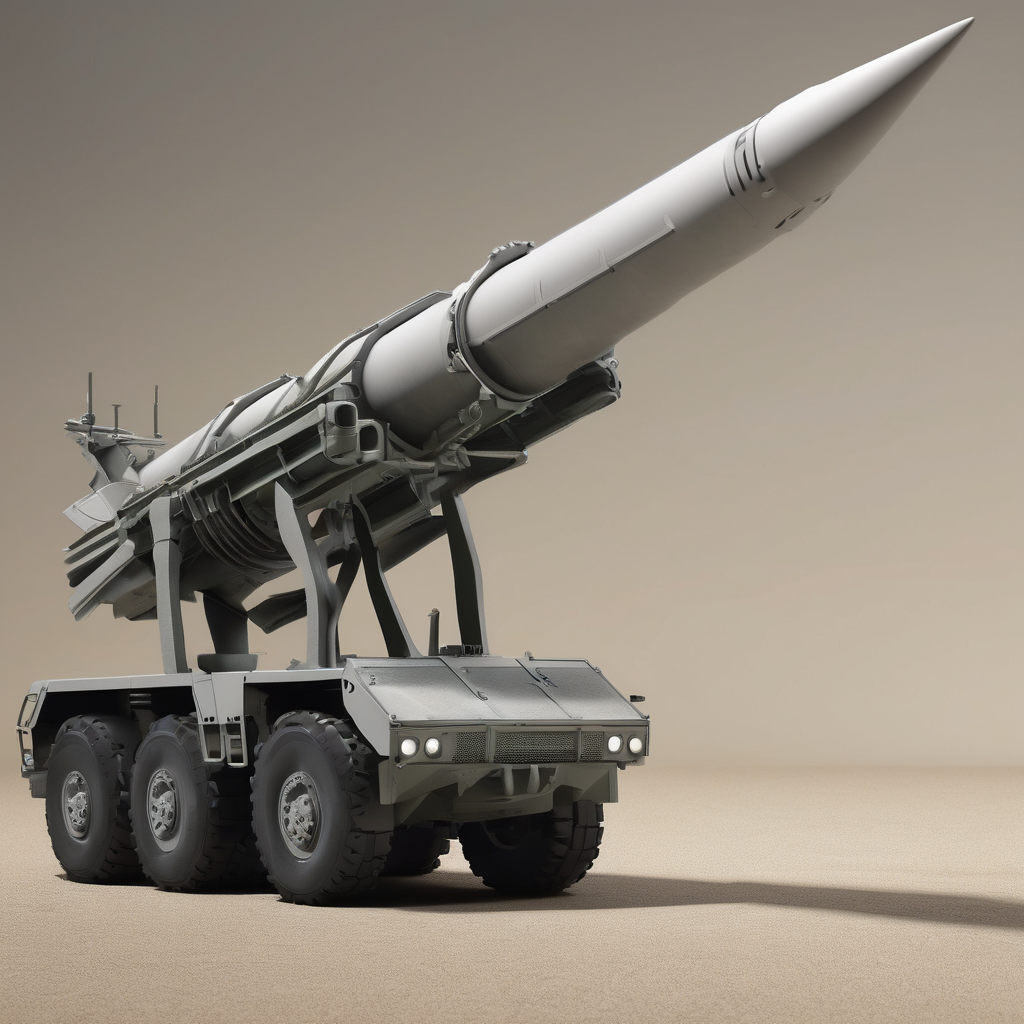
On September 3, 2025, the People’s Republic of China showcased a range of advanced military technology during a grand parade marking the 80th anniversary of its victory over Japan. Among these developments was the new HQ-29 anti-ballistic missile system, which has significant implications for global strategic stability and the ongoing arms race between the United States and China.
While the parade highlighted several alarming additions to China’s arsenal, such as nuclear-capable air-launched ballistic missiles and various intercontinental ballistic missile (ICBM) versions, it was the HQ-29 system that elicited particular interest among military analysts. This weapon represents China’s first operational capability for midcourse interception, aimed at neutralizing long-range ballistic missile threats. This advancement calls attention to potential risks for U.S. nuclear deterrence strategies and highlight a shift in China’s missile defense ambitions.
China’s journey towards a sophisticated missile defense system began as early as 1964 with “Project 640,” which sought to create technology capable of intercepting nuclear missiles. However, due to financial and technical challenges, the project was ultimately canceled. Interest in missile defense persisted, particularly after the U.S. initiated the Strategic Defense Initiative in the 1980s. The operational HQ-9 missile system was introduced in 2001, designed primarily for anti-aircraft roles but with some capabilities for ballistic missile interception.
In recent years, including tests from 2010 to 2023, China made strides toward enhancing its midcourse interception capabilities. Observers noted that the HQ-29 is designed to outperform previous systems like the HQ-19, with a focus on engaging high-value ballistic missile targets during their midcourse phase. Unlike terminal-phase interceptors that protect specific regions, midcourse systems have the potential to shield against longer-range threats that are in the cruising phase of their trajectory.
The strategic context for China’s missile defense developments raises questions about its regional military intentions. Although few long-range ICBMs threaten China from neighboring nations, the HQ-29 aims primarily to counter U.S. missile threats—a defensive measure designed to bolster China’s deterrent capacity and counteract perceived U.S. nuclear dominance.
China is also reportedly working on aligning its early warning architecture with its missile defense ambitions. A network of satellites and ground-based radar systems has been established to track missile launches, which is critical for effective midcourse interception initiatives. This infrastructure enhances the overall capabilities of the HQ-29 and aligns with China’s goal of establishing a robust defensive posture.
The emergence of such sophisticated missile defense systems raises concerns regarding U.S.-China dynamics. As China pursues increased military transparency, U.S. strategic planners face challenges in accurately assessing China’s nuclear intentions and maintaining a credible deterrent posture. The evolving military landscape increases the likelihood of an arms race, pushing both nations to develop countermeasures against each other’s capabilities.
As China strengthens its missile defense systems, a dialogue on mutual deterrence and transparency becomes essential. Encouraging China to specify the operational goals of the HQ-29 could serve as a foundation for diplomatic efforts and informed nuclear planning. This could help alleviate tensions and reduce the chances of escalation into unrestrained arms competition.
Optimistically, a cooperative approach to missile defense and strategic transparency could pave the way for reduced military tensions in the region, fostering a more stable and predictable security environment. The future hinges on whether both the U.S. and China can engage in meaningful conversations regarding their military strategies and contingencies, ultimately aiming to achieve a balance that avoids damaging escalations.