
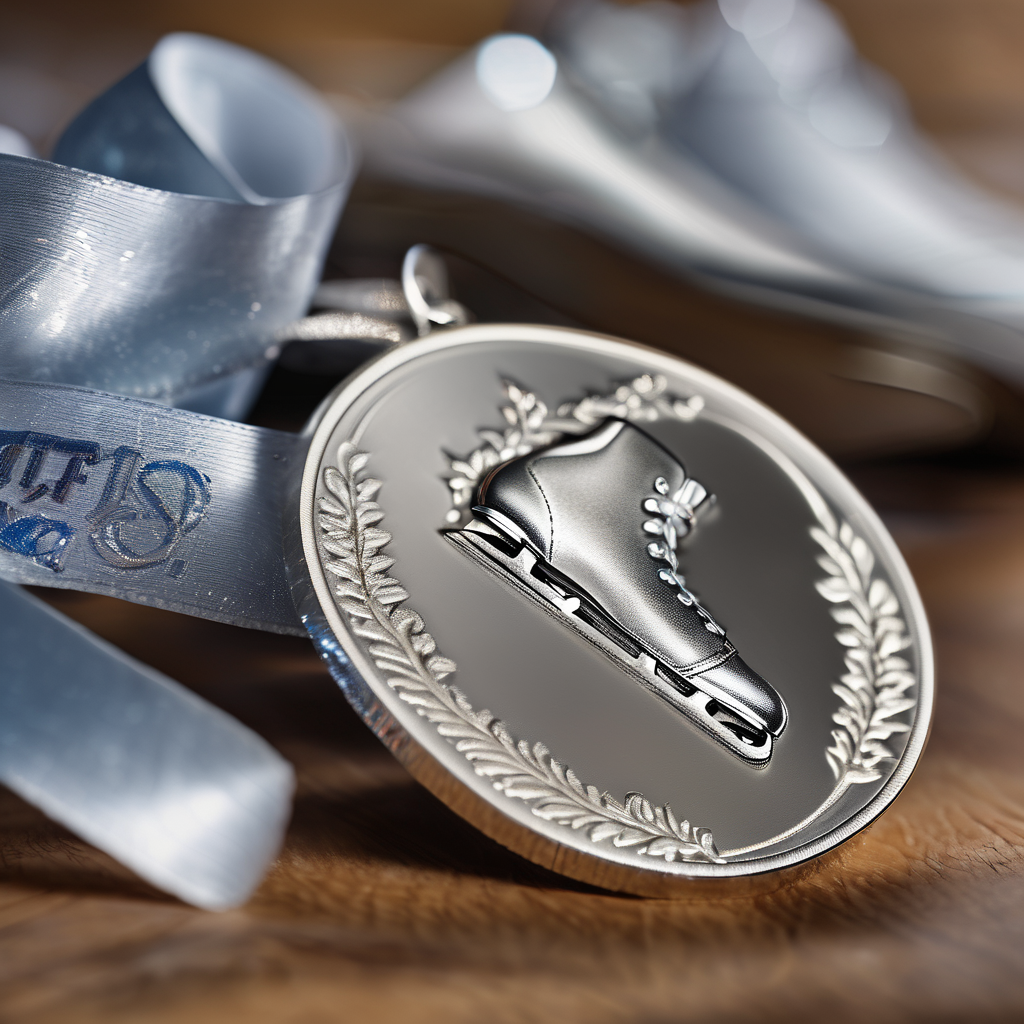
Anastasiia Metelkin and Luka Berulava made history when they stepped onto the podium at the Milan Ice Skating Arena, receiving Georgia’s first-ever medal in the Olympic Winter Games. Dressed in matching bedazzled teal outfits, the duo secured a silver medal in the pairs skating competition held on Monday night, marking a significant achievement for their nation, as well as for their personal journeys as athletes.
Despite the ongoing ban on Russia from competing under its flag in Olympic events due to doping scandals and geopolitical conflicts, the influence of Russian figure skating remains strong. Of the six athletes on the pairs skating podium in Milan, three were born in Russia, underscoring the ongoing presence of Russian-trained talent in international competitions. Japan’s Riku Miura and Ryuichi Kihara claimed the gold with a record-setting performance, while Metelkin and Berulava followed closely in silver position, with the bronze going to Germany’s Minerva Fabienne Hase and Nikita Volodin.
Metelkin, who trains with Russian coaches in Perm, expressed her commitment to representing Georgia. “I was accepted very well by the Georgians, and I want to do my very best to represent this flag and country,” she stated earlier this week. As Russian-born skaters increasingly opt to represent other nations, this evolving dynamic has enriched the figure skating landscape. In total, 11 Russian-born athletes are competing for various countries at these Games, marking a shift in the sport’s competitive environment.
The historical ties between Russia and figure skating have resulted in a blend of athletes and coaching staff at the Games, despite the ban on Russian representation. This year, new pairs teams from countries like Armenia and the Netherlands are competing, showcasing the depth of talent that persists in the figure skating community. One notable participant, Karina Akopova, also shared her excitement as the first pair skater representing Armenia after transitioning from competing for Russia.
Navigating national affiliations isn’t uncommon among Olympic athletes, particularly in winter sports where fierce competition for quota spots exists. In pairs skating, the chemistry and compatibility between partners can lead to athletes searching internationally for the perfect combination. However, the situation has grown more complicated for some, like U.S. couple Alisa Efimova and Misha Mitrofanov, who faced citizenship issues that prevented them from competing in Milan.
As the Games continue, there are ongoing discussions regarding the future of Russian athletes in international sport. Hope remains that a potential reintegration could occur, as IOC President Kirsty Coventry emphasized that “our game is sport,” and not influenced by politics. The landscape of Olympic participation will evolve, especially as younger athletes with Russian and Belarusian passports could soon find their way back into competition without restrictions.
For Metelkin and Berulava, their silver medal achievement marks a milestone not only for Georgia but also contributes to the broader narrative of resilience and adaptation in sports. With the tournament still unfolding and plenty of excitement yet to come, including the expected performances from other Russian-born athletes like Adeliia Petrosian, the spirit of competition and achievement continues to thrive at the Milan Cortina Games.