
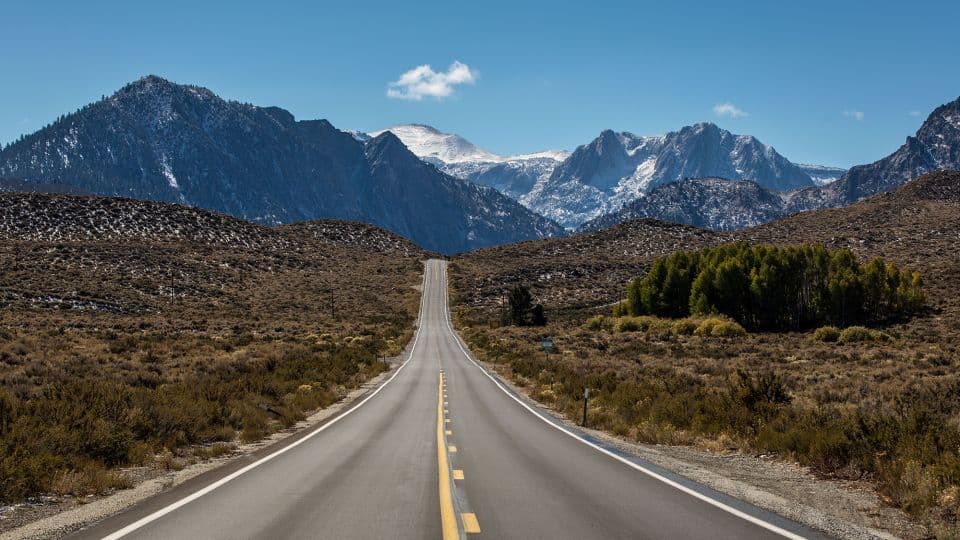
Mono County, a remote swath of the eastern Sierra Nevada home to the tiny tourist town of June Lake, now carries the dubious distinction of having the highest average gas price in the United States. AAA reported the county’s average at $6.72 as of Monday, and locals say pump prices in the town’s single service station have climbed as high as $7.50 a gallon.
Connie Lear, who manages 42 vacation rentals around June Lake and lives in the town of roughly 300 people, said the cost has reshaped daily life. She rides a golf cart around town to avoid using gasoline, limits grocery runs 20 miles away to once a week, and sometimes drives 120 miles into Nevada to fill up — the last time she topped off there gas was $4.57 a gallon. Lear said she’s already seeing a drop in bookings for the summer season, with visitors shortening stays to four or five days instead of a full week, a pattern she recalls from the 2022 price shock after Russia’s invasion of Ukraine.
Multiple factors are pushing Mono County’s gas higher than most of the country’s urban centers. Rural areas tend to lack the low-cost retailers that help keep prices down, and long delivery routes make wholesale supply more expensive. A tanker truck must travel more than 200 miles — a trip of about four and a half hours — to reach the closest wholesale terminal in the state, raising distribution costs for station owners. Just down the road in Lee Vining, Shelly Channel, who runs a Shell station, has posted regular at $6.85; she said that price was $5.69 before the recent escalation of conflict in the Middle East.
AAA’s figures also reflect a national uptick in pump prices tied to the war: gasoline is up $1.14 per gallon nationally since the start of the conflict, and California prices have risen $1.29 in the same span. Those global and regional market pressures layer on state-specific factors that keep California’s prices among the nation’s highest — a blend of taxes, fees, stringent environmental regulations and the closure of refineries in recent years that has reduced local supply and forced longer-haul shipments.
For small, tourism-dependent communities such as June Lake, the consequences are immediate. Higher travel costs risk deterring the summer visitors that sustain lodging, restaurants and outdoor recreation businesses. Lear said she fears this season may mirror or exceed the downturn experienced in 2022, when steep fuel costs cut into travel and tightened household budgets.
Experts and local proprietors say the situation in Mono County is not unique: many rural counties pay more at the pump than metropolitan areas because of limited competition, longer delivery distances and fewer discount retailers like warehouse chains. Until either supply chains shorten, state and federal pressures ease, or alternative conveniences expand in these communities, residents face a choice between paying unusually high local prices or traveling significant distances to fill their tanks.