
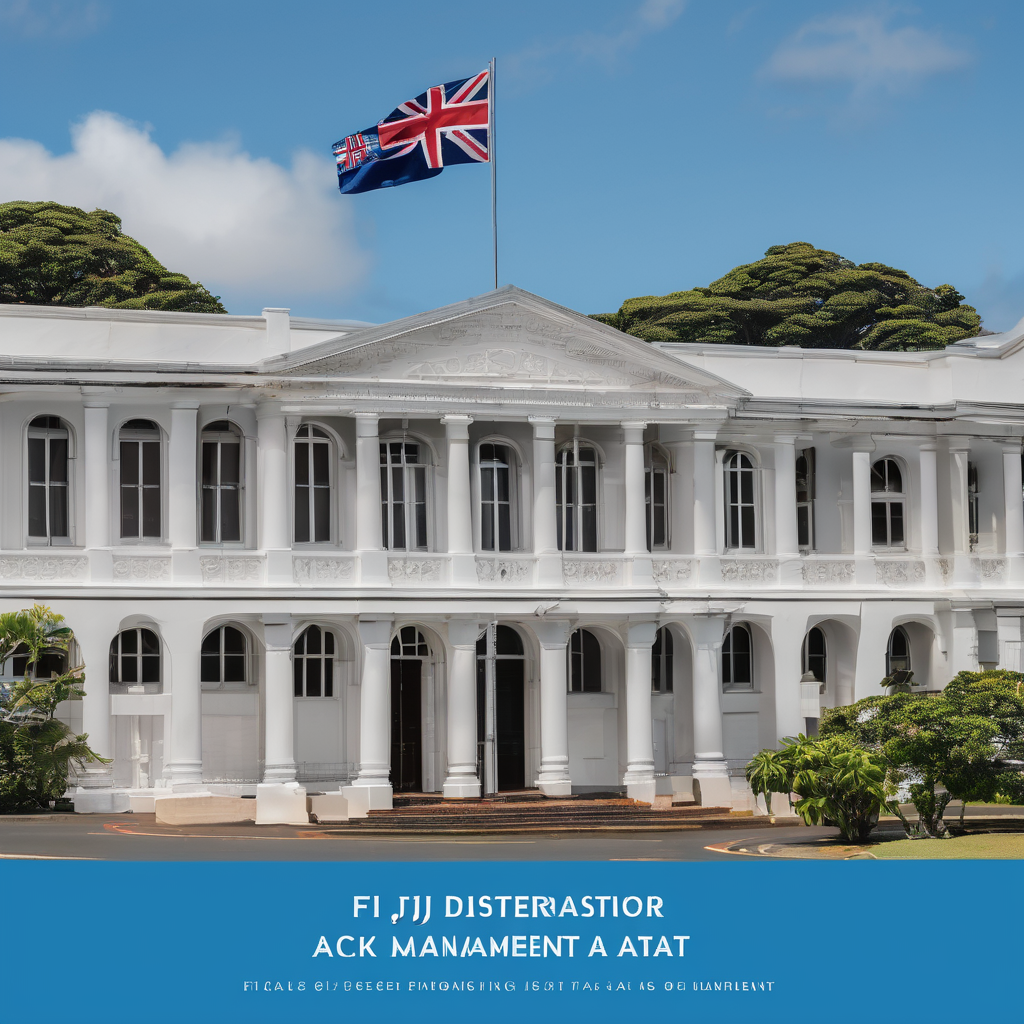
Fiji is implementing a robust framework for disaster risk management, anchored in comprehensive legal and policy structures. Central to this initiative is the National Disaster Risk Management Act 2024, which establishes essential guidelines for efficient disaster management. This includes provisions for budgeting, establishing a disaster fund, and creating effective early warning systems.
The Act mandates the National Disaster Risk Management Office (NDRMO) to collaborate with various agencies in developing a “people-centered, multi-hazard warning system.” This approach emphasizes the monitoring of hazards, forecasting their potential impacts, and devising “pre-agreed actions” aimed at mitigating those impacts based on anticipated hazard conditions. Importantly, the law allows authorities to declare a State of Disaster even when a hazard is merely likely to cause substantial damage, enabling proactive measures to be taken before a disaster occurs.
Fiji’s disaster management strategy is further strengthened through various national policies, such as the National Disaster Risk Reduction Policy (2018-2030) and the National Adaptation Plan (NAP). These policies underscore the importance of enhancing preparedness and fostering proactive responses to climate-related hazards, including tropical cyclones.
At the community level, the framework recognizes that effective disaster preparation begins locally. The Community-Based Disaster Risk Management (CBDRM) Policy facilitates anticipatory actions, encouraging the establishment of triggers and plans to mobilize funding and resources prior to disasters. Public awareness initiatives, such as National Disaster Awareness Week, play a crucial role in educating citizens about preparedness and response strategies. Local organizations and community groups significantly contribute to spreading important information and ensuring that last-mile actions are effectively implemented during emergencies.
The establishment of a National Disaster Risk Financing (DRF) Strategy aims to bolster financial resilience against disasters by ensuring prompt and predictable access to funds. This strategy seeks to minimize fiscal shocks and support quicker recovery. Existing mechanisms, including the Pacific Catastrophe Risk Insurance Company (PCRIC) and the World Bank’s Catastrophe Deferred Drawdown Option (CAT-DDO), will be integrated with micro-insurance programs that specifically target households, businesses, and the agricultural sector.
Additionally, the framework emphasizes the importance of inclusivity in disaster preparedness. The Sendai Gender Action Plan (GAP) underlines the necessity of integrating gender-responsive strategies into disaster risk management. A policy brief directed at Pacific Island Countries advocates for a focus on sexual and reproductive health (SRH) and gender-based violence (GBV) in disaster planning. Key recommendations include institutionalizing SRH and GBV initiatives, bolstering community participation, and expanding gender-sensitive financing.
Governance of this comprehensive disaster risk management framework is spearheaded by the NDRMO, with oversight provided by the National Disaster Risk Management Council and the Cabinet of Fiji. Collaboration with the Fiji Meteorological Service is crucial for triggering appropriate responses, while humanitarian partners and various line ministries execute planned activities. The governance structure also features a national cluster system that harmonizes humanitarian and anticipatory actions across different sectors.
This layered governance approach promotes a decentralized and inclusive system, combining national leadership with localized participation. By engaging Divisional Commissioners, Provincial Administrators, and community committees, Fiji aims to ensure that disaster preparedness and early warning systems reach all corners of the community, significantly enhancing the nation’s resilience to future disasters.