
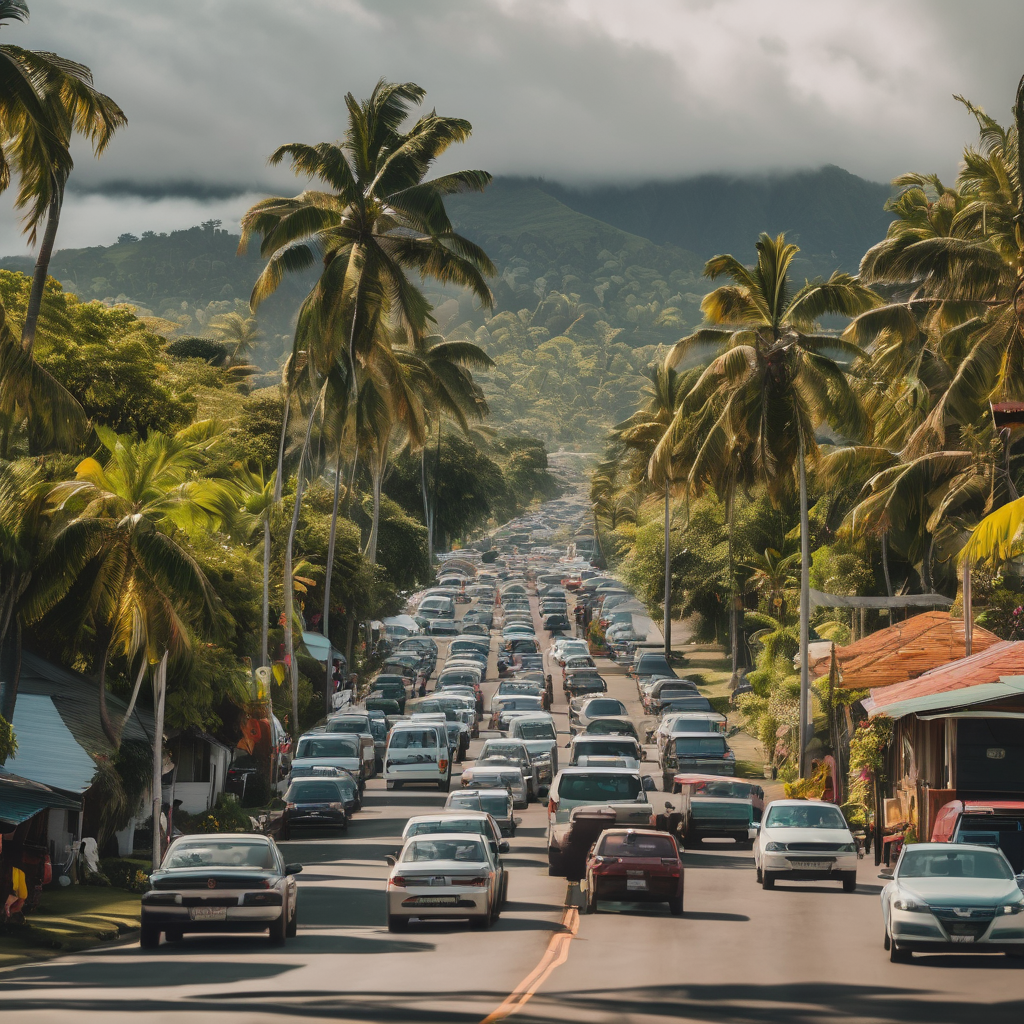
Fiji is contemplating the possibility of restricting vehicle ownership to alleviate traffic congestion, according to Lui Naisara, chairman of the Land Transport Authority Board. Although no formal policies are currently in place, discussions surrounding potential caps, quotas, or increased taxes on additional vehicles are part of a long-term strategy for transport management.
Naisara emphasized that car ownership, once a luxury, has become accessible to many families in Fiji, leading to a surge in the number of vehicles on the roads. He posed a critical question: do households genuinely require multiple vehicles?
Currently, there is no established benchmark in Fiji to determine the optimal number of vehicles per kilometer of road, which Naisara identified as a crucial factor that authorities must assess before implementing any restrictions. He highlighted that traffic congestion tends to vary by district rather than being a nationwide issue, suggesting that vehicle limits could be contingent on specific local conditions.
Referencing Singapore’s vehicle quota system, Naisara indicated that Fiji could benefit from similar strategies, but he stressed the need to balance such policies with economic considerations and personal freedoms. He noted that vehicles are significant to the economy and reflect consumer purchasing power.
To address the issue without enforcing outright bans, he proposed that higher taxes on second or third vehicles might encourage households to reconsider excess vehicle ownership. This strategy could serve as a viable compromise, promoting responsible vehicle use while also accommodating the growing economic landscape.
In exploring these potential changes, there is a hopeful perspective that thoughtful planning can lead to a more sustainable and efficient transport system in Fiji, ultimately enhancing the quality of life for its residents.