
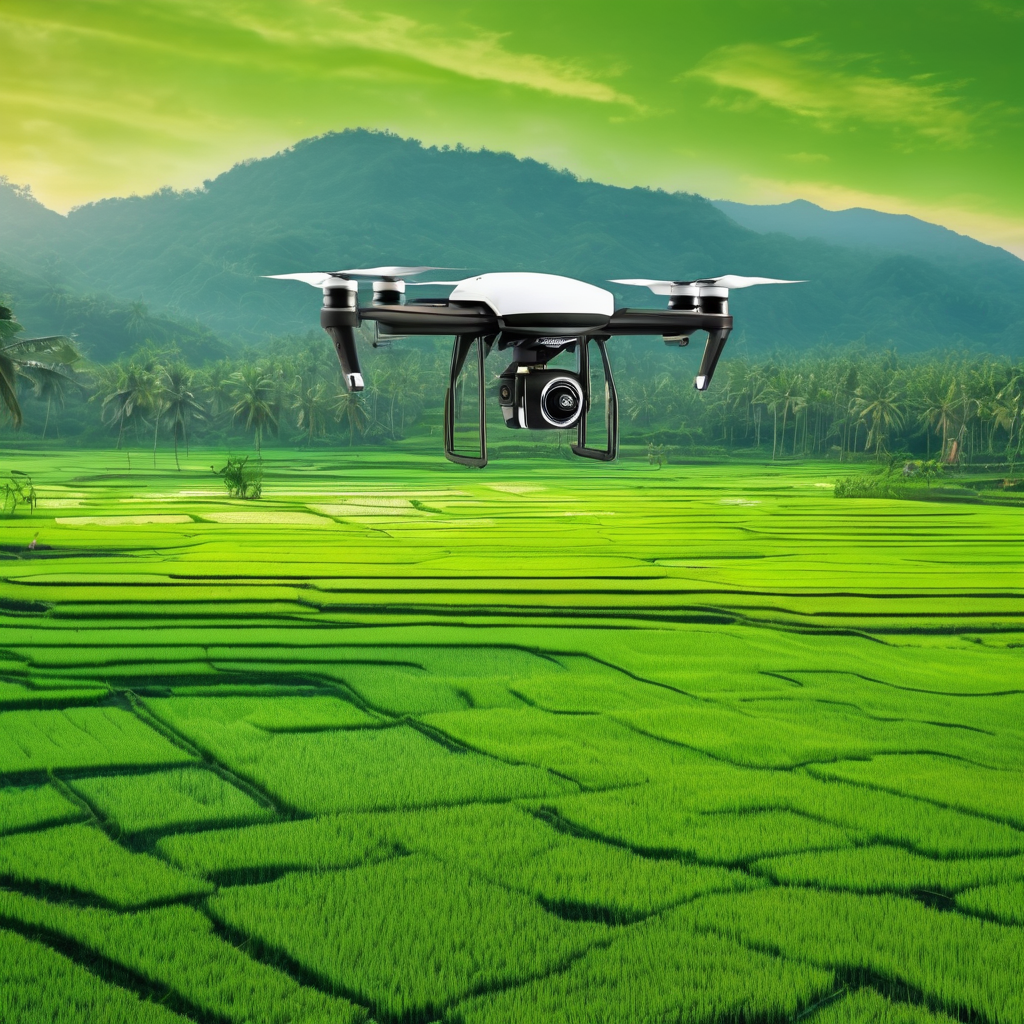
The Ministry of Agriculture and Waterways has initiated a testing phase for agricultural drone technology, aimed at enhancing efficiency, safety, and productivity in large-scale rice farming. These trials are currently taking place at the Koronivia Research Station, where a versatile drone is being utilized to spray pesticides on rice fields that are designated for seed production.
This initiative signifies a pivotal shift towards modernized farming practices, with the Ministry highlighting that the adoption of drone technology can significantly reduce labor costs, streamline field operations, and minimize farmers’ direct exposure to potentially harmful chemicals. Officials have noted that drone-assisted pesticide application is not only safer than traditional manual methods but also enhances both accuracy and coverage, thereby lowering health risks for farmers and agricultural workers.
As part of this advancement, five officers from the Ministry are undergoing certification training to become licensed drone pilots, which will enable the legal and safe operation of this technology. Beyond its application in pesticide spraying, the drones also possess capabilities for seed broadcasting, fence-line spraying, field surveys, and crop monitoring. This multi-faceted approach supports broader national objectives aimed at bolstering agricultural productivity and ensuring food security.
The integration of drone technology in agriculture signifies a promising future for farming practices, potentially leading to more sustainable and efficient food production systems. This advancement not only aims to enhance the livelihoods of farmers but also contributes significantly to the overall food ecosystem, making strides towards a more food-secure nation.