
Department of Homeland Security Secretary Markwayne Mullin signaled a potential shift in immigration enforcement policy Monday, saying the department will take a closer look at customs operations at major international airports located in so-called sanctuary jurisdictions and raising the possibility of restricting those airports’ customs privileges.
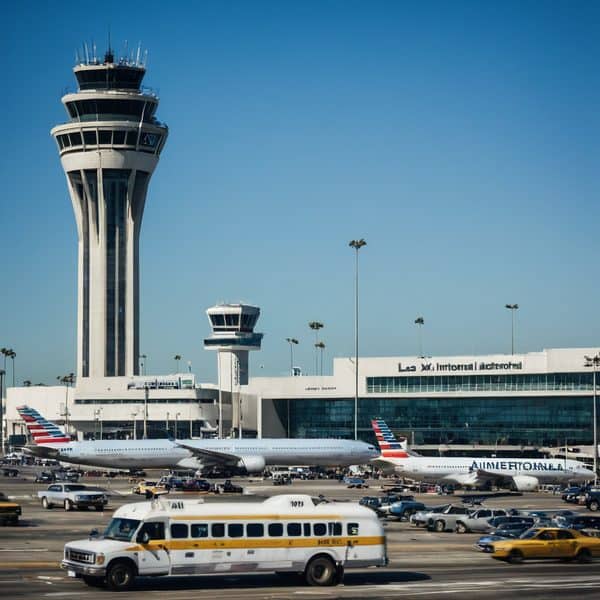
In his first televised interview as DHS secretary on Fox News’s Special Report, Mullin questioned whether cities that limit local cooperation with federal immigration enforcement should be allowed to host processing of arriving international passengers. “If they're a sanctuary city, should they really be processing customs into their city?” he asked, adding that airports in jurisdictions that refuse to enforce immigration laws “may need to have a really hard look at that.” He specifically pointed to Los Angeles International Airport and John F. Kennedy International Airport as examples of major hubs that fall within sanctuary jurisdictions; Port Authority figures show roughly 3 million people pass through customs at JFK each month.
Mullin framed the review as a matter of partnership between federal agencies and local authorities. “If they’re a sanctuary city and they’re receiving international flights, and we’re asking them to partner with us at the airport, but once they walk out of the airport, they’re not going to enforce immigration policy — maybe we need to have a really hard look at that,” he said. He stressed that any measures would remain within the bounds of policies set by Congress: “I am not going outside the policies that Congress passed for me, and we’re not trying to push those, but we’re saying you’ve got to partner with us.”
The comments mark an early indication of how Mullin, a Republican who was sworn in as DHS secretary on March 24 after his predecessor Kristi Noem was fired by President Donald Trump, intends to approach immigration enforcement and relations with local governments. During his confirmation process Mullin said he hoped to reduce daily headlines surrounding the department within six months and to better equip employees to carry out the mission assigned by Congress and the president.
Mullin also reiterated a long‑running Republican critique of sanctuary policies, calling them “not lawful” and saying DHS would “take a hard look” at them under his leadership. The practical and legal mechanics of conditioning customs operations on local cooperation are unresolved: customs and border processing at ports of entry is a federal responsibility, and implementing restrictions or operational changes tied to municipal policy could trigger complex legal and logistical challenges.
The interview came amid a partial government shutdown that has affected DHS funding. Mullin blamed Democrats for leaving the department in a vulnerable position, particularly as tensions with Iran persist, and said the impasse was “putting our mission at risk.” He said he would be “forced to make hard decisions” if funding constraints and political disputes hampered operations.
Mullin’s remarks are likely to intensify debate between the federal government and major cities such as New York and Los Angeles, which have longstanding sanctuary policies intended to limit local cooperation with federal immigration enforcement. Any move to alter customs processing at large international airports would have wide operational and political implications and could prompt legal challenges and pushback from city officials and aviation authorities.