
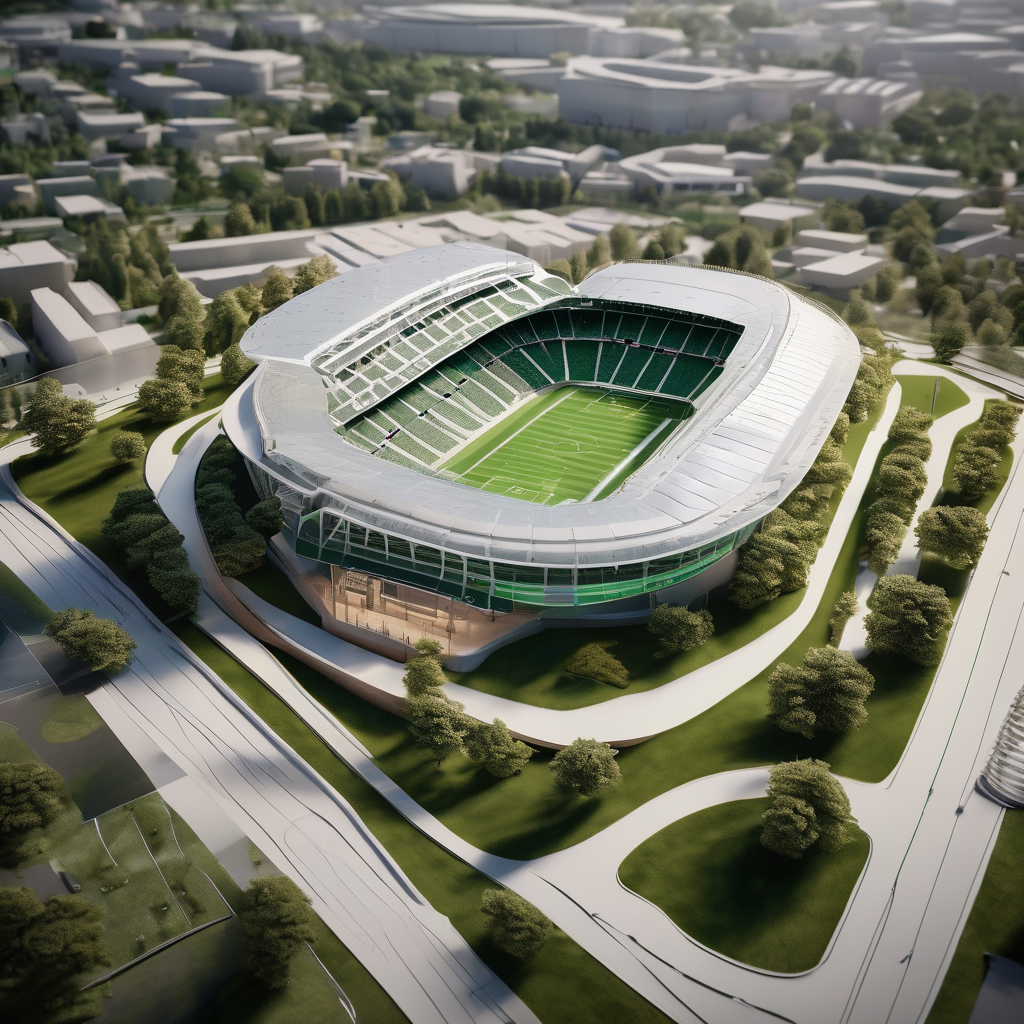
Architecture firm HKS, in collaboration with the Washington Commanders NFL team, has unveiled plans for a striking new stadium at the RFK Campus in Washington, DC. The design promises a capacity of over 70,000, aiming to be a monumental feature of the city’s skyline and a significant community asset.
The stadium’s design is characterized by a white colonnade that echoes the architectural grandeur found in Washington’s civic monuments, such as the Lincoln Memorial. HKS has ensured that the layout pays homage to the historic L’Enfant Plan, maintaining respect for the nearby Capitol Building and the remnants of the former RFK Stadium, which previously occupied the site.
Mark A. Williams, the global venues director at HKS, emphasized that every design decision is anchored in the site’s historical significance, ensuring the new stadium reflects Washington’s rich architectural heritage. He described the structure as a “bold civic landmark” that integrates seamlessly into the urban fabric while being a dynamic presence in the city.
Positioned next to the Anacostia River, the stadium features an innovative cable-net glass roofing system designed to present a welcoming profile while respecting the sightlines of nearby national monuments. The unique column system will provide an elegant façade, complemented by large glass areas that promise to create an eye-catching lantern effect at night.
In addition to its impressive architecture, the stadium will include ample public spaces for pre-game gatherings and events. The comprehensive development plan adheres to the broader vision outlined by Perkins Eastman for the RFK Campus, enhancing the connection with the surrounding area.
Although the RFK Stadium has not been home to the Commanders since the late 1990s, the venue has seen various sports events until its closure in 2019, and it is currently undergoing a phased dismantling. The land, which has shifted from federal to local governance, is now leased to the Commanders, allowing for the anticipated development to proceed after the local government granted the necessary approvals.
While the architectural approach has sparked some debate, particularly regarding its classical elements, HKS and the Commanders’ management maintain that the design’s direction was set prior to the discussions with the National Capital Planning Commission. There is a commitment to engage with the NCPC and local communities throughout the design process.
Mark Clouse, president of the Washington Commanders, underscored the intention behind the stadium’s design to energize football culture while serving as a year-round venue for the local community. Ongoing engagement efforts are intended to solicit feedback, further enriching the stadium’s connection to its future users.
Washington DC Mayor Muriel Bowser highlighted the project’s positive impacts, including improved public transportation access and job creation. She expressed optimism regarding the unique waterfront stadium’s contribution to the city’s entertainment landscape.
The Commanders are set to continue their operations at their current Maryland location until the new stadium is expected to open around 2030. HKS, known for designing other prominent NFL venues like SoFi Stadium, continues to exemplify innovation and community focus in sports architecture with this ambitious project.