
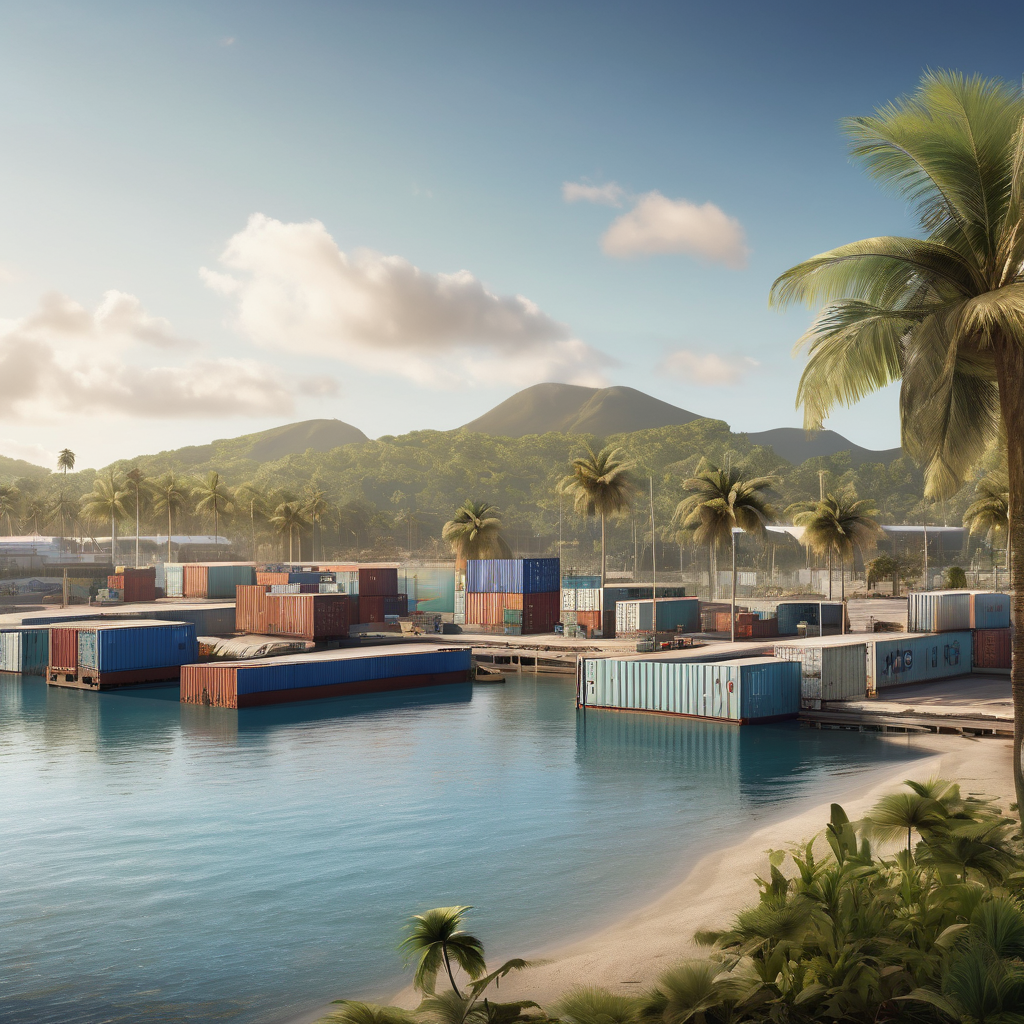
Chinese-funded infrastructure projects in the Pacific Islands, while ostensibly civilian, may serve to enhance China’s military presence in the region, according to senior members of a bipartisan congressional advisory commission. In an interview with Fox News, Randall Schriver, chair of the U.S.-China Economic and Security Review Commission, highlighted that these developments are often “dual use,” meaning they can fulfill both civilian and military functions.
Schriver pointed out that the ongoing trend of militarization in the area suggests underlying security interests tied to China’s investments. He emphasized that despite their civilian labels, these infrastructure projects may play a crucial role in the Chinese military’s strategic ambitions. “China’s investments in the Pacific should not be viewed in isolation,” he stated, indicating that they are often linked to broader geopolitical maneuvers.
Vice Chair Michael Kuiken added that China’s financing often comes with strings attached, creating a cycle of “debt diplomacy.” He described a pattern where China extends loans to Pacific Island nations, which then find themselves vulnerable to Chinese influence due to mounting debt. This strategy, he argued, allows China access to develop facilities, such as runways and ports, that have potential military applications.
Schriver acknowledged that the U.S. has been slow to respond to these developments, particularly as Chinese projects advance near strategic locations like Guam, which is vital for U.S. logistics and military operations. He indicated that warning signs of transitioning from civilian use to military capabilities are emerging, such as instances of undersea cable cutting and possible deployments of Chinese military aircraft to Pacific facilities.
Kuiken stressed the need for U.S. lawmakers to focus on increased transparency and scrutiny over these developments. He suggested that members of Congress should consult intelligence reports and imagery to better understand and monitor the situation, emphasizing the importance of undersea infrastructure in the region’s security.
The commission has proposed a comprehensive U.S. response, including enhanced cooperation with Coast Guard operations and support for Pacific Island nations to bolster their resilience against threats and economic pressures from China. Schriver mentioned a “Pacific Island Security Initiative” that aims to integrate economic development, law enforcement, and defense engagements strategically.
This multi-faceted approach aims to effectively counterbalance China’s influence in the region, ensuring the preservation of security and stability across Pacific Island nations. By addressing these threats holistically, the U.S. could foster stronger partnerships and promote resilience within these communities, ultimately resulting in a more secure future for the Pacific Islands and reinforcing U.S. interests in the region.