
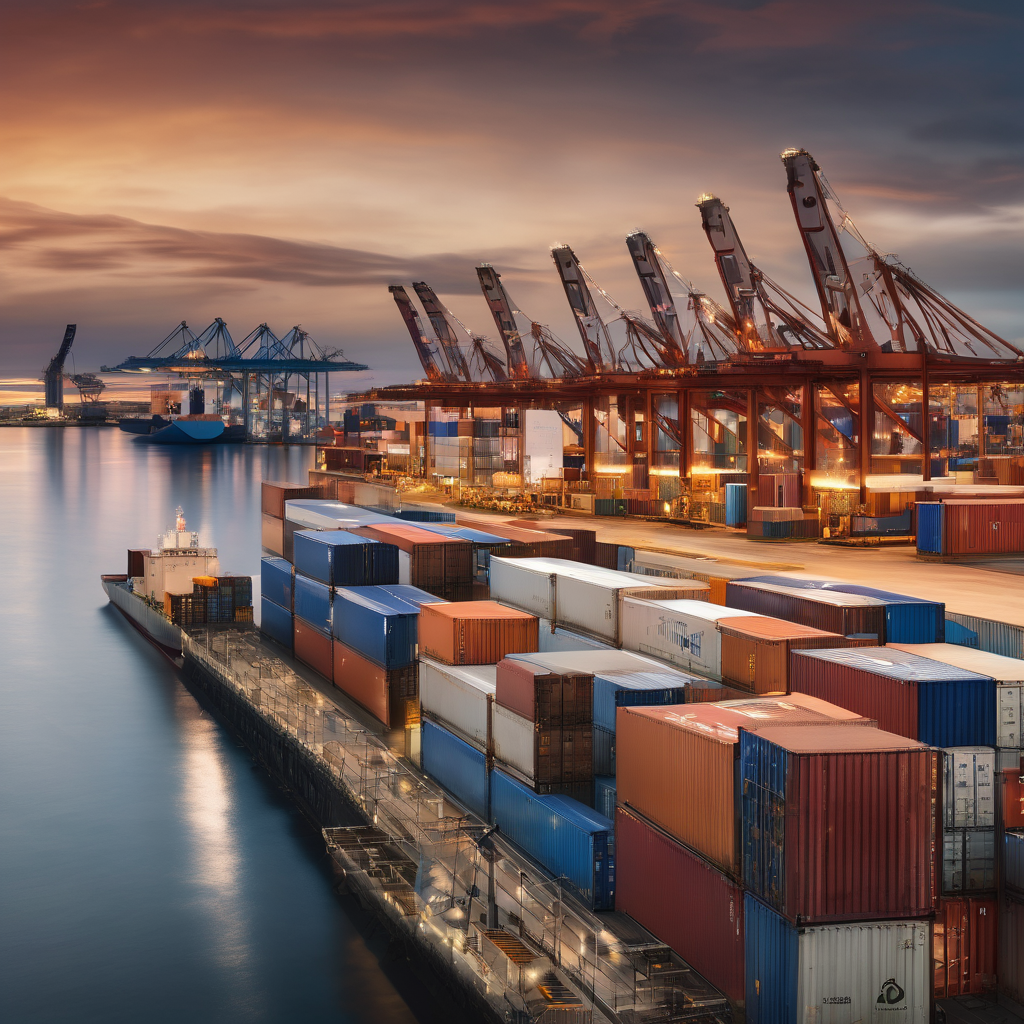
On Thursday, October 18, the Federal Government unveiled the Strategic Evaluation of the National Logistics Plan (PNL 2050), a comprehensive document that outlines the current state and future of multimodal transport in Brazil. The Ministry of Ports and Airports (MPor) played a significant role in developing this study, emphasizing the urgent need to balance the transport matrix by alleviating highway congestion and enhancing the utilization of waterways, cabotage, and airport infrastructure.
A key focus of the evaluation from the MPor is the directive to prioritize high-capacity and efficient transport modalities. The goal is to connect production areas to ports and international markets through integrated corridors, which will facilitate swift transport and lower costs.
Tetsu Koike, the Director of Sectoral Policies, Planning, and Innovation at MPor, celebrated the evolutionary nature of the project. “We have a valuable tool to guide our actions and to visualize the kind of country we want to be in the future. Transportation drives the economy, and its modes must be integrated to achieve logistical efficiency, cost reduction, and to overcome historical challenges. This is an ongoing and intergovernmental process,” he commented.
George Santoro, Executive Secretary of Transportation, highlighted that the PNL is a continually evolving guide. “Every five years, we update and refine our road and rail transport plans. This allows us to logically integrate various modalities, connecting them through logistical corridors. The PNL 2050 provides relevant data, with a matrix that accurately reflects the reality of the country,” he stated.
Challenges and Gaps
The technical study identified significant challenges that directly affect the competitiveness of the port and air transport sectors. It pointed out logistical bottlenecks at the origin of cargoes and difficulties in export logistics, which put pressure on the efficiency of Brazilian ports.
Additionally, in the passenger transport sector, PNL 2050 identified overcrowding at major airport hubs. In response, the plan uniquely incorporates an intermodal approach to passenger movement, aiming to promote territorial integration and enhance accessibility. Leonardo Ribeiro, National Secretary of Rail Transport, emphasized that “today, ports, highways, and railways are connected to the PNL strategy,” highlighting that tracks and roads serve as vital arteries supporting the export port system.
Public Consultation
PNL 2050 aligns with the Integrated Transport Planning (PIT) guidelines established by the Federal Government to enhance national competitiveness. To ensure that the needs of the air and waterway sectors are fully addressed, a public consultation on the Strategic Evaluation of the PNL is open and will run until January 18, 2026, on the Participa + Brasil platform.
This proactive approach signals a commitment to improving Brazil’s transportation infrastructure, which bodes well for the future of the nation’s logistics and economy. The collaboration among government sectors and engagement with the public illustrates a determination to create a more efficient and interconnected transport network.