
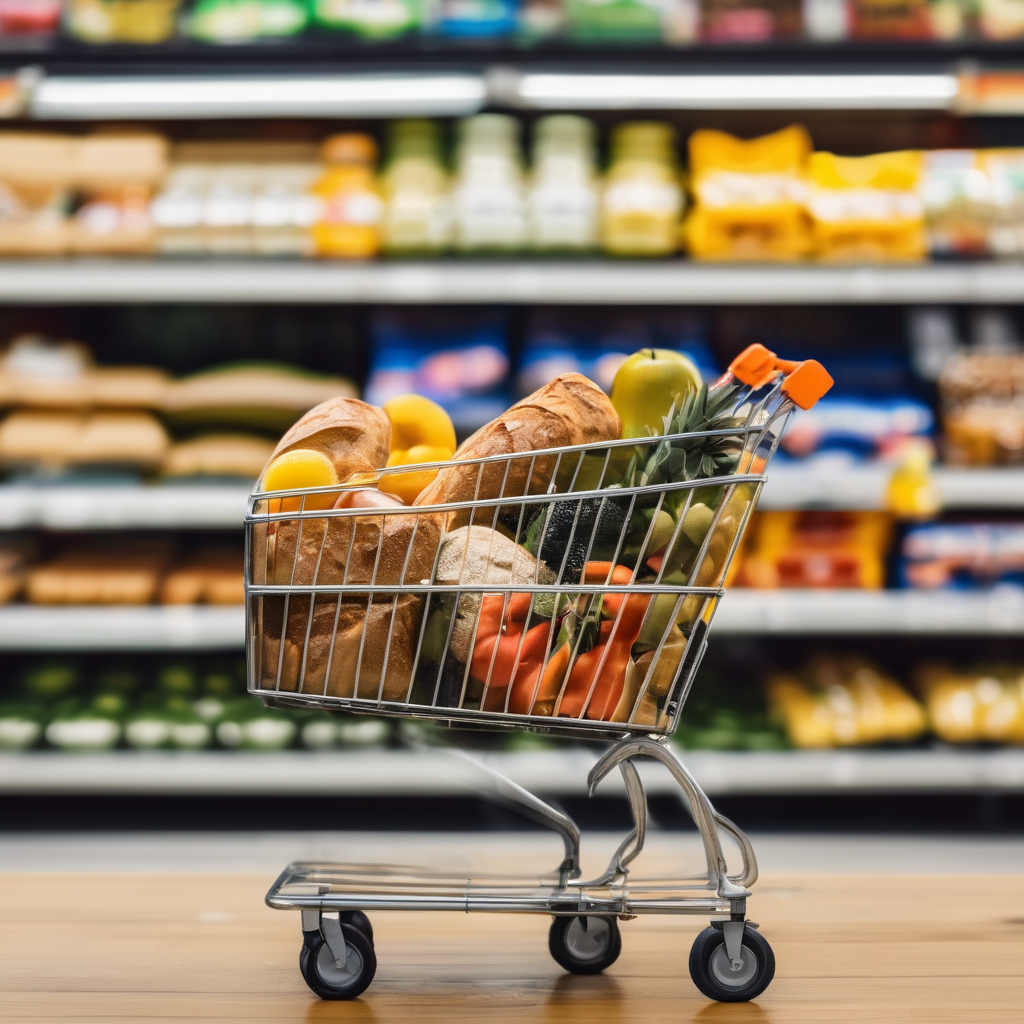
The government has announced plans to reduce the Value Added Tax (VAT) on selected staple foods to approximately 5 percent as part of an effort to ease the financial strain on low-income households. To finance this reduction, a new levy on non-recyclable plastic and a package levy for goods imported from outside the European Union will be implemented.
Officials revealed that while the details are still being finalized, staple items such as milk, eggs, bread, and vegetables are likely to qualify for the new lower tax rate. Vice Chancellor Andreas Babler clarified that the shopping basket of products eligible for the VAT reduction would be designed to ensure proper funding through these new levies, which are expected to generate approximately 400 million euros.
The mechanics of these counter-financing measures involve implementing a levy that targets non-recyclable plastic, anticipated to raise around 300 million euros, as well as a package levy projected to contribute an additional 100 million euros. Critics have voiced concerns over the potential for consumers to face higher costs as a result of these new taxes on packaging. Sylvia Hofinger from the Chemical Industry Association indicated that while the VAT reduction may provide savings, it could lead to increased prices elsewhere in the shopping basket.
Opposition voices, such as FPÖ General Secretary Michael Schnedlitz, have described the initiative as a “sham,” arguing that reducing VAT while imposing new taxes on imports is not a true relief for consumers. The Greens have echoed these concerns, questioning the clarity of how the proposed levies will be structured and whether they will effectively target manufacturers rather than passing costs to consumers.
In response to concerns about the overall impact, Georg Knill, President of the Federation of Austrian Industries, critiqued the “watering can” approach to this VAT reduction, asserting it falls short of providing real economic support to local businesses and may offer minimal benefit to consumers. He mentioned that the resultant price drop, though positive, may not significantly impact those who do not struggle financially.
Despite the critiques, the Trade Association has expressed support for the VAT reduction and has pledged to ensure that tax savings are directly passed on to consumers. The Federal Competition Authority is set to monitor compliance, though experts warn about the challenges in maintaining oversight and ensuring the proper application of the new VAT rate.
The government’s initiative reflects an acknowledgment of the current economic pressures facing many households, and while the full impact remains to be seen, it represents a commitment to support those in need while trying to balance fiscal responsibilities.