
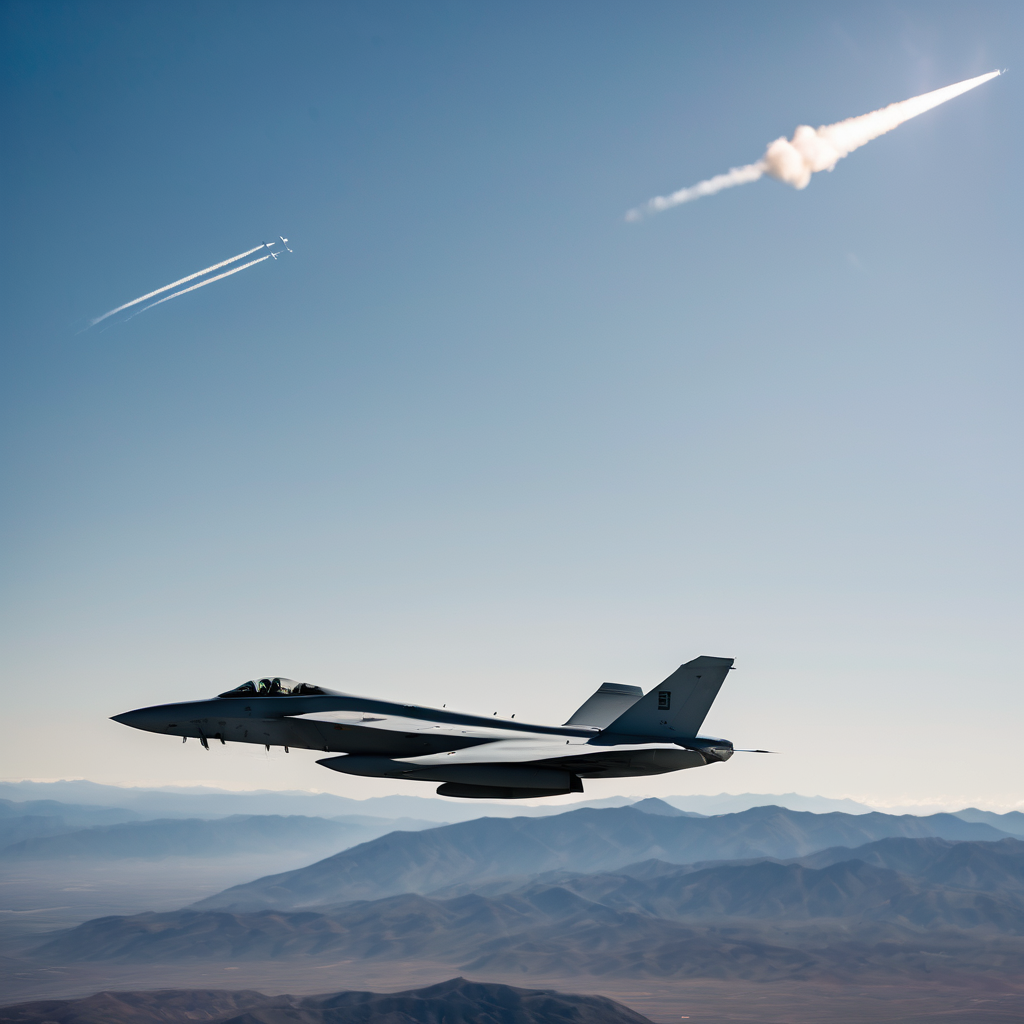
The North American Aerospace Defense Command (NORAD) has reported the observation of several Russian military aircraft operating in international airspace near Alaska, prompting the United States to deploy fighter jets for monitoring purposes. On Friday, NORAD disclosed that two Russian Tu-95 bombers, two Su-35 fighter jets, and one A-50 surveillance aircraft were tracked within Alaska’s Air Defense Identification Zone (ADIZ).
In response to the incursion, the U.S. scrambled a fleet of aircraft including two F-16s, two F-35s, one E-3 airborne warning and control system aircraft, and four KC-135 refueling tankers. NORAD emphasized that the Russian aircraft did not breach U.S. or Canadian sovereign airspace, and they were escorted out of Alaska’s ADIZ without incident.
While the Russian Ministry of Defence has yet to comment on the recent activity, NORAD noted that encounters with Russian aircraft in Alaska’s ADIZ are not uncommon and are typically regarded as routine, rather than a direct threat.
The concept of the ADIZ is significant, as it requires foreign military aircraft to identify themselves when entering designated airspace, though these zones lack formal recognition under international law and are not regulated by any global governing body. This follows a similar event in July 2024, when U.S. and Canadian forces intercepted a formation of two Chinese and two Russian bombers in Alaska’s ADIZ. That incident was particularly noteworthy, as it marked a joint operation between the Russian and Chinese military forces, raising concerns about the implications for regional stability among the U.S. and its allies.
As international airspace disputes continue, increased monitoring and communication between different nations remain crucial in maintaining security and preventing misunderstandings.