
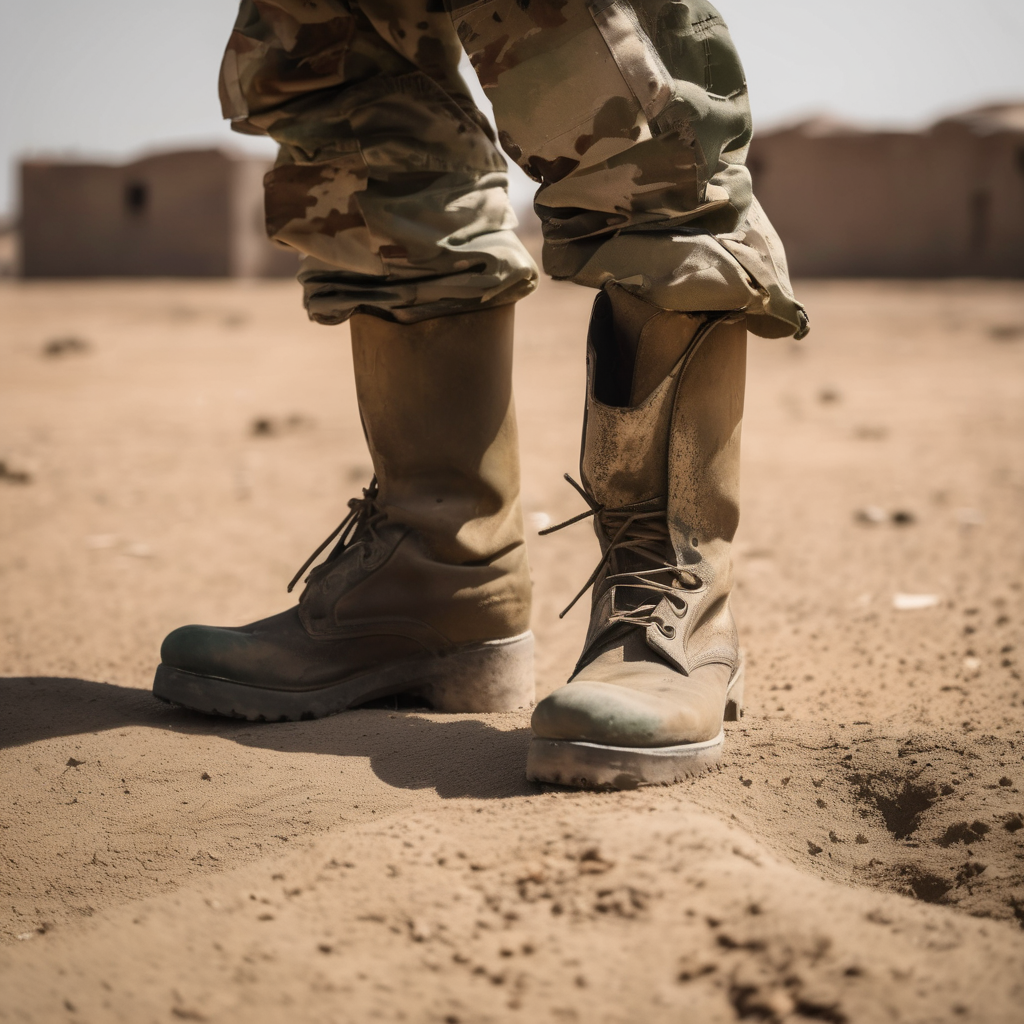
Nigerian officials expressed concerns following recent U.S. military strikes in the country, which were characterized by President Donald Trump as action against “ISIS Terrorist Scum.” This development, which could signal the beginning of a broader U.S. military campaign against militant groups in Nigeria, has drawn mixed reactions from security analysts who warn of the complexities involved in the region’s long-standing conflict.
Trump has made several declarations about potentially intervening in Nigeria, primarily in response to widespread violence affecting Christians. On Christmas night, he announced “numerous perfect strikes” and vowed further action if the violence continues. This marks a significant shift in U.S. military engagement in Nigeria, noted to be the first such strikes in decades, as the country grapples with pervasive violence throughout its diverse regions, where Muslims and Christians coexist.
According to both U.S. and Nigerian officials, the strikes, which reportedly used Tomahawk cruise missiles from a Navy vessel in the Gulf of Guinea, were coordinated with the Nigerian government, which provided intelligence. Daniel Bwala, an adviser to President Bola Ahmed Tinubu, indicated that this is just the beginning of efforts to combat insecurity in Nigeria. Foreign Affairs Minister Yusuf Tuggar confirmed ongoing cooperation and assured that more operations are planned.
The violence in Nigeria varies significantly by region. In the northeast, Boko Haram and its Islamic State faction are prominent; in the northwest, criminal gangs with possible Islamist links are rampant; while central Nigeria faces violent clashes between farmers and herders. Analysts have highlighted that much of the recent violence in Sokoto State, where the strikes were reported, is attributed to a group known as Lakurawa, which some sources link to Islamic State and others to al-Qaeda’s affiliate, Jama’at Nusrat al-Islam wal-Muslimin (JNIM).
Aneliese Bernard, a former State Department adviser, remarked that even if militants from Lakurawa were targeted, they likely were not high-ranking figures due to the strike’s location. She observed that this escalation of U.S. military involvement in Africa is notable, especially when compared to past U.S. responses to crises, such as Boko Haram’s resurgence in the mid-2010s.
However, analysts caution that the realities on the ground may not align with Washington’s narrative. Trump’s focus on Christian persecution in Nigeria, influenced by a pressure campaign from certain U.S. politicians and evangelical leaders, has raised concerns among experts about the accuracy of claims regarding Islamist violence.
Critics, including Ladd Serwat from the Armed Conflict Location and Event Data Project (ACLED), have noted potentially inflated figures regarding the number of Christian fatalities, emphasizing the necessity for precise targeting to prevent civilian casualties. They express fears that a lack of understanding could lead to increased violence against innocent civilians.
Local reactions are mixed. In northwest Nigeria, residents from Jabo expressed confusion over the strike, indicating that their community had not been significantly impacted by militant violence. With no apparent casualties reported in the area, the residents voiced their concerns about the strikes and the potential for misunderstanding the threat they faced.
Looking ahead, experts like James Barnett warn that if the U.S. is indeed shifting its policy towards Nigeria, it could lead to significant challenges, especially regarding how these interventions are perceived. The announcement of the strikes by Trump rather than Nigerian officials also raised questions about sovereignty and the legitimacy of U.S. military actions in Nigeria.
Overall, while some Nigerians may welcome foreign assistance against militants, the hope is that this initiative can effectively target the threats without unintentionally harming civilians or exacerbating the already complex situation.