
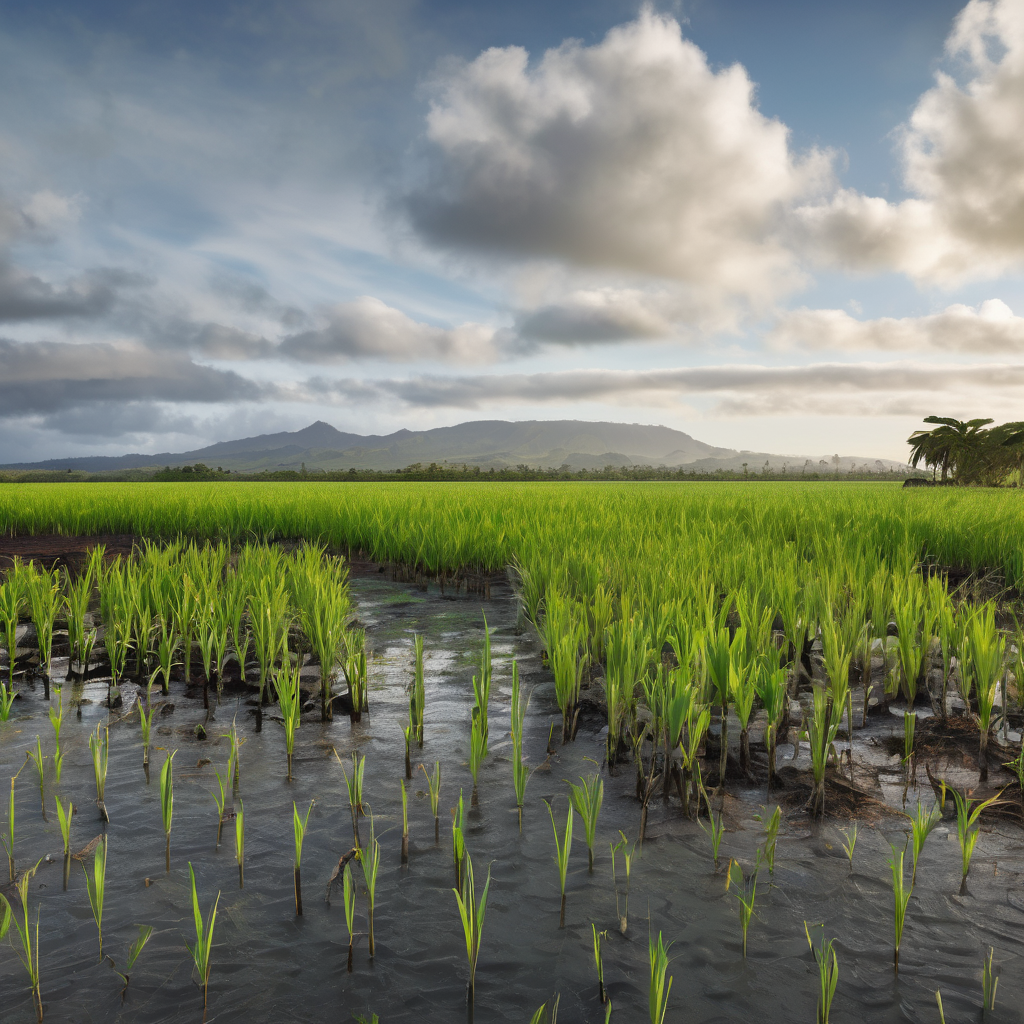
Sea level rise is having a devastating impact on sugarcane farming in Wailevu, Macuata, where the persistent intrusion of saltwater is destroying crops and threatening the livelihoods of families who have relied on this land for generations. Mahen Lal, a farmer from the low-lying community of Wailevu Tiri, which lies nearly two meters below sea level, reports that seawater increasingly floods cane fields during high tides, leading to a severe decline in soil fertility and crop yields.
The issue of saltwater intrusion has plagued these farmers for decades, yet sustained and effective interventions have been lacking, despite the growing losses in agricultural production and income. “Seawater comes inside and our sugarcane dries up and is finished. We keep complaining, but there is no proper solution,” Lal lamented.
As cane production continues to dwindle, many families are being forced to abandon farming altogether as their lands become less viable. This alarming trend has led farmers in Wailevu to make urgent requests for enhancements to floodgate infrastructure and the dredging of natural waterways. They warn that without immediate and decisive measures, the cane industry in Wailevu faces the risk of extinction.
Despite the challenges, the resolve of the farming community highlights a determination to seek solutions and preserve their agricultural heritage. With proper support and action, there is potential for revitalizing the industry and safeguarding the future of sugarcane farming in the region.