
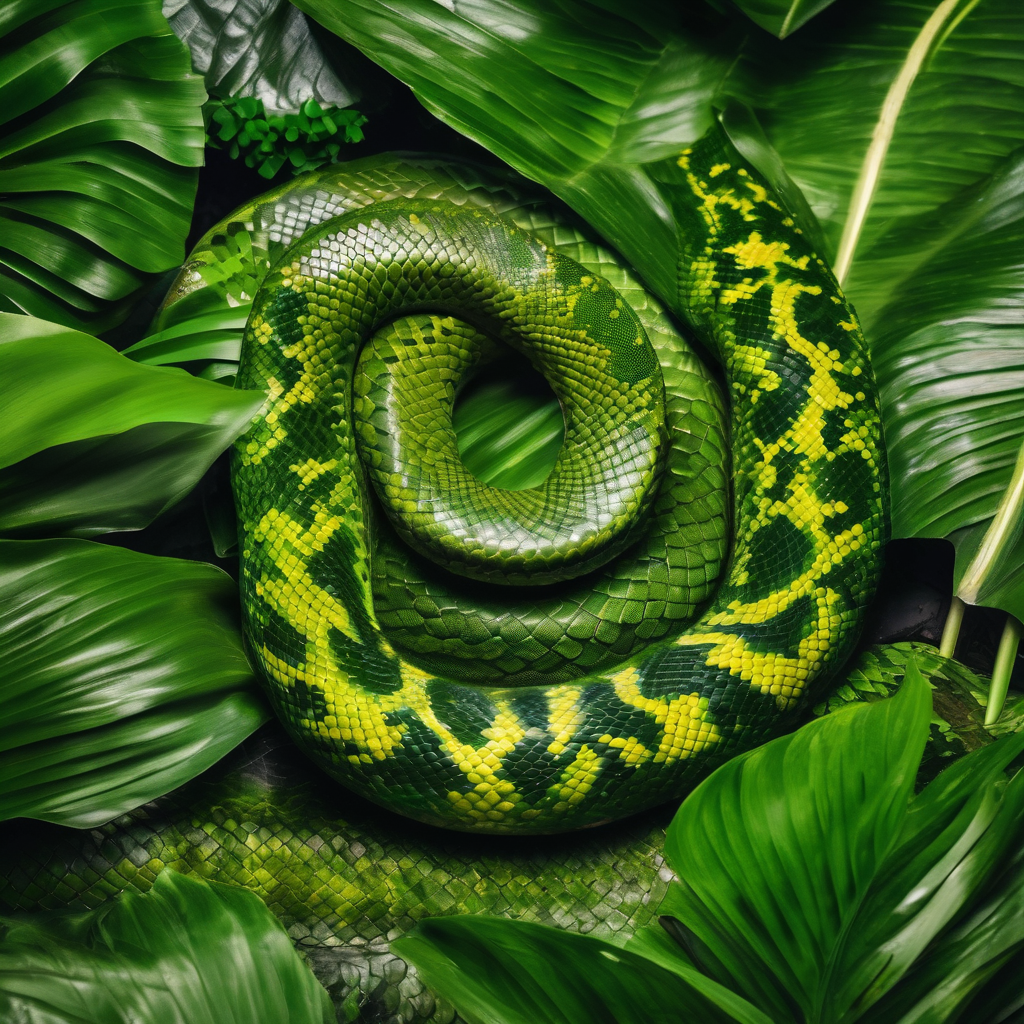
Anacondas, revered for their impressive size and unique hunting techniques, occupy a prominent place among the world’s most fascinating reptiles. Known for their incredible strength and swimming skills, these colossal snakes have garnered attention over the years. The Green Anaconda (Eunectes murinus) holds the title of the largest snake globally, both in weight and length. Notably, a recent research endeavor by National Geographic in 2024 unearthed Ana Julia, a Green Anaconda measuring an astounding 20.7 feet and weighing 441 pounds, which has reshaped our understanding of these creatures’ capabilities and evolutionary history.
Inhabiting mainly South America, particularly regions to the east of the Andes such as Brazil, Colombia, Venezuela, Ecuador, Peru, Bolivia, and Guyana, anacondas prefer slow-moving waters like rivers, marshes, swamps, and inundated grasslands. They possess a remarkable ability to remain submerged for up to ten minutes, allowing them to ambush prey comprised of animals like deer, capybaras, and caimans. Additionally, green anacondas have established themselves in Florida’s Everglades, where they pose as an invasive species. The absence of natural predators in this new habitat raises concerns about potential population explosions, necessitating human intervention to manage their numbers.
Unlike many snakes, anacondas are non-venomous and rely on constriction to subdue their prey. They lie in wait, often with only their eyes and nostrils above water, to strike unsuspecting animals that venture too close. This deadly technique leads to suffocation or compression of vital organs, allowing the anaconda to consume its prey whole. Their impressive size lends them the title of apex predators, capable of hunting creatures many times larger than themselves.
Female green anacondas typically exhibit significant size dimorphism, being five times larger than males, especially during mating season. They give live birth, averaging between 20 and 40 offspring, with newborns measuring around two feet in length. While anecdotal reports have circulated about anacondas reaching lengths of up to 33 feet, Ana Julia remains the largest scientifically confirmed specimen.
Recent findings have introduced the northern green anaconda (Eunectes akayima), suggesting a more complex evolutionary lineage than previously understood. Local Waorani communities have even reported sightings of larger individuals, indicating that record-breaking snakes may still be lurking in the Amazon and Orinoco River basins.
The colossal size of anacondas provides evolutionary advantages, allowing larger females to produce more offspring while their mass and strength enable them to target a variety of prey. Their unique physical adaptations, such as eyes positioned on top of their heads for nearly total concealment, along with their underwater breath-holding capabilities, reinforce their role as dominant predators in the rich ecosystems of South America.
Despite their formidable presence, anacondas face multiple threats, including habitat loss, hunting, and illegal pet trafficking. Conservation efforts aim to safeguard their riverine and rainforest environments, ensuring these essential apex predators continue to thrive. The public’s fascination with their size and predatory prowess fuels ongoing scientific inquiry and wildlife tourism, contributing to a greater awareness of ecological balance and the vital role these magnificent creatures play in South America’s natural heritage.