
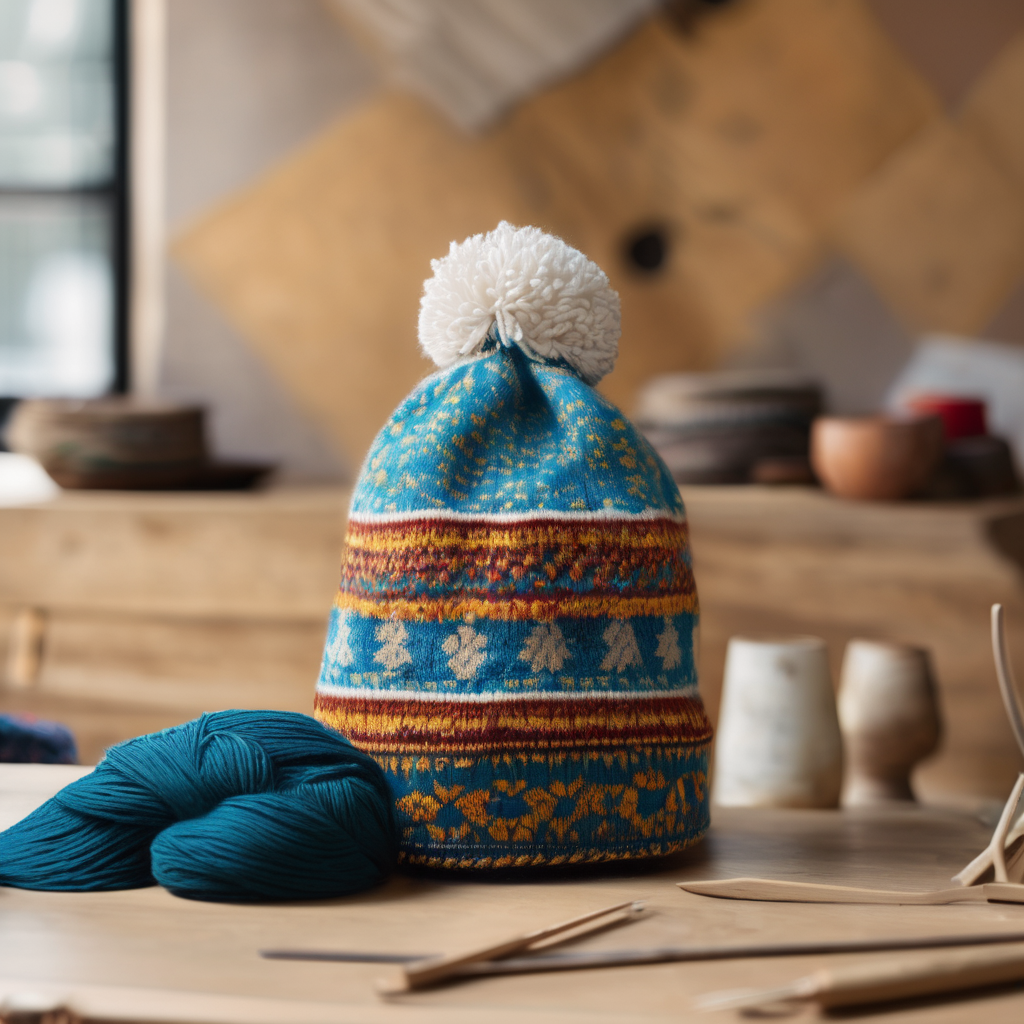
In the wake of heightened tensions regarding immigration policies in the United States, Gilah Mashaal, owner of Needle & Skein—a yarn store in the suburbs of Minneapolis—has turned her weekly knit-along into a powerful statement against federal immigration enforcement. With a commitment to keeping her shop free from political discussions, Mashaal felt compelled to act following the occupation of the Twin Cities by federal agents. In collaboration with her employee Paul, they decided to create a “protest stitch-along” featuring a distinctive red knit hat inspired by Norway’s resistance caps during World War II.
The design, dubbed the “Melt the ICE hat,” seeks to symbolize defiance against the current immigration policies, drawing connections to the historical significance of woolen caps worn by Norwegians resisting Nazi occupation. Mashaal, who has Jewish heritage and understands the implications of resistance, embraced this idea wholeheartedly. “Red is the color of resistance,” she articulated, emphasizing the importance of reclaiming the color from those who distort its meaning for divisive purposes.
The response to their initiative has been overwhelming, with over 100 participants showing up for the first session, and by the following week, nearly 70,000 patterns had been downloaded from Ravelry, a popular social network for knitters and crocheters. The project has not only garnered attention but has also raised over $250,000 for immigrant support organizations, including the St Louis Park Emergency Program (Step), contributing to efforts that assist those impacted by ICE raids.
As the movement has gained momentum, it has fostered a broader wave of creative expressions across various online platforms. From nail art to sewing circles, artists and hobbyists are channeling their anger and frustration into tangible acts of defiance. One notable nail artist highlighted her work with a bold anti-ICE message, eschewing subtlety for a more direct approach, reflecting the common feelings of exhaustion shared among many regarding the political climate.
These acts of resistance through handicrafts echo throughout history. In the past, fiber arts have been used as a means of defiance against oppressive regimes, whether during the American colonial struggle against British rule or among Indian partisans during Gandhi’s movement for independence. Contemporary artists are similarly finding their voices through materials and methods reminiscent of activism and cultural memory.
The significance of Mashaal’s initiative lies not only in its immediate impact on immigrant support but also in the larger narrative of resistance against governmental oppression. Historian Mats Tangestuen notes that the connection between the use of red hats during the Nazi occupation and contemporary protests is noteworthy, especially given Minnesota’s strong ties to Norwegian heritage. Even as knitting becomes a political statement today, its roots lie in a rich history of community, solidarity, and a relentless fight against injustice.
This creative outpouring serves as a powerful reminder that art, crafting, and communal activity can offer not just solace but also fuel for social change. Through their needles and yarn, participants are knitting not only hats but also hope and resilience in a challenging sociopolitical landscape.