
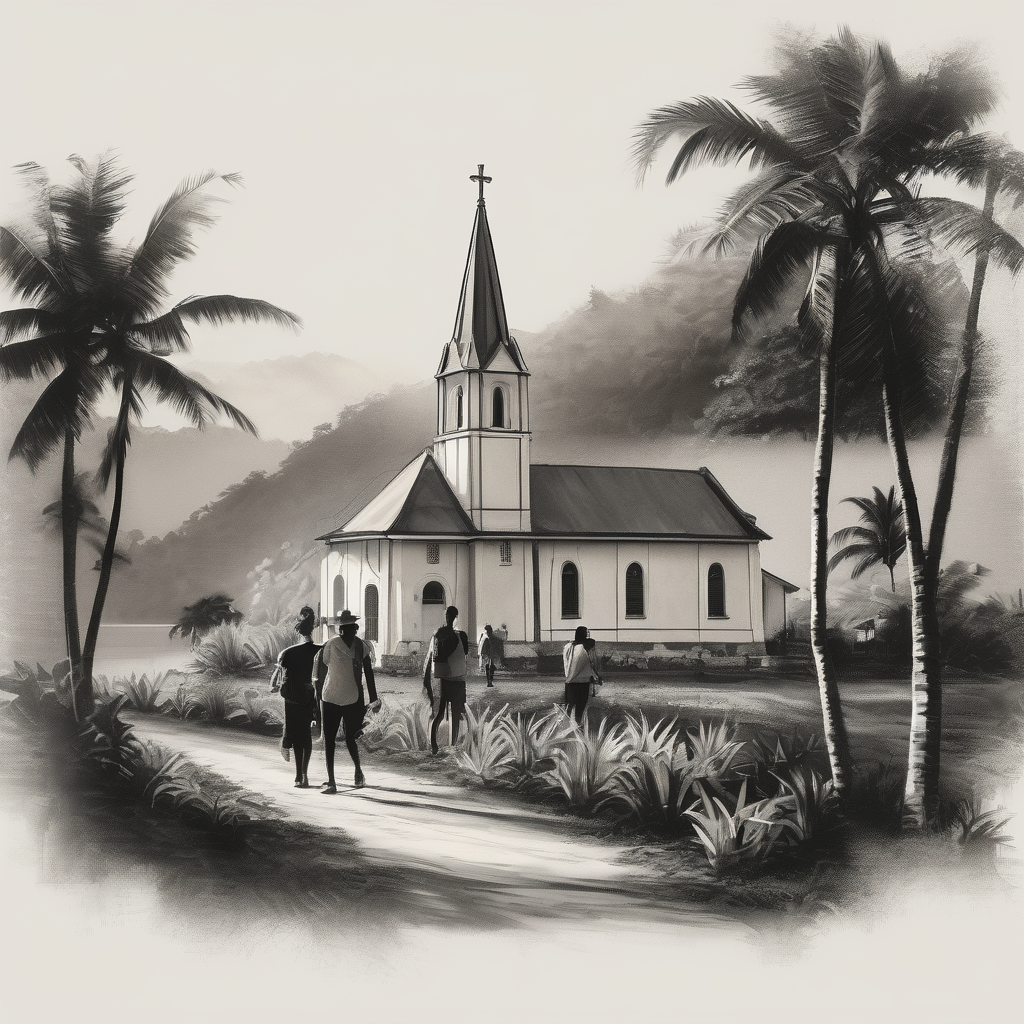
Stepping onto Bau Island is akin to traversing a portal into a realm teeming with ancient significance. This sacred space, home to the villages of Bau, Lasakau, and Rara-o-Soso, embodies a history deeply ingrained in the lives of its people—a legacy not just recorded in books, but woven into their very existence.
At the heart of Bau, a compelling contrast emerges between two historical eras. One side of this narrative is marked by the shadow of Na Vatanitawake, a remnant of darker times, while the other shines in the brilliance of the Ratu Cakobau Memorial Church, symbolizing defiance and redemption. Turaga Tunitoga, Ratu Aisea Komaitai, describes this church as a story passed down through generations.
In the 19th century, Bau was ruled by Ratu Seru Cakobau, a formidable warlord whose reign was characterized by power and fear. Across the waters of Viwa Island, a contrasting influence was quietly developing; John Hunt, a missionary from England, devoted his final years to praying for Ratu Cakobau’s salvation. Although Hunt passed away six years before the ruler’s conversion, his prayers resonated profoundly, culminating in Ratu Cakobau’s acceptance of Christianity on April 30, 1854. Upon his conversion, he adopted the name Epenisa, or Ebenezer, signifying a transformative dawn for the islands.
The change in Ratu Cakobau was comprehensive, extending from the spiritual to the physical. In 1859, he ordered the demolition of 17 out of his 18 pagan temples, repurposing the stones to construct a church that marked his newfound faith. Built over 21 years by stonemason John Sinclair and the labor of prisoners of war, the Ratu Cakobau Memorial Church emerged as a formidable structure, its walls crafted with precision and adorned with light from Gothic windows. It was completed in 1880, after which it was dedicated to Ratu Epenisa, who died just three years later.
The church has endured the test of time, undergoing renovations in 1954 and again in 1980 to prepare for a visit from Queen Elizabeth II. The villagers of Daku, with traditional ties to the Tui Kaba clan, played significant roles in these restorations. A notable feature within the church is the Vatu ni Bokola, once a killing stone, now transformed under Ratu Cakobau’s edict to become a vessel for holy water, symbolizing redemption and renewal.
Today, after 146 years and under the leadership of 49 ministers, the church continues to flourish as a vibrant hub of worship. Attending a service at Bau offers a glimpse into the enduring legacy of Ratu Cakobau’s prayers. The people kneel in prayer, echoing the reverence of their chief’s original supplications, as the stones of the island resonate with a powerful narrative of a violent past that has been reshaped by faith.
Bau teaches that sovereignty, much like faith, can be recreated, represented through its rich history that celebrates both struggle and salvation. This luminous story of change serves as a poignant reminder of the resilience and enduring spirit of its people.