
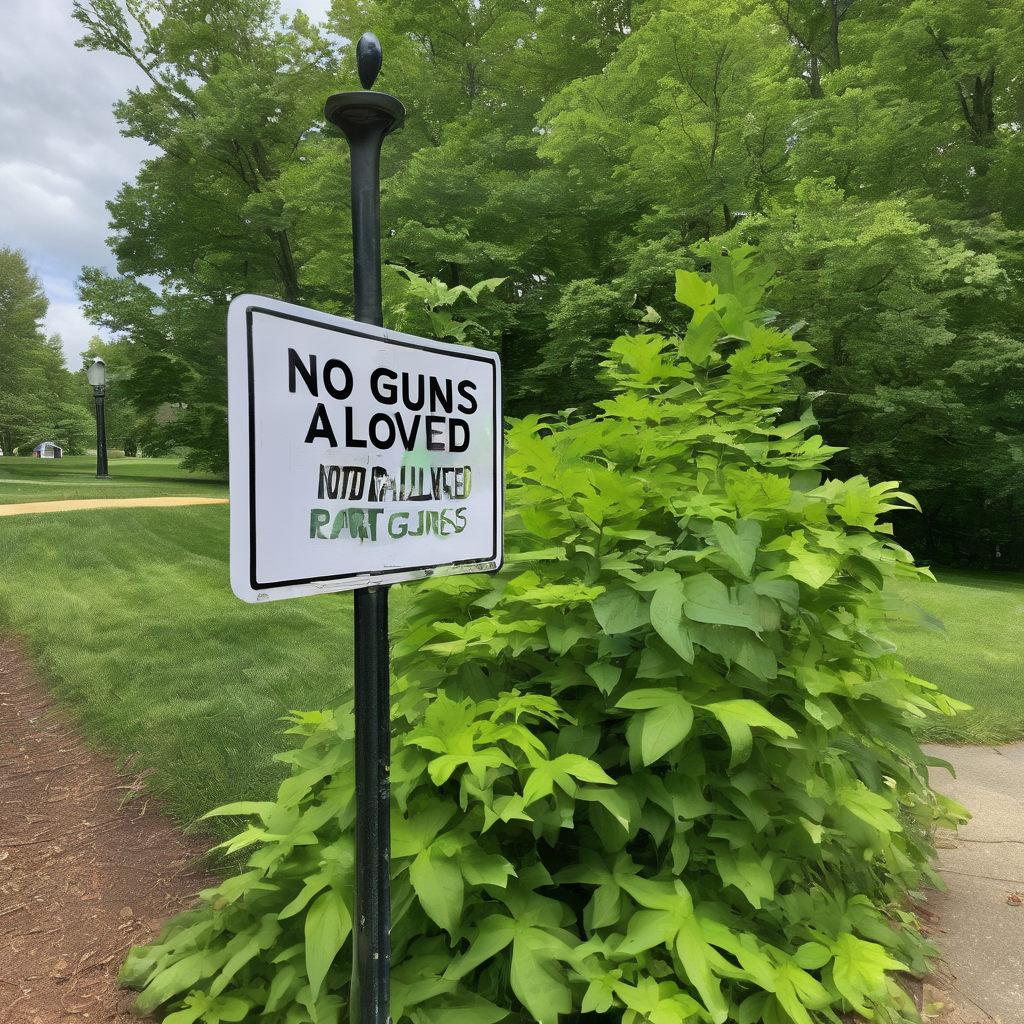
The Fourth Circuit Court of Appeals ruled today that Maryland’s law restricting firearms in designated “sensitive places” is largely constitutional, aligning with the state’s stance in a challenge brought forward by gun advocacy groups and individuals. This law was defended as consistent with the “sensitive place exception” outlined in the landmark 2008 Supreme Court case District of Columbia v. Heller.
Maryland Governor Wes Moore hailed the ruling as a significant victory for public safety, stating, “We can protect the Second Amendment while also protecting Marylanders from the heightened dangers of guns in places like schools, hospitals, public transportation, parks, and other spaces where families should be able to live, learn, and move about safely.” He underscored the state’s commitment to collaborating with law enforcement and community leaders to keep illegal firearms off the streets while respecting the rights of responsible gun owners.
The Fourth Circuit’s decision identified several locations categorized as “sensitive places” under the law, which includes government buildings, public transportation, school grounds, state parks, museums, healthcare facilities, stadiums, and locations that sell alcohol, among others. All but one aspect of this law received a unanimous endorsement from the court, with the exception being the prohibition on carrying guns in private properties held open to the public, which requires property owner consent.
Additionally, the court reversed two aspects of the district court’s earlier ruling concerning restrictions within 1,000 feet of public demonstrations and at alcohol-selling locations. Janet Carter, managing director of Second Amendment litigation at Everytown Law, emphasized the ruling as a victory for public safety, indicating it reinforces the notion that guns pose particular risks in areas such as parks, schools, and public transit.
The broader debate over the legality of banning firearms in sensitive locations is anticipated to extend to the U.S. Supreme Court, as the case Wolford v. Lopez regards similar laws in Hawaii and California. Oral arguments for this case were presented on January 20, showing that the discourse surrounding gun regulations continues to evolve at both state and federal levels.
This ruling reflects a growing consensus in the judiciary around the necessity of legislative measures designed to safeguard communities, even as it acknowledges and aims to maintain the rights of responsible gun owners. The ongoing engagement between lawmakers, the judiciary, and advocacy groups suggests a robust dialogue about balancing public safety with Second Amendment rights.