
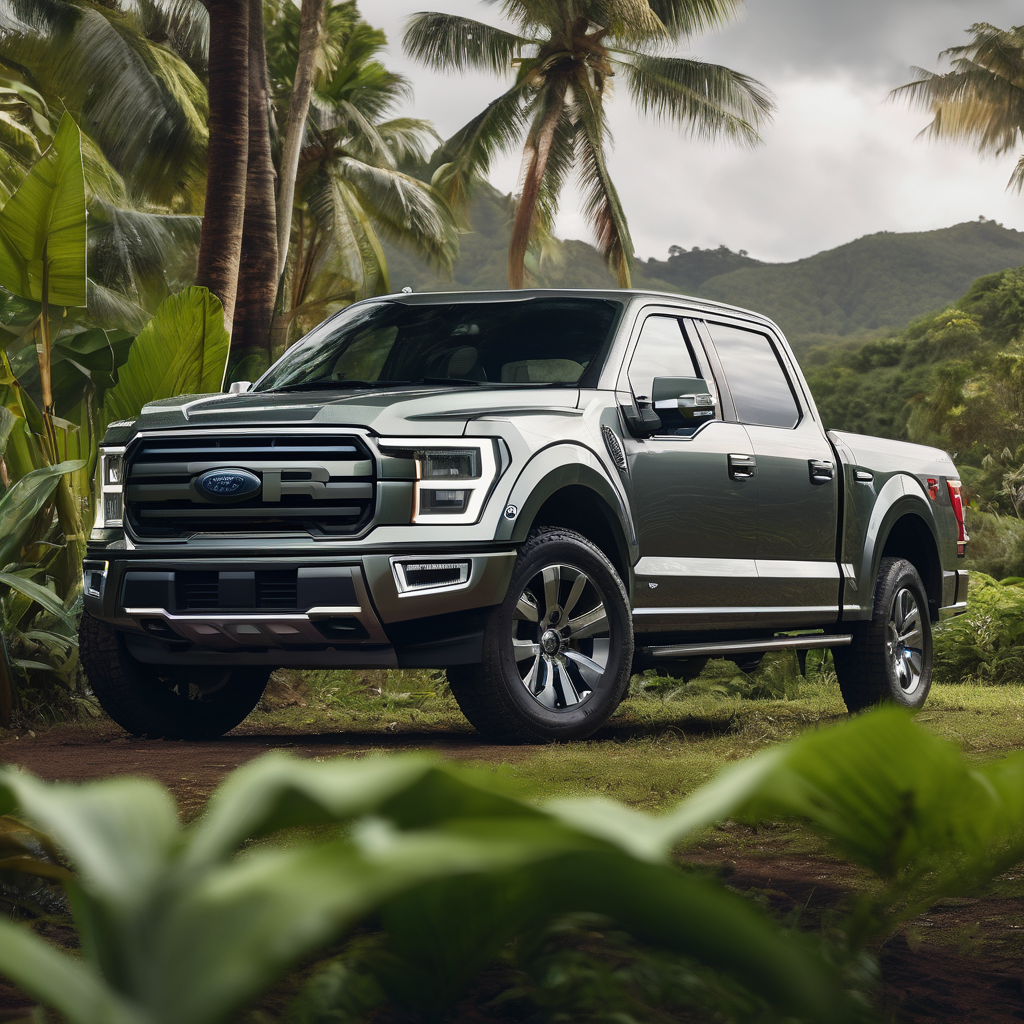
Ford has decided to pause production on its F-150 Lightning electric truck, diverting its workforce to assemble more gas and hybrid models. This shift signifies a strategic retreat from the automaker’s previous commitment to fully electric full-size pickup trucks, a sector where it initially sought to establish a strong foothold. Instead, Ford will concentrate on producing more affordable vehicles, hybrid options, and innovative range-extended electric vehicles (EREVs).
One of these EREVs will succeed the F-150 Lightning, featuring a gasoline generator that charges its battery. This design caters to those who appreciate hybrid technology, as it promises to deliver robust towing capabilities that Ford identifies as “non-negotiable” for truck owners, coupled with an impressive expected range of up to 700 miles (1,126 km).
Doug Field, Ford’s chief EV, digital, and design officer, stated, “Our next-generation F-150 Lightning EREV will be every bit as revolutionary. It delivers everything Lightning customers love – near instantaneous torque and pure electric driving. But with a high-power generator enabling an estimated range of 700+ miles, it tows like a locomotive. Heavy-duty towing and cross-country travel will be as effortless as the daily commute.”
The background to this decision is not entirely unexpected. Speculations regarding the F-150’s fate had been circulating for some time, and recent developments, including a conclusion of a partnership with SK On regarding the establishment of EV battery plants in Kentucky and Tennessee, have compounded the situation.
This pivot may open up new opportunities for Ford, allowing it to innovate within the hybrid vehicle space while still catering to traditional truck buyers. Despite the challenges faced, Ford’s commitment to blending electric capabilities with practical towing and range solutions reflects its ongoing adaptability in a rapidly evolving automotive landscape.