
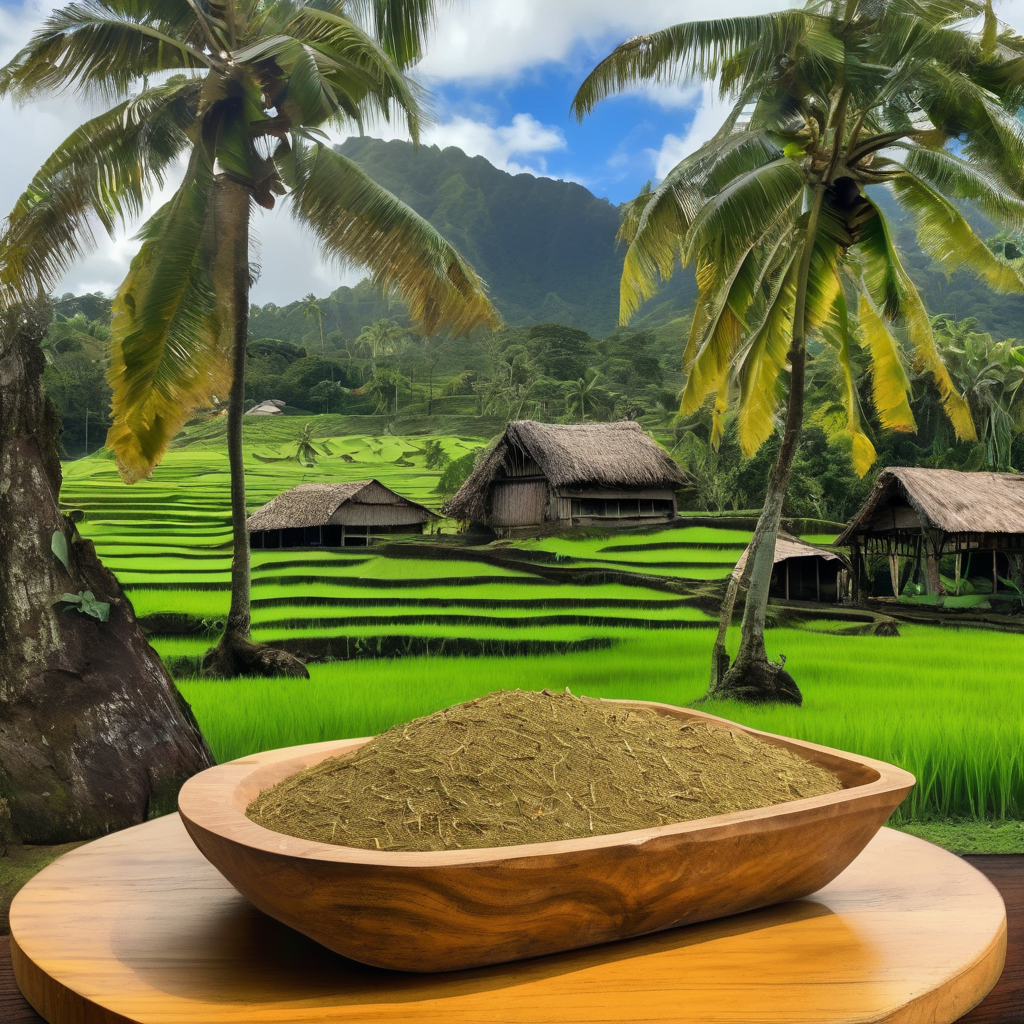
Fiji’s kava industry has experienced remarkable growth over the last 15 years, evolving from a crop primarily used for subsistence into the nation’s most valuable agricultural export. Presently, the kava sector is estimated to be worth more than $190 million, marking a significant shift in its economic impact on the country.
Historically, kava exports were valued at less than $4 million in 2008, coinciding with the launch of the Pacific Horticultural and Agricultural Market Access (PHAMA) Program’s first phase. By 2024, this figure soared to over $53 million, as reported by the Fiji Bureau of Statistics. When accounting for domestic consumption, processing, and informal sales, the total value of the kava sector now exceeds FJD190 million, underlining its crucial role in Fiji’s economy.
The increase in kava exports has also led to growing support for local farming families. As of 2024, more than 14,500 households are engaged in kava farming, an increase from around 10,400 households in 2016, as detailed in the Fiji Yaqona Farming Household Census. Key regions involved in kava cultivation include Kadavu, Bua, Cakaudrove, Naitasiri, and certain areas of Macuata and Lomaiviti.
For many rural communities, kava has transitioned into a dependable income source. The report emphasizes that for these communities, earnings from kava have significantly surpassed subsistence returns, providing a stable livelihood that supports local economies even during challenging times.
The kava industry in Fiji has undergone three major boom cycles throughout its history. The first boom occurred due to exports to Europe, which faced a collapse in the early 2000s due to an export ban stemming from safety and quality issues. After a period of recovery, production gradually stabilized, with continued growth in both domestic and export markets until around 2012.
According to PHAMA Plus, improvements in market access, adherence to quality standards, and enhanced industry coordination have been instrumental in the resurgence of the sector, firmly establishing kava as a fundamental part of Fiji’s agricultural and rural development narrative. This positive trajectory reflects not only the resilience of the industry but also the potential for further growth and sustainability in Fiji’s agricultural landscape.