
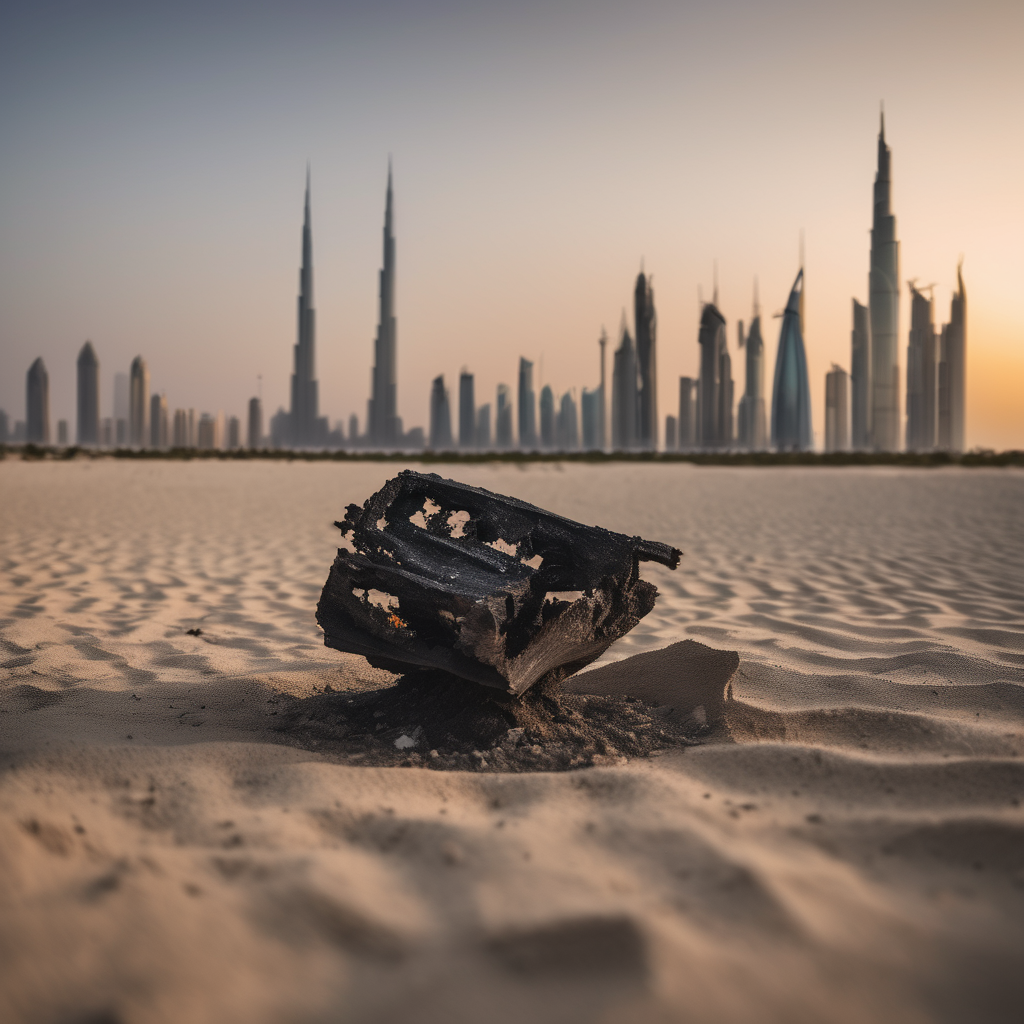
The United Arab Emirates, long marketed as a tranquil and tax-free haven, faced a significant security crisis on Saturday as Iranian missile attacks targeted Dubai and Abu Dhabi, resulting in one fatality and several injuries. The attacks set ablaze a high-end resort and posed a substantial threat to iconic structures, including the Burj Khalifa, the tallest building in the world.
Iran’s military response follows a series of strikes from U.S. and Israeli forces, igniting fears in a region usually perceived as stable. “This is Dubai’s ultimate nightmare,” stated Cinzia Bianco, a Persian Gulf expert, emphasizing that Dubai’s appeal relied heavily on its image as a peaceful oasis amidst regional turbulence.
In the wake of the attacks, UAE officials sought to reassure the public about the nation’s advanced air defense systems, which successfully intercepted numerous missiles and drones. Reem Al Hashimy, the minister of state for international cooperation, noted that while such military activities are unsettling for residents, the sounds heard were related to defensive actions rather than direct assaults.
Despite government reassurances, the incident has dealt a severe blow to the UAE’s endeavors to alleviate tensions with Iran, prompting the closure of the country’s airspace and the withdrawal of Emirati diplomats from Tehran. The Foreign Ministry condemned the Iranian strikes as an “aggressive and provocative approach,” underscoring the commitment to national security and sovereignty.
The UAE has positioned itself as a luxurious and secure destination for expatriates, with nearly 90% of its population comprising foreign nationals drawn by its promise of safety and a favorable business environment. However, recent attacks have raised serious concerns about the nation’s long-held perception as one of the safest places globally.
The aftermath of the missile strikes saw notable damage across Dubai, affecting some of its most prominent locations. Fires erupted at the Fairmont hotel on Palm Jumeirah and near the Burj Al Arab, creating an atmosphere of chaos in a city known for its luxury. Moreover, the damage extended to the Dubai International Airport, which has left many travelers stranded as operations were suspended.
Witnesses, including tourists and business travelers, described the surreal and alarming experience of witnessing explosions and chaos in a region typically associated with peace.
While the ongoing situation remains critical, officials continue to work on restoring calm and security in the Emirates, vital not only for its residents but also for the millions of visitors and expatriates who seek refuge in its welcoming environment. As the situation evolves, the UAE’s resilience will be under observation, particularly in its efforts to maintain its status as a desirable destination amidst regional unrest.