
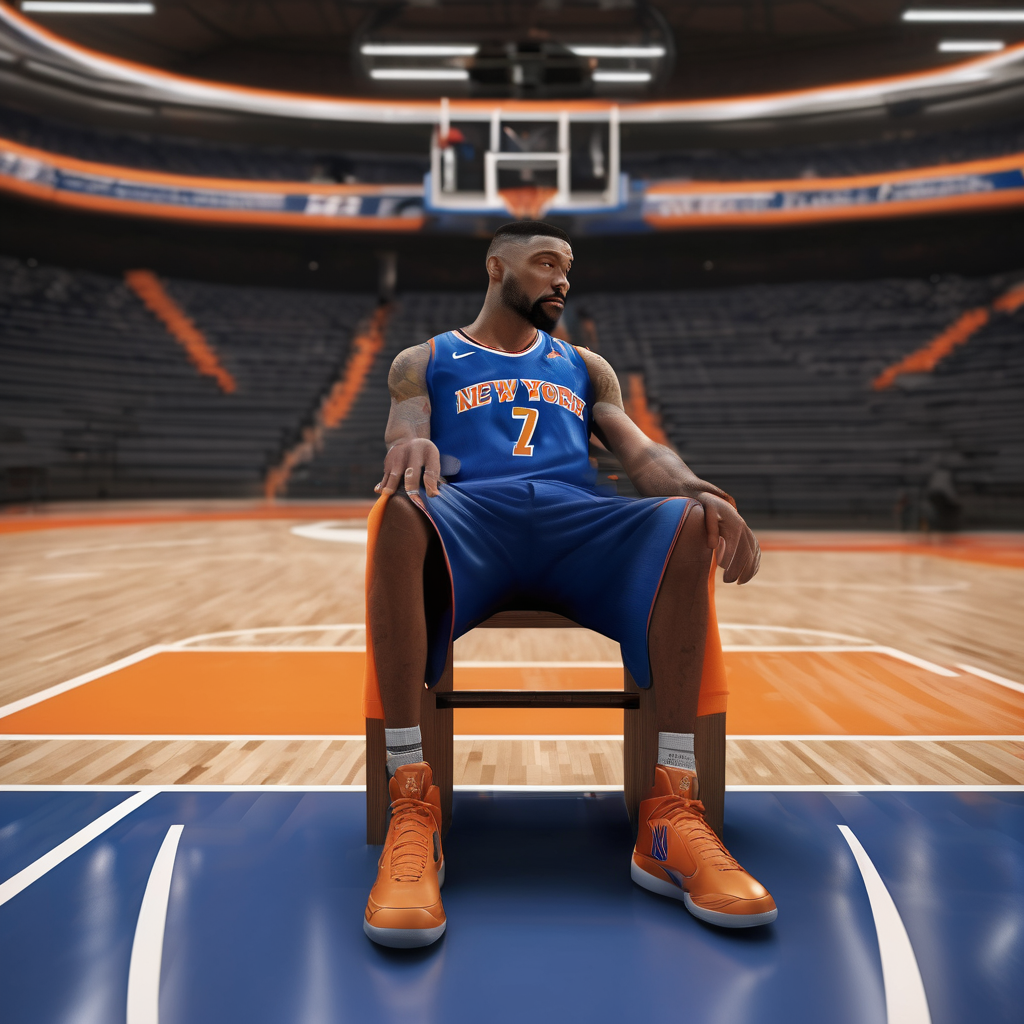
New York Knicks head coach Mike Brown faced a tough postgame interview following his team’s 126–111 defeat to the Detroit Pistons at Madison Square Garden. Amid questions about his decision to bench Mikal Bridges early in the fourth quarter, Brown emphasized that the change was situational rather than punitive.
“Landry had hit a couple of shots. We needed to score,” he explained, referring to reserve player Landry Shamet, who ended up finishing the game strong after taking over for Bridges. “It wasn’t anything where I’m going to sit Mikal because he’s not doing this, or he’s not doing that. We were looking to score points, and Landry was the only one to make a shot from behind the arc.”
This decision came at a pivotal time when the Knicks were trailing and Bridges had just been involved in three consecutive negative plays, leading to a critical moment in the game. After a turnover and a missed three-pointer, Bridges fouled opposing player Javonte Green, helping Detroit to expand their lead to 97–81. Following a timeout called by Brown, Bridges did not return to the game.
Shamet seized the opportunity, scoring 15 points on 4-of-10 shooting, including three 3-pointers, briefly igniting the Knicks’ offense. However, the momentum waned as the Pistons regained control, with key contributions from Cade Cunningham, who led all scorers with 42 points. Bridges, conversely, ended the night with just eight points, failing to score from long range.
Despite being known for his defensive abilities, Bridges’ exemplary performance on that end of the court was overshadowed by his inability to provide necessary scoring. He was effective against Cunningham, limiting him to 1-of-5 shooting when Bridges was the primary defender. This added urgency to Brown’s decision-making, highlighting the balance between maintaining defensive integrity and securing points.
Bridges’ struggles drew more attention with the return of OG Anunoby, who was back after missing four games due to a painful toe injury. Anunoby struggled to limit Cunningham, raising concerns about the Knicks’ wing defense, especially given his lucrative five-year, $212.5 million contract signed earlier this year, which made him a cornerstone of the Knicks’ roster.
Brown’s comments following the game reflected the team’s defensive challenges and highlighted the need for better floor coverage to prevent players like Cunningham from exploiting openings. The loss marked a concerning trend for the Knicks, who have now lost three consecutive matchups against Detroit, being outscored by 84 points over those games.
While Brown stood by his decision to prioritize immediate scoring from Shamet over long-term trust in Bridges, the significance of the loss resonates louder as the season progresses. It illuminates the critical importance of reliable offensive contributions from their highest-paid players when it matters most, reinforcing the need for a balanced approach on both ends of the court.