
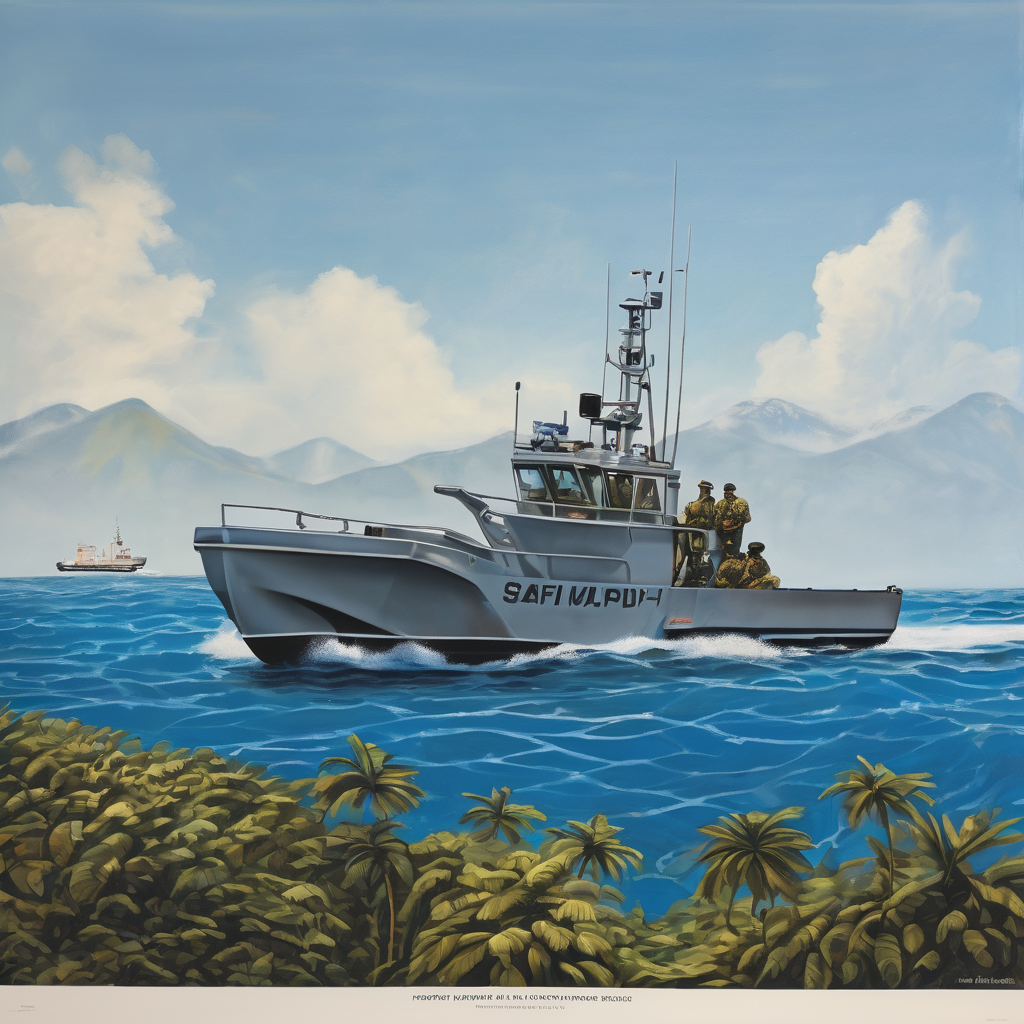
Customs authorities throughout the Pacific are increasingly engaged in combating sophisticated transnational criminal networks that exploit the region’s vast oceanic territories and legitimate supply chains. Mohammed Ajaz, a Customs Enforcement Advisor with the Oceania Customs Organisation (OCO), emphasized the evolving role of Customs officials during a recent discussion.
Ajaz stated, “Our officers are no longer just border administrators — they are now defending our societies from highly organised criminal syndicates targeting our geography.” Pacific island nations, despite their small populations, oversee enormous maritime zones, which have turned into alluring transit pathways for narcotics destined for profitable international markets.
He highlighted alarming statistics from January, including significant cocaine seizures—2.6 tonnes intercepted in Fiji and 4.87 tonnes confiscated in French Polynesia on the same day—illustrating that criminal organizations perceive the Blue Pacific as a billion-dollar drug corridor.
The infiltration of legitimate supply chains by these syndicates poses a grave risk, with criminals recruiting insiders and strategically hiding drugs within industrial machinery, refrigerated containers, and common goods. “The so-called ‘rip-on, rip-off’ method, where drugs are inserted into legitimate cargo, has become standard practice across trans-Pacific routes,” Ajaz explained.
In response to this escalating threat, OCO is enhancing intelligence-sharing among its 24 member countries and strengthening collaborations with global partners, such as the World Customs Organisation. The organization is also leveraging new technologies, non-intrusive inspection systems, and specialized training to safeguard trade while dismantling criminal operations.
Ajaz noted the critical impact that drug infiltration has on communities, stating, “When drugs enter our communities, we lack the rehabilitation systems to deal with the fallout. That’s why communities must be partners. Prevention is our only real option.” He underscored that measures of success should extend beyond the quantity of seizures to encompass the protection of families, the safety of youth, and the preservation of communities.
The ongoing commitment of customs authorities in the Pacific to adapt and respond to these challenges reflects their dedication to ensuring the safety and security of their regions, fostering a hopeful outlook for enhanced collaboration and community involvement in prevention efforts.