
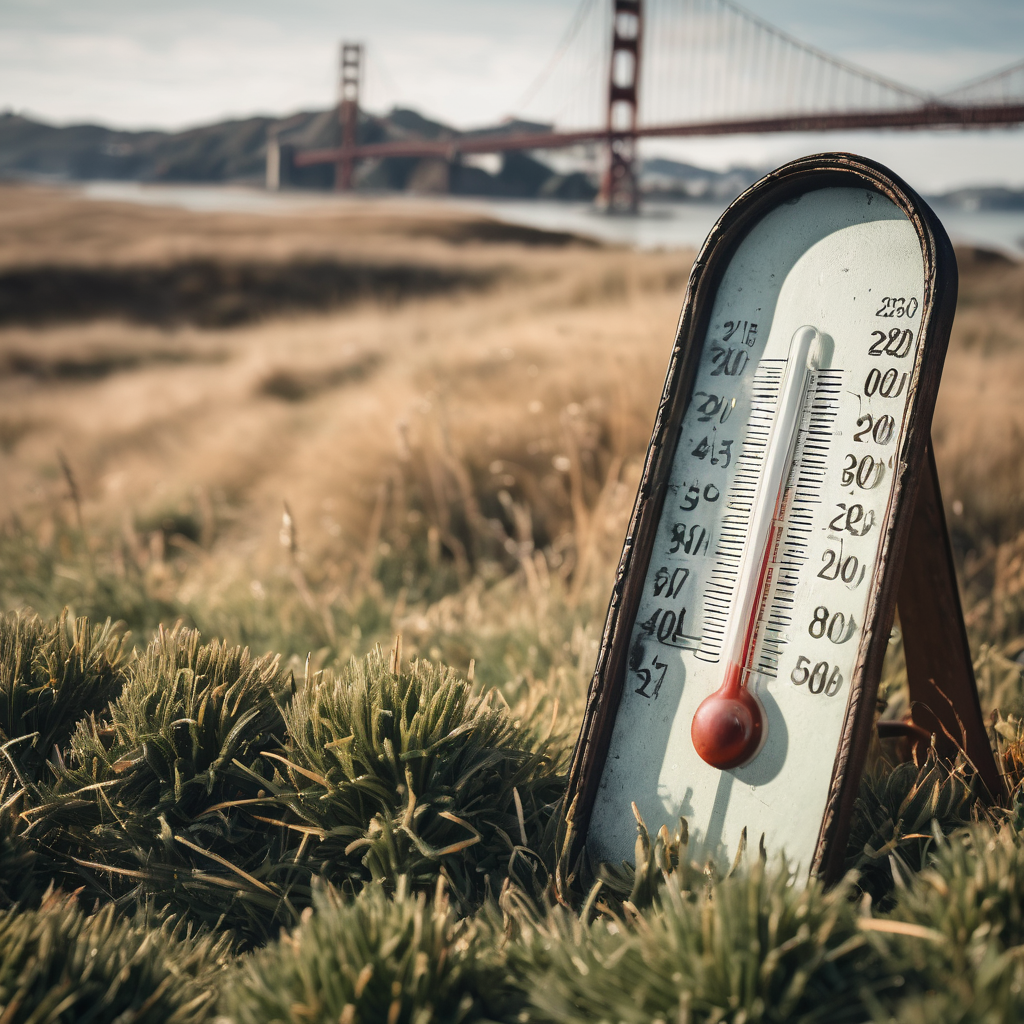
National Weather Service forecasters are currently assessing the need to issue public alerts for extreme cold temperatures expected within the next 48 hours. Frigid conditions may continue into Friday and potentially linger into Saturday. This unexpected cold snap, particularly late in the winter season, has raised concerns among climate researchers about the ongoing impacts of human-caused climate change on seasonal weather patterns.
Rachael Kennedy, a meteorologist from the National Weather Service’s Bay Area Office, noted, “This is going to be a lot colder than we’ve seen across the board this winter so far.” She added that this situation might set the stage for breaking several long-standing record lows if temperatures drop below forecasted levels.
The cold front is anticipated to sweep across a wide region, impacting areas from the North Bay, the Santa Clara hills, the shoreline of San Francisco, to the East Bay and extending to the Monterey area. Specific forecasts indicate that Santa Rosa could experience temperatures as low as 27 degrees Fahrenheit, just slightly above its record low of 26 degrees set in 1913. Downtown San Francisco may see temperatures reach around 40 degrees, while Oakland’s forecast hovers around 37 degrees, with a record low of 36 recorded in 2011. Moreover, both Napa and Livermore could plummet to 29 degrees, nearing their record low of 27 degrees established in 2018.
Kennedy highlighted the significance of potentially breaking century-old records, stating, “Some of these lows have been the record low for over a hundred years, so that would be kind of impressive if we could see temperatures drop below them.” However, she emphasized the importance of monitoring the situation as Friday approaches.
Climate experts like Shel Winkley from the nonprofit group Climate Central pointed out that this late-season cold snap reflects the complexities of climate change, which has been more characterized by warm temperatures across much of the Western United States this winter. This contrast underlines the unpredictable nature of weather influenced by fossil fuel emissions, making it a topic of ongoing research and concern.
The upcoming cold snap serves as a reminder of the complex relationship between climate change and seasonal weather variations, as communities brace for colder temperatures that may disrupt typical winter patterns.