
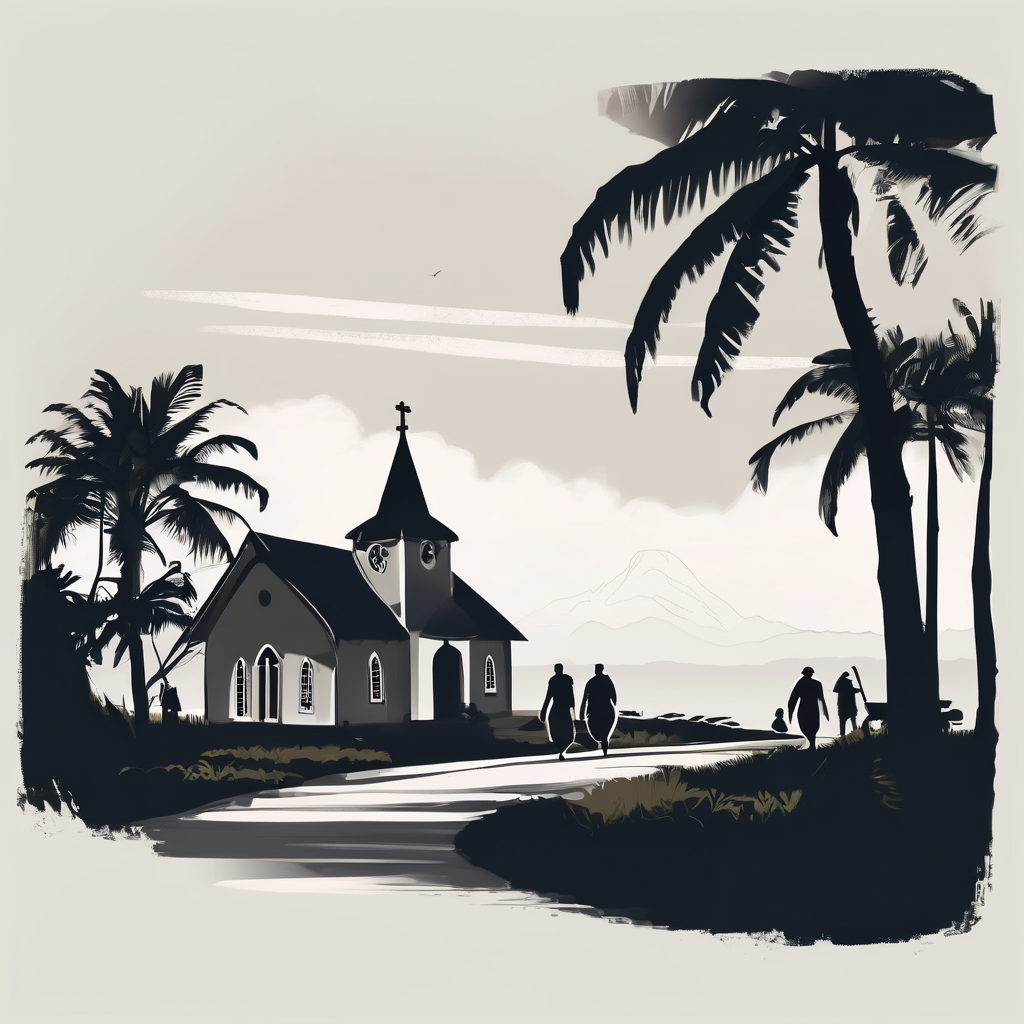
Bau Island serves as a profound reminder of the deep historical significance embedded in the lives of its inhabitants. The island is home to the villages of Bau, Lasakau, and Rara-o-Soso, and its rich past is intricately woven into the community’s identity, transcending mere written accounts to embody a living legacy.
At the center of Bau lies a stark juxtaposition between tumultuous historical moments. On one hand is Na Vatanitawake, a symbol of a darker period, while on the opposite side stands the Ratu Cakobau Memorial Church, representing hope, defiance, and renewal. Turaga Tunitoga, Ratu Aisea Komaitai, eloquently describes this church as a narrative that has been passed down through generations, highlighting its significance in the community’s collective memory.
The history of Bau traces back to the 19th century, when it was under the rule of the powerful Ratu Seru Cakobau, whose reign was marked by both authority and fear. Concurrently, across the waters of Viwa Island, John Hunt, an English missionary, dedicated his final years to praying for Ratu Cakobau’s spiritual awakening. Although Hunt passed away in 1848, six years before Cakobau’s conversion to Christianity on April 30, 1854, his influence lingered. Once converted, Cakobau assumed the name Epenisa (Ebenezer), heralding a transformative era for the islands.
The metamorphosis of Ratu Cakobau was significant; it prompted a sweeping transition from paganism to Christianity. In 1859, he instructed the dismantling of 17 of his 18 pagan temples, using the stones to erect a church that embodied his newfound faith. This monumental task was undertaken by stonemason John Sinclair alongside the labor of prisoners of war, culminating in the completion of the Ratu Cakobau Memorial Church in 1880. It was dedicated to Ratu Epenisa, who passed away just three years later.
Over the years, the church has stood resilient against the passage of time, undergoing restorations in 1954 and 1980 in anticipation of visits from notable figures, including Queen Elizabeth II. These renovations saw the involvement of the Daku villagers, who have longstanding connections to the Tui Kaba clan. A significant transformation within the church includes the Vatu ni Bokola, which was once a site of violence—the “killing stone”—but now serves as a vessel for holy water, symbolizing the themes of redemption and renewal heralded by Ratu Cakobau’s leadership.
Now, after 146 years and with the guidance of 49 ministers, the Ratu Cakobau Memorial Church remains a flourishing center of worship. Attending a service at Bau today provides insight into the enduring legacy of Ratu Cakobau’s fervent prayers, as villagers kneel in unity, echoing the deep reverence their chief once held. The stones of the island resonate with strong narratives, transforming a violent past through the power of faith.
Bau Island stands as a testament to the idea that sovereignty and faith can be reshaped over time. Its rich history highlights both the struggles faced and the triumphs achieved by its people, serving as a beacon of resilience and a celebration of the enduring spirit within the community. Through faith and determination, the story of Bau inspires hope and strengthens the cultural identity of its inhabitants.